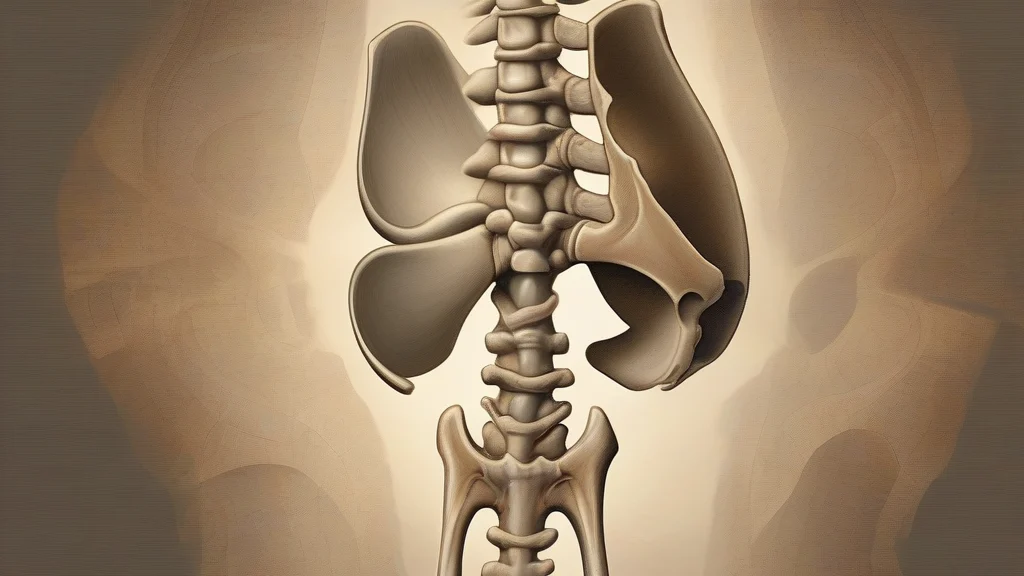
What does acetabulum mean?
An acetabulum is the cup-shaped depression in the pelvis that forms the socket of the hip joint, receiving the rounded head of the femur and enabling the wide range of movement characteristic of the human hip. In anatomy and orthopaedic medicine, the term is essential for describing conditions such as hip dysplasia, fractures of the acetabulum, and degenerative changes in the joint. The word derives from Latin, where it referred to a small vinegar cruet used at the dining table — a fitting name, since the anatomical structure resembles a shallow cup. In classical scholarship, 'acetabulum' also denotes this ancient Roman vessel and a corresponding unit of liquid measure. Today the word belongs almost exclusively to technical registers: it appears in medical literature, surgical reports, and anatomy teaching rather than everyday conversation. Its plural, acetabula, follows the Latin second-declension pattern and is standard in formal scientific writing.
The cup-shaped socket in the hip bone that receives the head of the femur, forming the ball-and-socket hip joint.
"Total hip replacement involves resurfacing both the femoral head and the acetabulum."
Standard plural in anatomical usage is 'acetabula'; the term appears chiefly in medical and anatomical writing.
A small Roman vessel or cruet for serving vinegar; also an ancient Roman unit of liquid measure equivalent to about one-eighth of a sextarius.
"Among the finds was a bronze acetabulum, likely used for pouring vinegar at mealtimes."
This sense is confined to archaeology, classics, and discussions of ancient Roman material culture.
The Latin plural 'acetabula' is standard in anatomical, medical, and scholarly writing; 'acetabulums' is rare and generally avoided in formal contexts.
"Both acetabula showed signs of developmental dysplasia on the pelvic radiograph."
In ancient Rome, an acetabulum was literally a small vinegar cup — and that humble condiment dish gave its name to the deepest socket in your skeleton.
Reviewed by Deb Chak, Editor. AI-assisted content curated by RJS Tech Solutions LLP.
Etymology of acetabulum
The English word 'acetabulum' comes directly from Latin, where it meant a small vessel for holding vinegar at the table. The Latin noun itself derives from 'acetum', meaning vinegar, combined with the diminutive suffix '-bulum'. Anatomists adopted the term because the hip socket's shape resembles such a small cup, and it has been used in English anatomical writing since at least the seventeenth century. Cognate terms trace back to the same Latin root 'acetum', which also underlies words connected with sourness and acidity.
How acetabulum is actually used
Primarily used in medical, anatomical, and orthopaedic contexts. The historical senses relating to Roman vessels and measurements are encountered mainly in archaeology, classics, and historical texts. Plural is 'acetabula' in formal anatomical usage, though 'acetabulums' occasionally appears informally.
Easily confused with acetabulum
Acetum is the Latin word for vinegar, whereas acetabulum refers specifically to the cup-shaped hip socket or a Roman vinegar cruet.