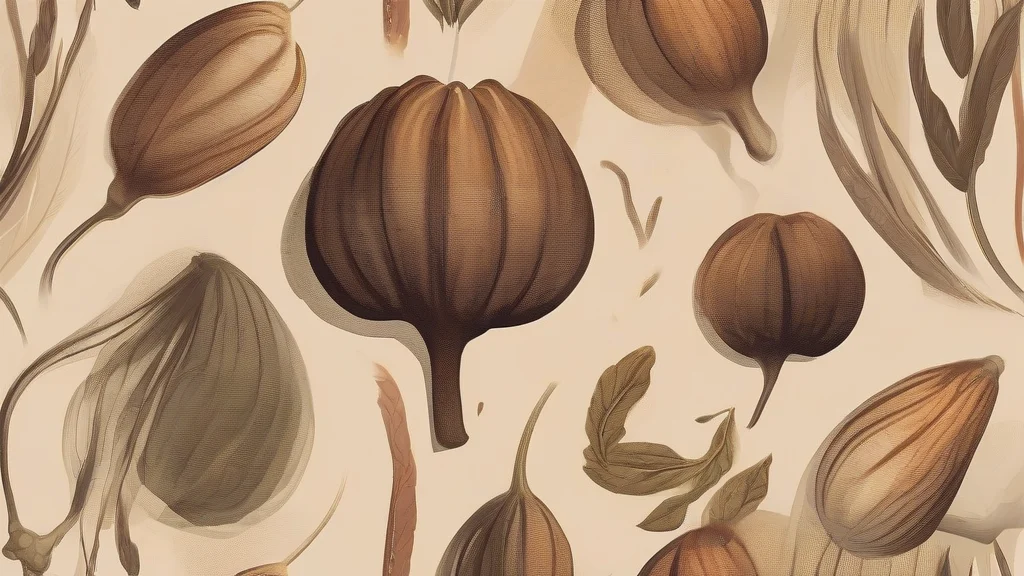
What does achenium mean?
An achenium is a dry, one-seeded fruit that does not split open at maturity — what botanists call an indehiscent fruit — formed from a single carpel. Familiar examples appear in buttercups, sunflowers, and dandelions, where each tiny seed-like body is technically an achenium rather than a true seed. The word is a Latinized variant of the more common English term 'achene', and it survives mainly in older botanical literature and in formal taxonomic descriptions, where precision about fruit type matters. Derived from Greek roots meaning essentially 'not gaping', the name captures the fruit's defining trait: its wall remains closed around the single seed rather than bursting open as a pod would. For general readers, 'achene' is the preferred modern spelling, but encountering 'achenium' signals a text rooted in classical botanical tradition.
nounA dry, one-seeded fruit that does not split open at maturity, formed from a single carpel; the technical botanical term more commonly rendered as 'achene'.
- A dry, indehiscent, one-seeded fruit formed from a single carpel, as in buttercups and dandelions.
"Each tiny achenium of the buttercup detaches cleanly when the seed head is brushed."
"The botanist noted that each achenium bears a feathery pappus that aids wind dispersal."
"Under the lens, the surface of every achenium revealed fine longitudinal ridges."
The plural follows the Latin second-declension neuter pattern, changing -um to -a.
"The receptacle was crowded with hundreds of tiny achenia."
The word achenium comes from the Greek for 'not gaping' — a fruit so stubbornly sealed it refuses to crack open even when fully ripe.
Reviewed by Deb Chak, Editor. AI-assisted content curated by RJS Tech Solutions LLP.
Etymology of achenium
Achenium derives from the Greek 'a-' (not) plus a form related to 'chainein' (to gape), yielding the sense 'not opening' — a reference to the fruit's failure to dehisce. It entered scientific Latin as achenium and was adopted into English botanical nomenclature alongside its now-standard synonym 'achene'. The same Greek root family gives us 'chaos' and 'chasm', both from the idea of a gap or opening.
How achenium is actually used
A technical term confined almost entirely to botany; 'achene' is far more common in modern usage, so 'achenium' may read as archaic or Latinate.
Easily confused with achenium
'Achene' is the standard English form of the same botanical term, while 'achenium' is the Latinized variant used chiefly in older or highly formal botanical texts.