What does adumbrated mean?
"Adumbrated" is the past tense of the formal verb "adumbrate," meaning to outline something only roughly or faintly, or to foreshadow it without stating it fully. The word derives from the Latin "adumbrare," literally "to shade," which explains its central image: just as a shadow suggests an object's shape without revealing its details, an adumbrated idea gives readers a dim preview of what will later be spelled out. The verb appears most often in elevated writing — political analysis, literary criticism, academic prose — where a speaker might say that a report adumbrated future reforms, or that an early novel adumbrated themes the author developed more fully later. Its two main senses are closely related: sketching an incomplete outline, and hinting at things to come. Because it implies deliberate vagueness rather than full explanation, it contrasts with words like "detailed" or "elaborated." It remains uncommon in casual conversation but is prized by careful writers for its precision and evocative history.
verb (past tense and past participle of 'adumbrate')To have outlined or sketched something in a faint or incomplete way, or to have foreshadowed or hinted at something to come.
- To outline or sketch something in a vague or incomplete way.
- To foreshadow or give a faint indication of something to come.
"The committee's interim report adumbrated the reforms that would later be enacted in full."
"In his opening remarks, the minister adumbrated the government's intentions without committing to any specific policy."
"The struggles of the protagonist adumbrated the turmoil that would soon engulf the entire nation."
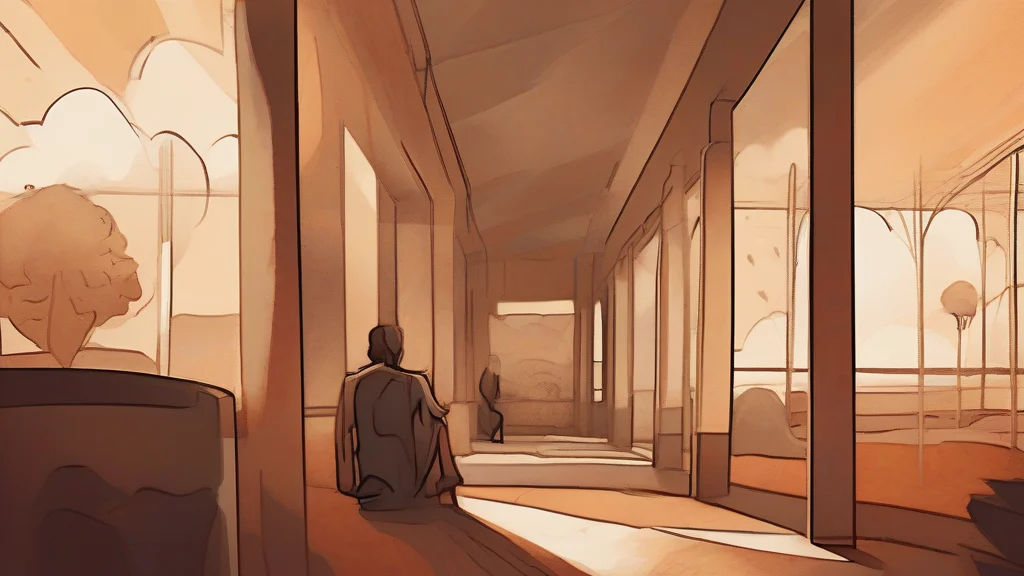
It comes from the Latin for 'to shade' — so when a writer adumbrates an idea, they're literally casting a shadow of it on the page before the full picture arrives.
Reviewed by Deb Chak, Editor. AI-assisted content curated by RJS Tech Solutions LLP.
Etymology of adumbrated
"Adumbrated" comes from the Latin "adumbrare," meaning "to represent in outline" or "to shade," formed from "ad-" (toward) and "umbra" (shadow). The English verb "adumbrate" entered the language in the early 17th century, borrowed via Latin usage. It shares its root with "umbrage," "umbrella," and "penumbra," all descendants of Latin "umbra."
Related word forms
How adumbrated is actually used
Formal and literary in register; rare in everyday speech. It carries a connotation of deliberate incompleteness — the speaker or writer is giving only a shadow or preview, whether from caution, brevity, or artistic effect. Common in academic, political, and critical writing.
Easily confused with adumbrated
'Illustrated' means clarified or explained with examples or pictures, whereas 'adumbrated' means only faintly outlined or hinted at — nearly the opposite degree of detail.