What does agnail mean?
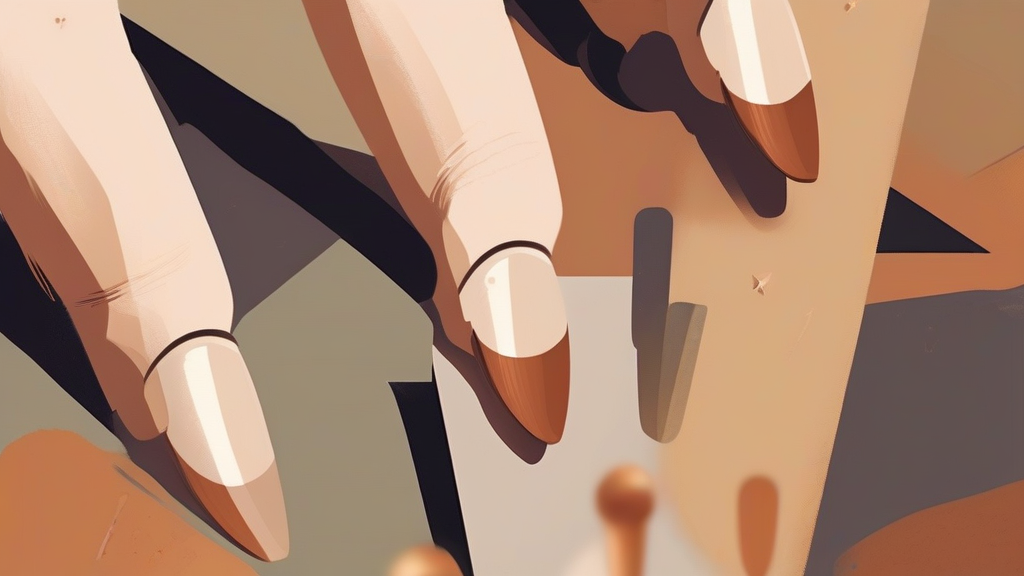
An agnail is a small strip of torn or loose skin that separates from the fold of skin alongside a fingernail or toenail — what most people today would call a hangnail. Though trivial in size, an agnail can be genuinely painful, catching on clothing or tearing further if pulled rather than clipped, and it can open the way to infection around the nail. The word has a long pedigree: it derives from Old English, where it was formed from elements meaning 'own' and 'nail', reflecting an early belief that the flapping skin was part of the nail itself. In older medical writing, agnail also denoted an ingrown nail, a sense now largely obsolete. Today the word is uncommon in casual conversation, having been displaced by 'hangnail', but it remains useful in historical, literary, and formal contexts, and it offers writers a precise, slightly archaic alternative for a familiar minor affliction.
nounA piece of torn or loose skin at the side or base of a fingernail or toenail; a hangnail. In older medical usage, the term also referred to an ingrown nail.
- A small strip of torn, loose skin at the edge of a fingernail or toenail (a hangnail).
- (Historical/medical) An ingrown fingernail or toenail.
"She winced as the agnail at the corner of her thumb caught on the fabric of her sweater."
"He bit away the agnail before it could tear any further down his finger."
"The manicurist trimmed the agnail carefully, warning that pulling it could cause an infection."
The plural is used when referring to multiple affected nails or several instances of torn skin.
"Cold winter weather left his hands covered in painful agnails."
The word 'agnail' literally meant 'own nail' in Old English — our ancestors thought the painful little flap of skin was part of the nail itself.
Reviewed by Deb Chak, Editor. AI-assisted content curated by RJS Tech Solutions LLP.
Etymology of agnail
Agnail descends from Old English 'agnægl', a compound of 'āgn' ('own') and 'nægl' ('nail'), so called because the torn skin was once thought to belong to the nail itself. The word has been in continuous use since the Anglo-Saxon period, making it one of the older terms in English dermatological vocabulary. Its modern synonym 'hangnail' arose later through folk reinterpretation, apparently influenced by the verb 'hang'. Related forms appear across the Germanic languages, all built on the same root word for 'nail'.
How agnail is actually used
Agnail is now rare in everyday speech, where 'hangnail' predominates; it survives mainly in dictionaries, historical medical texts, and literary usage. It carries no strong connotation but may sound quaint or archaic to modern readers.
Easily confused with agnail
Hangnail is the everyday modern term for the same condition, while agnail is the older, more formal word for it.
Paronychia is a bacterial or fungal infection of the skin around the nail, whereas an agnail is simply torn skin that may become infected if untreated.