What does allemande mean?
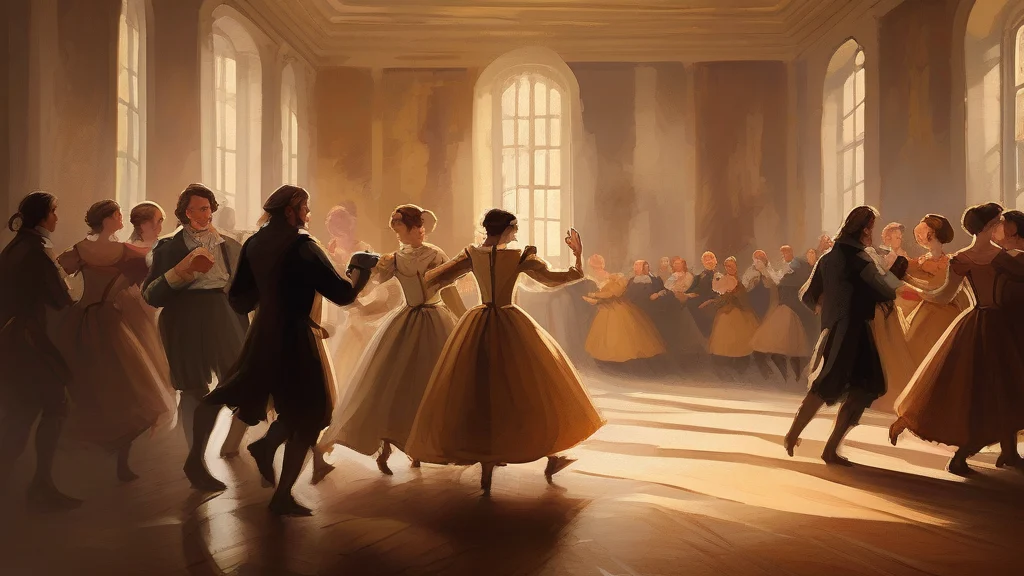
An allemande is a dance of German origin that became one of the most characteristic forms of the Baroque era. Adopted into French courtly culture in the sixteenth century, it was typically a moderate-tempo piece in duple time marked by flowing, continuous melodic lines. By the seventeenth century composers such as Bach and Handel had made the allemande a fixture of the instrumental suite, where it usually follows an introductory prelude and precedes more animated dances like the courante. The term survives today in two main settings: classical music, where it denotes both the historical dance and its stylized musical offspring, and American square dancing, where the call 'allemande left' — a forearm turn with another dancer — remains among the most frequently heard instructions on the dance floor. Borrowed directly from French, in which allemande simply means 'German', the word offers a compact reminder of how much of Europe's musical vocabulary traveled across borders in the early modern period.
A German courtly dance of moderate tempo in duple time, adopted into the Baroque instrumental suite as a standard movement; by extension, a musical composition in the style of that dance.
"Bach's French Suites each begin their sequence of dances with an allemande."
In suites, the allemande traditionally follows the prelude and precedes the courante.
In modern square dancing, a figure in which two dancers join forearms and turn around each other.
"The caller prompted an allemande left, and the dancers wheeled smoothly into place."
Standard plural for both the dance/musical sense and the square-dance figure.
"The recital program included allemandes from three different Baroque suites."
In square dancing, 'allemande left' is one of the most frequently called moves in North America — a direct survival of an aristocratic dance that Bach wrote into his suites three centuries ago.
Reviewed by Deb Chak, Editor. AI-assisted content curated by RJS Tech Solutions LLP.
Etymology of allemande
Allemande comes from the French allemande, meaning 'German' (feminine of allemand), so the dance's very name advertises its origin. The French adopted the German courtly dance in the sixteenth century, and from France it spread across Europe as a staple of the Baroque suite. The French word ultimately traces back to the Alemanni, an ancient Germanic people whose tribal name gave rise to the general Romance-language terms for Germany and Germans.
How allemande is actually used
The word carries a distinctly musical or historical register: outside of early-music performance and square-dance calling, it appears mainly in program notes, music history, and dance literature. The plural is allemandes.
Easily confused with allemande
Allemande is simply the French word for 'German' and names a dance and musical form in English; it does not function as the ordinary English adjective for things from Germany.