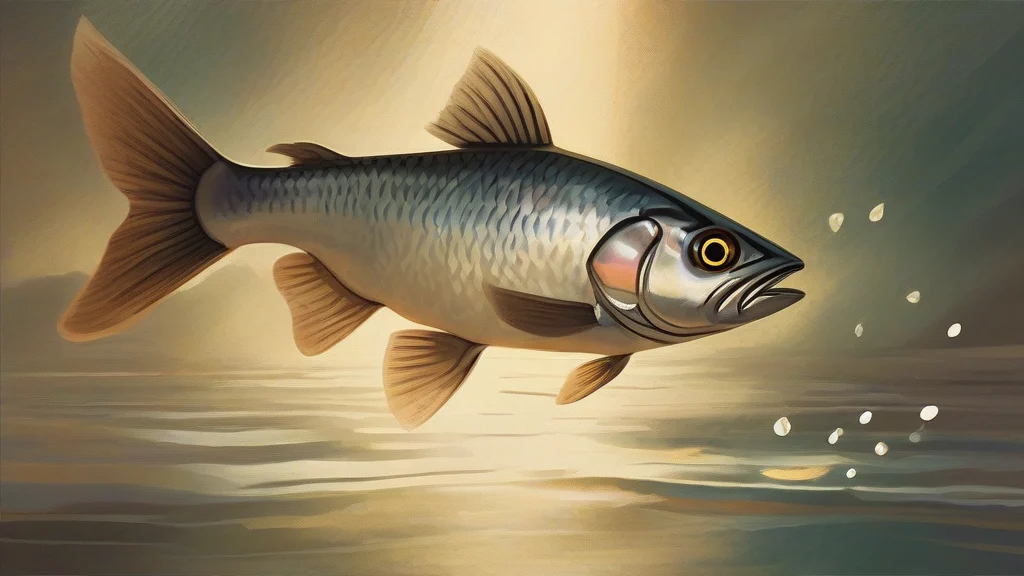
What does allis mean?
The allis, more fully the allis shad, is a silvery, herring-like fish found along the Atlantic coasts of Europe, from Scandinavia to the Mediterranean basin. Like its American relative the shad, it is anadromous: it spends most of its life at sea but returns to fresh water each spring, swimming far up rivers such as the Gironde, the Loire, and the Severn to spawn. The name derives from the Old French "alose," reflecting how long the fish has featured in European river life and cuisine. Distinguishing the allis from its smaller cousin, the twaite shad, can be difficult, and the two species are frequently mentioned together by anglers and conservationists. Though once commercially important, populations have declined in many rivers due to pollution, barriers to migration, and overfishing, making the allis a subject of active restoration efforts.
nounThe allis shad, a European fish of the herring family (Alosa alosa) that migrates up rivers to spawn, closely related to the American shad.
- A migratory European clupeoid fish, Alosa alosa, of the herring family, which ascends rivers to spawn.
"In late spring, allis gather in the tidal reaches of the Severn before running upstream to spawn."
"Conservationists have recorded increasing numbers of allis passing the fish counters at the estuary barrage."
"The allis, once abundant in the Loire, has declined sharply across much of its European range."
Like several game-fish names, "allis" often functions as an unchanged plural when referring to the fish collectively; "allises" is also acceptable.
"Schools of allis were reported below the falls throughout May."
The allis takes its name from the old French word for the fish itself — a name so old it predates the English word 'shad' arriving in Britain.
Reviewed by Deb Chak, Editor. AI-assisted content curated by RJS Tech Solutions LLP.
Etymology of allis
The word "allis" comes from the Old French "alose," the traditional French name for this shad, which itself traces back through medieval Latin forms such as "alausa." The fish was well known to river communities of western Europe long before the term entered English usage, where it settled as part of the compound "allis shad." Its closest linguistic relative in modern use is the French "alose," which preserves the original form directly.
How allis is actually used
"Allis" is chiefly British and almost always appears in the fuller form "allis shad" outside specialist fisheries contexts; in North America the equivalent fish is simply called shad. The plural may be written "allis" or "allises," with "allis shads" also used when referring to multiple individuals of the full compound form.
Easily confused with allis
The twaite (or twait) shad, Alosa fallax, is a smaller, closely related cousin of the allis shad, and the two are often confused by anglers.
"Alice" is a common female given name, whereas "allis" refers specifically to a species of migratory fish.