What does alluvion mean?
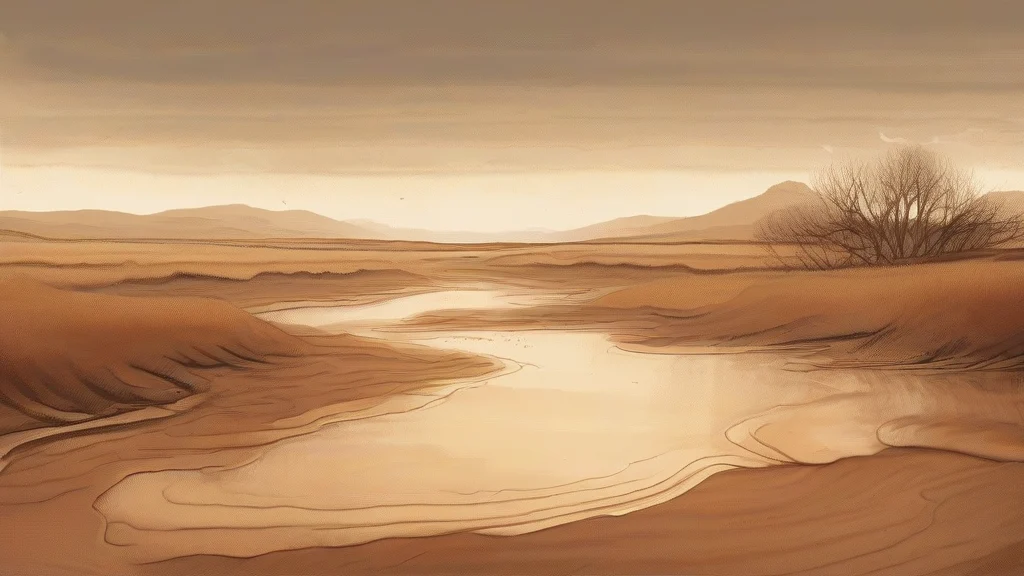
Alluvion refers to the slow, often imperceptible accumulation of sediment — silt, sand, and mud — deposited by moving water along riverbanks, floodplains, deltas, and coastlines. Geographers use it to describe how rivers build and extend their landforms over time, while lawyers invoke it in a related sense: under the doctrine of alluvion, any land gradually added to a waterside property by natural deposition belongs to the owner of that property, without need for purchase or deed. This contrasts with avulsion, where water suddenly and violently removes or reassigns land, as when a flood carves a new channel. The term derives from Latin roots connected with washing and flooding, sharing ancestry with 'alluvium', the name for the deposited material itself. Though largely confined to technical writing in earth sciences and riparian law, alluvion captures a striking idea: that entire landscapes, and even legal boundaries, can be reshaped grain by grain, invisibly, by nothing more than the patient work of flowing water.
nounAlluvion is the gradual accumulation of soil, sand, or sediment deposited by flowing water, especially along riverbanks and floodplains; in legal usage, it denotes land added imperceptibly to a property by such natural water-borne deposits.
- The gradual, imperceptible deposit of sediment by flowing water that builds up land along rivers and coasts.
- (Legal) The increase of riparian land through such natural water-borne accretion, which typically belongs to the adjoining landowner.
"Over centuries, the alluvion of the Nile quietly extended Egypt's fertile fields into the sea."
"The delta's steady growth was driven by centuries of alluvion from the upper river."
"Under the doctrine of alluvion, the farmer gained title to the strip of new land the stream had silently deposited."
The plural is uncommon but follows standard noun pluralization; it may appear when referring to multiple distinct depositional events or legal cases.
"The survey recorded several alluvions along the lower reaches of the river."
In property law, if a river slowly adds an inch of silt to your land each year, that new ground is legally yours — thanks to a doctrine called alluvion.
Reviewed by Deb Chak, Editor. AI-assisted content curated by RJS Tech Solutions LLP.
Etymology of alluvion
Alluvion comes from the Latin 'alluvio', meaning 'a washing against' or 'an inundation', itself derived from 'alluere' — 'to wash upon' — formed from 'ad-' ('toward') plus 'luere' ('to wash'), the same root that gives English 'lavatory' and 'dilute' their washing connotations. The word entered English in the early seventeenth century, borrowed via French or directly from Latin, initially in scholarly and legal discussions of land formation. Its closest relatives are 'alluvium' (the deposited matter) and 'diluvion'/'deluge' terms tied to great floods, all descending from the same Latin family of wash- and flow-related words.
How alluvion is actually used
Alluvion is a formal, technical term found mainly in geology, geography, and property law; it is rare in everyday speech. In legal contexts it is closely paired with its counterpart avulsion (sudden change) and is often discussed alongside accretion. The word carries no emotional connotation — it is descriptive rather than evaluative.
Easily confused with alluvion
Alluvium is the deposited material itself (the sediment), while alluvion is the act or process of deposition — or, in law, the resulting addition of land.
Avulsion is the sudden, violent loss or gain of land by water (as in a flood cutting a new channel), whereas alluvion is gradual and imperceptible accretion.