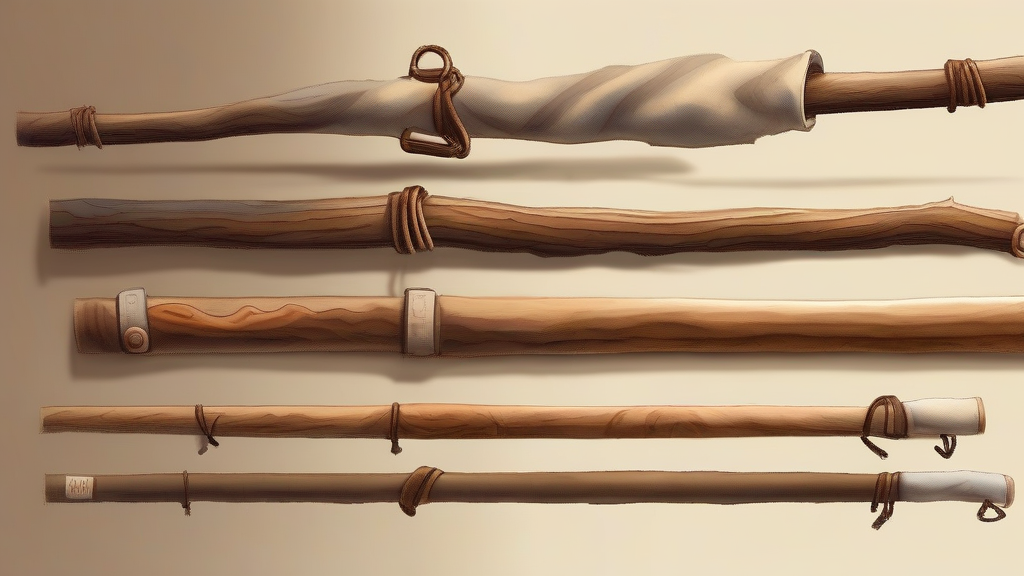
What does alpenstock mean?
An alpenstock is a long staff, traditionally of wood with an iron tip, used by walkers and climbers to steady themselves on steep, icy, or rocky mountain ground. The name comes from the German Alpenstock, meaning 'Alpine stick', reflecting its origins among guides and travellers in the Alps. Widely used through the eighteenth and nineteenth centuries — when it was standard equipment for tourists ascending peaks such as Mont Blanc — the alpenstock served chiefly for balance and probing snow, though some versions were fitted with spikes or hooks. It was gradually displaced by the more versatile ice axe in the late nineteenth century, so the word now carries a distinctly historical, literary flavour. Today it appears mostly in accounts of early mountaineering, where it stands as a symbol of the sport's humble beginnings: before technical gear, climbers trusted little more than a sturdy pole between themselves and the mountain.
nounA long iron-shod staff used by mountain climbers and walkers as a support on steep or icy alpine terrain; the traditional predecessor of the modern ice axe.
- A long, usually iron-shod wooden staff used by climbers and hikers in mountainous terrain for support and balance.
"The old guide leaned on his alpenstock as he led the party up the glacier."
"She planted her alpenstock firmly in the snow and pulled herself over the ridge."
"In Victorian times, no tourist attempting Mont Blanc would set out without an alpenstock."
Standard regular plural; used when referring to multiple staffs, e.g. in descriptions of climbing parties.
"The museum displayed a row of nineteenth-century alpenstocks behind glass."
Before the ice axe existed, every serious Alpine climber carried an alpenstock — a simple iron-shod pole that literally gave mountaineering its footing.
Reviewed by Deb Chak, Editor. AI-assisted content curated by RJS Tech Solutions LLP.
Etymology of alpenstock
The word derives from the German 'Alpenstock', literally 'Alpine stick', combining 'Alpen' (the Alps) with 'Stock' (stick or staff). It entered English in the late eighteenth century as British travellers adopted the equipment of Alpine guides during the era of early mountaineering. Its root connects it to other words drawn from the Alps, such as 'alpine' and 'alpenhorn'.
How alpenstock is actually used
The word is somewhat dated and literary today, evoking 19th-century Alpine tourism; modern climbers use trekking poles or ice axes instead. It is a countable noun.
Easily confused with alpenstock
An ice axe is a short, modern tool with a pick and adze for cutting steps and arresting falls, whereas an alpenstock is a long plain staff used mainly for balance and support.