What does alyssum mean?
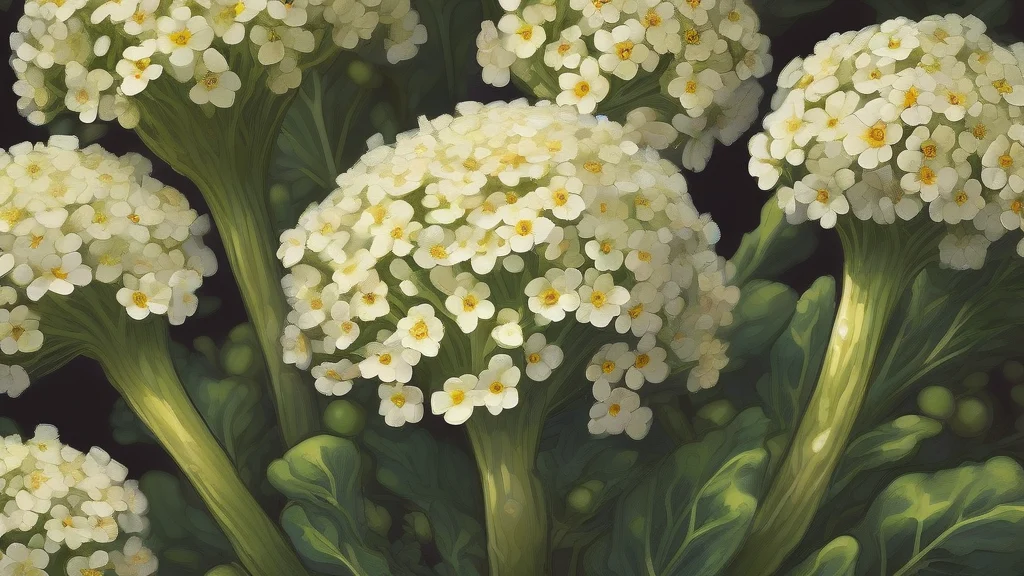
Alyssum is the common name for plants of the genus Alyssum, a group of low-growing members of the cabbage family prized in gardens for their dense clusters of tiny flowers, most often white or yellow. The best-known species is sweet alyssum, a fragrant annual that forms soft mats of bloom along borders, paths, and hanging baskets, and is valued for attracting pollinators such as bees and hoverflies. The word entered English in the sixteenth century from Latin and ultimately Greek, where it was formed from 'a-' meaning 'not' and 'lyssa' meaning 'madness' — a reference to the old belief that the plant could ward off rabies. Today alyssum carries entirely pleasant connotations of cottage gardens and gentle perfume, and the term appears almost exclusively in horticultural writing rather than everyday conversation.
nounA low-growing annual or perennial plant of the genus Alyssum in the cabbage family (Brassicaceae), bearing clusters of small, often white or yellow, fragrant flowers; especially sweet alyssum (Lobularia maritima), widely grown as a garden edging and ground-cover plant.
- Any plant of the genus Alyssum (family Brassicaceae), typically low-growing with clusters of small white or yellow flowers.
- Especially sweet alyssum (Lobularia maritima), a fragrant white-flowered annual popular in gardens as edging and ground cover.
"The borders of the vegetable bed were fringed with sweet alyssum, its honey scent drifting across the garden."
"She sowed sweet alyssum along the path so its honeyed fragrance would greet visitors all summer."
"Golden alyssum spills over rock walls in late spring, covering them in sheets of yellow."
In most horticultural writing alyssum functions as a mass noun and needs no plural form; the countable plural 'alyssums' appears when referring to individual plants or multiple species.
"The nursery stocked several alyssums, from trailing whites to upright golden varieties."
The name literally means 'against madness' — ancient Greeks believed the plant cured rabies, though it does nothing of the sort.
Reviewed by Deb Chak, Editor. AI-assisted content curated by RJS Tech Solutions LLP.
Etymology of alyssum
Alyssum came into English in the sixteenth century via Latin, borrowing the Greek name 'álysson', formed from the negative prefix 'a-' and 'lyssa', meaning madness or rabies. The Greeks gave the plant this name in the belief that it was a remedy against rabies, a folk association that survives in the word itself even though the plant has no such medicinal power. The genus sits in the mustard family, Brassicaceae, alongside cabbages and wallflowers.
How alyssum is actually used
A botanical and horticultural term used mainly by gardeners and in gardening literature; neutral register. In everyday garden contexts, 'alyssum' without qualification usually refers to sweet alyssum.
Easily confused with alyssum
An aloe is a succulent desert plant grown for its fleshy leaves and gel, whereas alyssum is a hardy flowering annual used for ground cover; they share only an initial 'al-' spelling.
A lysosome is an organelle within cells that digests waste, while alyssum is a garden plant; the resemblance is purely coincidental.