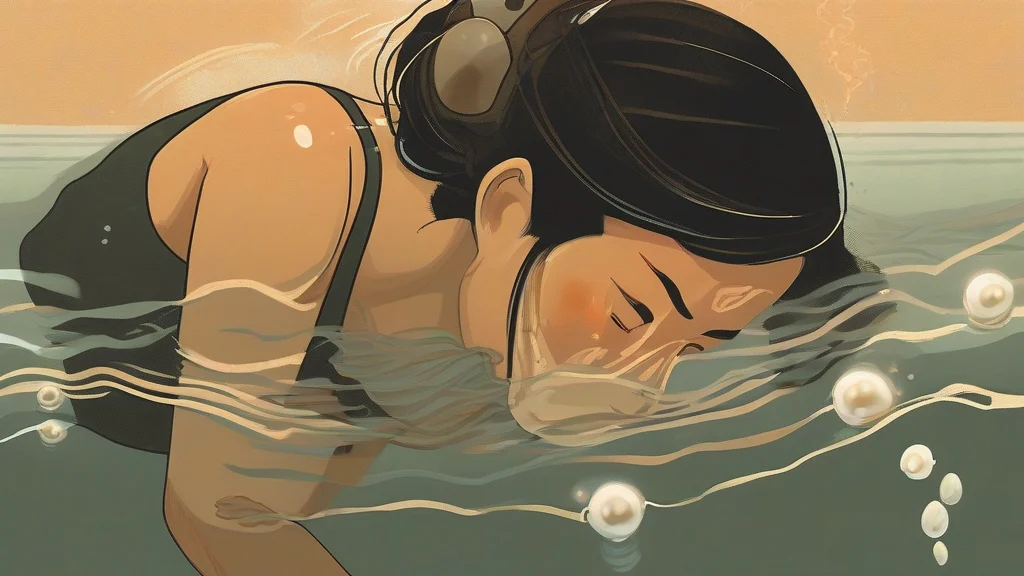
What does ama mean?
An ama is a Japanese woman who earns her living by diving for shellfish, seaweed, and historically pearls, using only a single breath of air rather than scuba equipment. The word comes directly from Japanese and refers to one of the world's oldest documented diving traditions, which may stretch back as much as two millennia. Ama divers work along the coasts of Japan, particularly in regions such as Mie Prefecture near Ise Shrine, and were famously employed in the early twentieth century to harvest oysters for Mikimoto's cultured pearl industry. The practice is physically demanding and dangerous, requiring exceptional breath control and tolerance of cold water, and the number of working ama has declined sharply in recent decades as the trade has aged and younger women have chosen other careers. In English usage, the term appears mainly in travel writing, anthropology, and journalism about this vanishing profession, and it should not be confused with amah, a word for a household servant or nursemaid in parts of Asia.
nounA Japanese woman who dives for shellfish, pearls, and seaweed without breathing apparatus, traditionally holding her breath for long periods underwater.
- A Japanese woman who free-dives for shellfish, pearls, and seaweed.
"The elderly ama surfaced with a basket of abalone gathered from the rocky seabed below."
"The last working ama of the village still dove each morning despite being nearly seventy."
"Mikimoto's pearl empire was built largely on the labor of the ama who harvested the oysters."
As a borrowed noun, ama takes a regular English plural formed by adding -s.
"The museum exhibit honored the amas whose harvests sustained coastal villages for generations."
Japan's ama divers have been plunging into the sea on single breaths for possibly two thousand years — some still dive into their seventies and eighties.
Reviewed by Deb Chak, Editor. AI-assisted content curated by RJS Tech Solutions LLP.
Etymology of ama
The word ama is a direct borrowing from Japanese, where it denotes a female diver of the traditional breath-hold diving profession. The Japanese term itself is ancient, associated with a coastal way of life attested in Japanese sources going back many centuries, though the precise date of its adoption into English is not firmly established. As a loanword it has no Latin or Greek cognates, and its relatives are other borrowings from Japanese rather than words sharing a European root.
How ama is actually used
The word is a direct borrowing from Japanese and is used almost exclusively in the context of Japan's traditional diving culture. It is typically treated as an English noun with no plural change (amas), though it remains rare outside discussions of Japanese maritime tradition, anthropology, or tourism writing.
Easily confused with ama
An amah is a nursemaid or domestic servant in parts of Asia, whereas an ama is a Japanese female breath-hold diver.