What does amberjack mean?
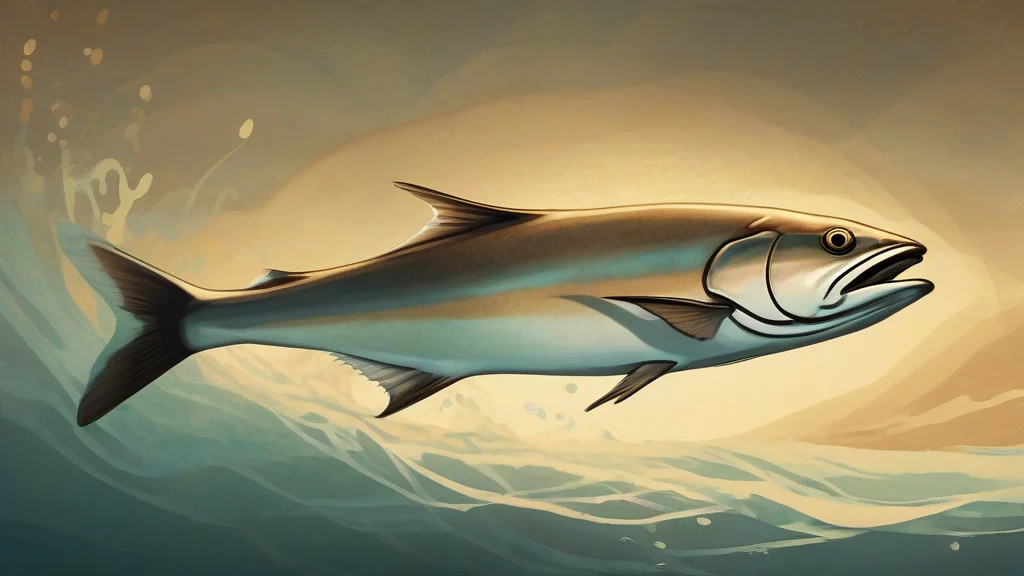
Amberjack is a noun referring to any of several large, powerful predatory fish belonging to the genus Seriola within the jack family, Carangidae. The best-known species is the greater amberjack (Seriola dumerili), a streamlined, olive-to-bluish fish with an amber stripe along its body that roams warm waters of the Atlantic, Pacific, and Indian Oceans, often near reefs, wrecks, and offshore structures. Amberjacks are highly regarded by sport anglers for their strength and stamina—so much so that the greater amberjack has earned the affectionate nickname "reef donkey." They are also commercially harvested and appear on restaurant menus, where their firm, clean-tasting flesh lends itself to grilling and searing. Smaller relatives include the lesser amberjack and the Almaco jack, which are sometimes grouped under the same name. For anyone interested in offshore fishing or seafood, "amberjack" is the standard English term uniting this family of impressive ocean gamefish.
nounAny of several large, fast-swimming marine fish of the genus Seriola (family Carangidae), prized as gamefish and valued as food.
- Any of various large marine gamefish of the genus Seriola, especially the greater amberjack (Seriola dumerili), found in warm seas worldwide and popular among sport anglers and as food.
"Off the wrecks of the Outer Banks, anglers battle amberjack that can top fifty pounds."
"Charter captains off Louisiana consider autumn the prime season for giant amberjack."
"The chef seared thick cuts of amberjack and served them with a citrus-soy glaze."
Standard regular plural; used when referring to multiple fish or multiple species collectively.
"Schools of young amberjacks gather around offshore oil platforms."
The greater amberjack is nicknamed the "reef donkey" by anglers for its stubborn, muscle-bound fight once hooked.
Reviewed by Deb Chak, Editor. AI-assisted content curated by RJS Tech Solutions LLP.
Etymology of amberjack
The name combines "amber" and "jack": "amber" derives from Middle English, borrowed via Old French from Arabic ʿanbar, ultimately alluding to the fish's amber-colored stripe, while "jack" is the long-standing English name for fish of the family Carangidae. The compound likely arose among English-speaking fishermen in the Atlantic world, probably in the eighteenth or nineteenth century. It shares the "amber" element with ambergris, which comes from the same Arabic root.
How amberjack is actually used
The word is used chiefly by anglers, fishermen, and in seafood contexts; it is a common noun covering several closely related species, so speakers often specify "greater," "lesser," or "Almaco" amberjack. In some regions, notably Japan, related Seriola fish are known by entirely different names (e.g., buri/hamachi), so "amberjack" is primarily an English-language term.
Easily confused with amberjack
"Jack" refers broadly to many carangid fish or to the playing card and other senses, while "amberjack" specifically denotes large gamefish of the genus Seriola.
"Yellowtail" often names Seriola species such as the California yellowtail, whereas "amberjack" typically refers to other Seriola fish like the greater amberjack; both are jacks but not interchangeable in regional usage.