What does ambuscading mean?
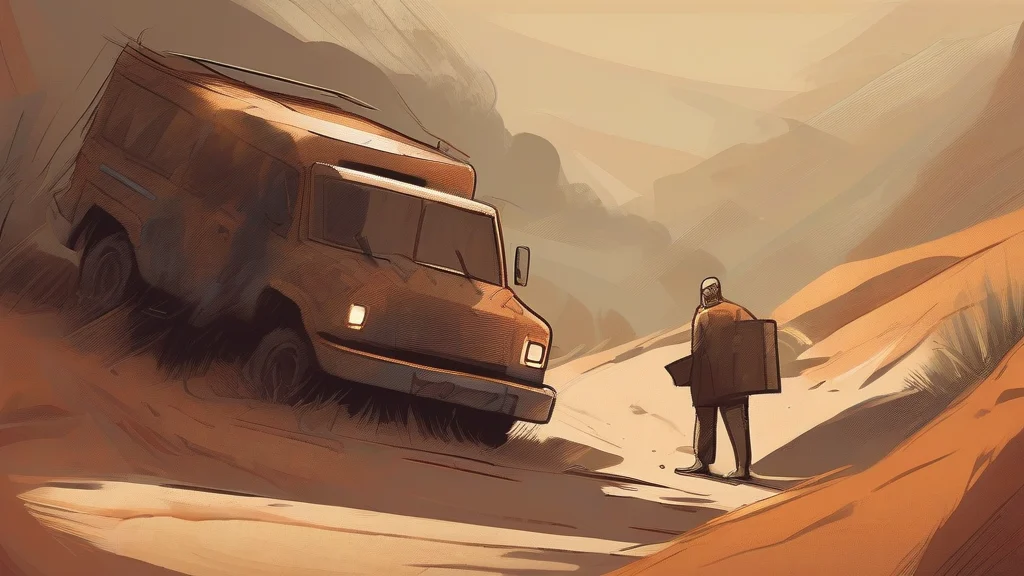
Ambuscading is the present participle and gerund of the verb 'ambuscade', meaning to lie hidden so as to launch a surprise attack — in short, to set an ambush. A military unit might be described as ambuscading a road, pass, or convoy, concealing its position until the target comes within striking distance. By extension, the word can be used figuratively: a journalist may be accused of ambuscading an interviewee with unanswerable questions, or a lawyer of ambuscading a witness with unexpected evidence. The term derives from the French embusquer, ultimately rooted in the idea of hiding 'in the bush', and entered English in the sixteenth century alongside the related noun 'ambuscade'. Although it survives mainly in historical fiction, military writing, and elevated prose, it remains fully understood and lends a slightly archaic, dramatic flavor that plainer synonyms like 'ambushing' lack.
Lying in wait in a concealed position in order to attack by surprise; setting an ambush.
"Guerrillas were ambuscading the supply route long before dawn broke."
Chiefly literary or historical register; 'ambushing' is the ordinary modern choice.
The action or practice of attacking from concealment; an act of ambushing.
"The chronicle describes months of ambuscading along the forest roads."
Rare as a noun; usually found in historical narrative.
Before soldiers said they were 'ambushing', English speakers for centuries preferred 'ambuscading' — a word that literally means hiding in the bushes.
Reviewed by Deb Chak, Editor. AI-assisted content curated by RJS Tech Solutions LLP.
Etymology of ambuscading
Ambuscading descends from the verb 'ambuscade', borrowed in the sixteenth century from French embusquade (or directly from Italian imboscata), built on the root meaning 'to hide in the bushes' — from the same Germanic source that gave English 'bush'. The word spread through European military vocabulary during the era of pike-and-shot warfare, when irregular troops specialized in concealed attacks. Its cousin 'ambush' came through Old French from the same ultimate source and eventually displaced it in everyday use, leaving 'ambuscade' and 'ambuscading' as literary alternatives.
Related word forms
How ambuscading is actually used
Ambuscading belongs chiefly to literary, historical, or military prose; in ordinary modern speech 'ambush' and 'ambushing' are strongly preferred. The verb is typically used transitively ('they ambuscaded the patrol') but also appears intransitively with a preposition ('men ambuscading along the road').
Easily confused with ambuscading
Ambushing is the everyday word for a surprise attack from concealment, while ambuscading is a rarer, more literary synonym carrying much the same meaning.