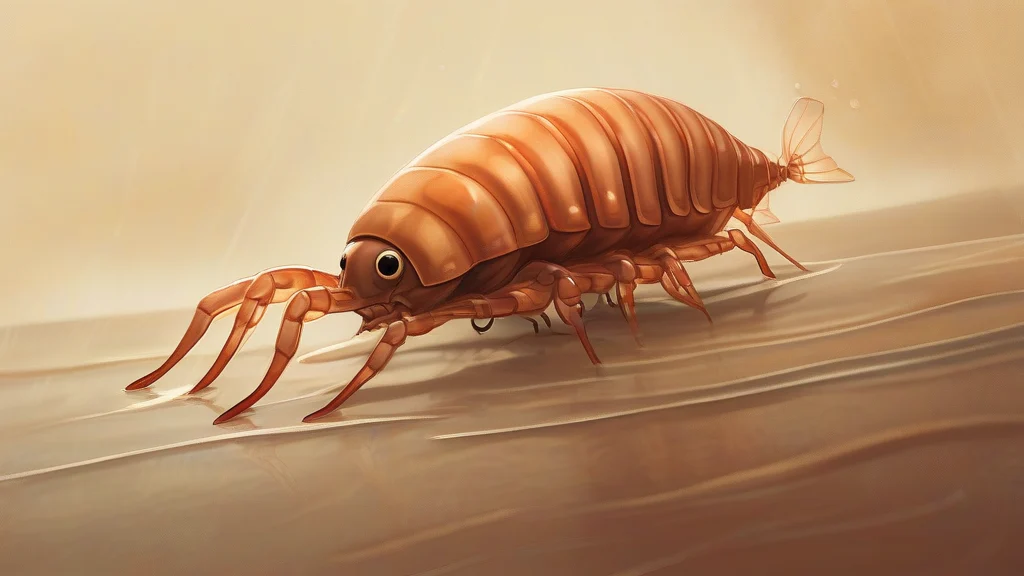
What does amphipod mean?
An amphipod is a small crustacean belonging to the order Amphipoda, a diverse group of more than ten thousand described species that live in oceans, freshwaters, and even damp land environments. Unlike many familiar crustaceans, amphipods have no carapace; their bodies are flattened from side to side and divided into distinct segments bearing legs specialised for swimming, crawling, burrowing, or jumping. The best-known examples are the sandhoppers, or beach fleas, that leap away when disturbed on a shoreline, and the freshwater scuds prized as fish food by anglers. Because many species are abundant and sensitive to pollution, ecologists frequently use amphipods as bioindicators of environmental health. The term is chiefly encountered in scientific literature, field guides, and nature writing, where it serves as precise shorthand for this widespread and ecologically important group of animals.
nounAn amphipod is a small, mostly aquatic crustacean of the order Amphipoda, having a laterally compressed body with no carapace and legs adapted for walking, swimming, or burrowing. Familiar examples include sandhoppers (beach fleas) and freshwater scuds.
- A crustacean of the order Amphipoda: a small, laterally compressed, shrimplike animal found in marine, freshwater, and occasionally terrestrial habitats.
"The researcher waded into the shallows to collect amphipods from beneath the submerged stones."
"Sandhoppers — a familiar type of amphipod — scatter across the beach when you lift a piece of driftwood."
"Ecologists monitor amphipod populations in streams because these crustaceans are sensitive indicators of water quality."
The standard English plural simply adds -s. In scientific writing, 'amphipods' may also refer collectively to the group as a whole.
"Thousands of amphipods swarmed around the baited trap on the seafloor."
Some deep-sea amphipods grow over 30 centimetres long — a giant compared to their sandhopper cousins — yet all of them lack the protective shell that most other crustaceans carry.
Reviewed by Deb Chak, Editor. AI-assisted content curated by RJS Tech Solutions LLP.
Etymology of amphipod
The word amphipod derives from Greek roots: 'amphi-', meaning 'on both sides' or 'around', combined with 'pous' (podos), meaning 'foot'. The name refers to the arrangement of the animals' limbs, which differ between the front and rear of the body. The term entered scientific usage in the early nineteenth century when French naturalists such as Pierre André Latreille formalised the classification of crustacean orders, and it has since remained the standard name for members of the order Amphipoda.
How amphipod is actually used
Amphipod is primarily a scientific and naturalist term, used in biology, ecology, and field guides rather than everyday conversation. It is pronounced with stress on the first syllable. The word is always singular in form; 'amphipods' is used for the plural.
Easily confused with amphipod
Isopods are dorsoventrally flattened crustaceans (like woodlice and pill bugs), whereas amphipods are typically flattened side-to-side.
Copepods are tiny planktonic crustaceans with a single eye and teardrop-shaped body, while amphipods are larger, shrimplike bottom-dwellers.