What does amp mean?
Amp is a compact English word with two principal meanings rooted in electricity. Most formally, it abbreviates the ampere, the SI base unit of electric current — named for the French physicist André-Marie Ampère — and appears constantly in engineering contexts such as wiring specifications, fuse ratings, and battery capacities. More casually, especially among musicians, an amp is an amplifier, the box of electronics that boosts a guitar or microphone signal into audible power; 'guitar amp' is a fixture of popular music culture. The word also fuels the lively informal verb phrase 'amp up', meaning to intensify, energize, or excite something, from a crowd before a concert to a marketing campaign. Short, punchy, and instantly recognizable, amp bridges precise scientific vocabulary and everyday slang, making it one of those rare terms equally at home on an electrical schematic and a concert stage.
The ampere: the SI base unit of electric current.
"The charger delivers up to two amps of current."
Standard technical usage.
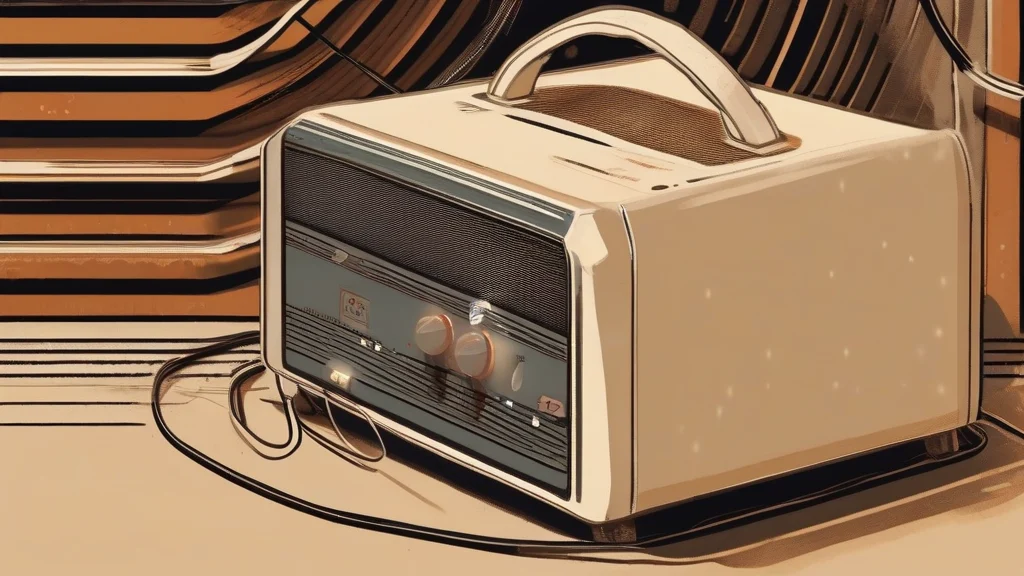
An amplifier, especially one used with electric guitars or audio equipment.
"He plugged his Stratocaster into the amp and struck a chord."
Informal register, common among musicians.
To increase the intensity, energy, or excitement of something (usually 'amp up').
"The DJ amped up the crowd with a thumping bassline."
Colloquial, chiefly American.
Used both for multiple units of current and for multiple amplifier devices.
"The main breaker is rated for 100 amps."
The word 'amp' honors André-Marie Ampère, the French physicist whose pioneering work on electromagnetism in the 1820s gave electricity its most fundamental unit of flow.
Reviewed by Deb Chak, Editor. AI-assisted content curated by RJS Tech Solutions LLP.
Etymology of amp
The noun 'amp' derives from the ampere, the unit of electric current adopted in honor of André-Marie Ampère (1775–1836), the French physicist and mathematician who laid the foundations of electrodynamics in the early nineteenth century. As electrical engineering matured in the late nineteenth and early twentieth centuries, 'amp' emerged as a convenient spoken and written shorthand for the full unit name. Independently, mid-twentieth-century musicians began calling their amplifiers simply 'amps', a colloquial clipping that spread through popular music culture. Related coinages include the ampere-hour, a unit of electric charge, and the ammeter, an instrument for measuring current.
How amp is actually used
As a noun, 'amp' is informal when referring to an amplifier but standard technical usage when denoting amperes. The verb sense 'amp up' is distinctly colloquial and common in American English.
Easily confused with amp
An ampersand is the '&' symbol meaning 'and', whereas an amp is a unit of electric current or an amplifier — they share only a similar-sounding name.