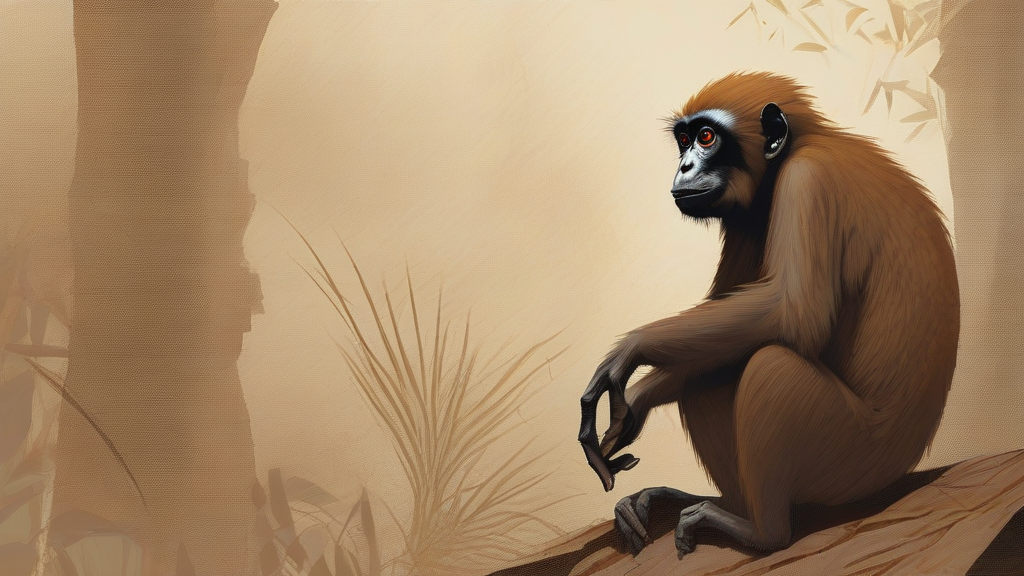
What does angwantibo mean?
The angwantibo is a small, nocturnal primate belonging to the genus Arctocebus within the family Lorisidae, which also includes the pottos and lorises. Two species are recognised: the golden angwantibo (Arctocebos calabarensis) of Nigeria and Cameroon, and the closely related golden-bellied angwantibo (Arctocebus aureus) found further east in Central Africa. Roughly the size of a squirrel, the angwantibo has thick, woolly yellowish to reddish-brown fur, large forward-facing eyes suited to night vision, a pointed snout, and no visible tail. It lives high in the rainforest canopy of equatorial Africa, moving with extreme slowness — a strategy that helps it avoid detection by predators such as eagles and snakes. Its diet consists chiefly of insects, especially hairy caterpillars that other animals refuse to eat, along with some fruit and gum. Like other lorisids, the angwantibo possesses a specialised grooming claw on each foot. The term derives from an indigenous West African language via early European naturalists' accounts, and the animal remains little known even within its native range, making the word largely confined to scientific contexts.
nounA small, nocturnal, tree-dwelling primate of the genus Arctocebus, native to the rainforests of West and Central Africa, having woolly yellowish-brown fur, a rudimentary tail, and slow, deliberate movements.
- Either of two species of small, slow-moving, nocturnal African primates in the genus Arctocebus (family Lorisidae), namely the golden angwantibo (Arctocebus calabarensis) and the golden-bellied angwantibo (Arctocebus aureus), characterized by dense woolly fur, vestigial or absent tails, and arboreal habits.
"The angwantibo moves so slowly through the forest canopy that predators often fail to notice it at all."
"Field researchers spent weeks tracking the elusive angwantibo before spotting one curled among the lianas."
"Because it forages almost exclusively on caterpillars, the angwantibo occupies a dietary niche few other rainforest mammals share."
"Conservationists worry that logging in Cameroon is fragmenting habitat for the golden angwantibo."
Standard plural; the word is countable when referring to individual animals.
"Camera traps have recorded several angwantibos in the same stretch of forest."
The angwantibo is one of the only mammals whose bite can be venomous — it carries toxins from its diet in glands near its elbows and delivers them through its teeth.
Reviewed by Deb Chak, Editor. AI-assisted content curated by RJS Tech Solutions LLP.
Etymology of angwantibo
The word 'angwantibo' entered English through European zoological literature in the nineteenth century, when naturalists began cataloguing the unfamiliar fauna of tropical West and Central Africa. It is generally traced to a source in an indigenous language of southern Nigeria, likely Efik or a related Cross River tongue, from the region around Calabar where the type specimen was collected. The name was adopted alongside the older alternative 'golden potto,' reflecting the animal's resemblance to its cousin Perodicticus. As a loanword from an African language rather than a classical root, it shares no etymological lineage with Latin- or Greek-derived zoological terms, though its scientific genus name Arctocebus does draw on Greek elements.
How angwantibo is actually used
A technical term used mainly in zoology, primatology, and wildlife conservation writing. It rarely appears outside scientific literature or nature documentaries. Both species in the genus Arctocebus are referred to by this name; 'golden potto' is an older alternative common name still encountered in some sources.
Easily confused with angwantibo
The potto (Perodicticus potto) is a larger, more common African lorisid with a more prominent tail, whereas the angwantibo is smaller, tailless or nearly so, and belongs to a separate genus.
A loris refers to primates of South and Southeast Asia (genera Loris and Nycticebus), while the angwantibo is an African relative found in Central and West Africa.