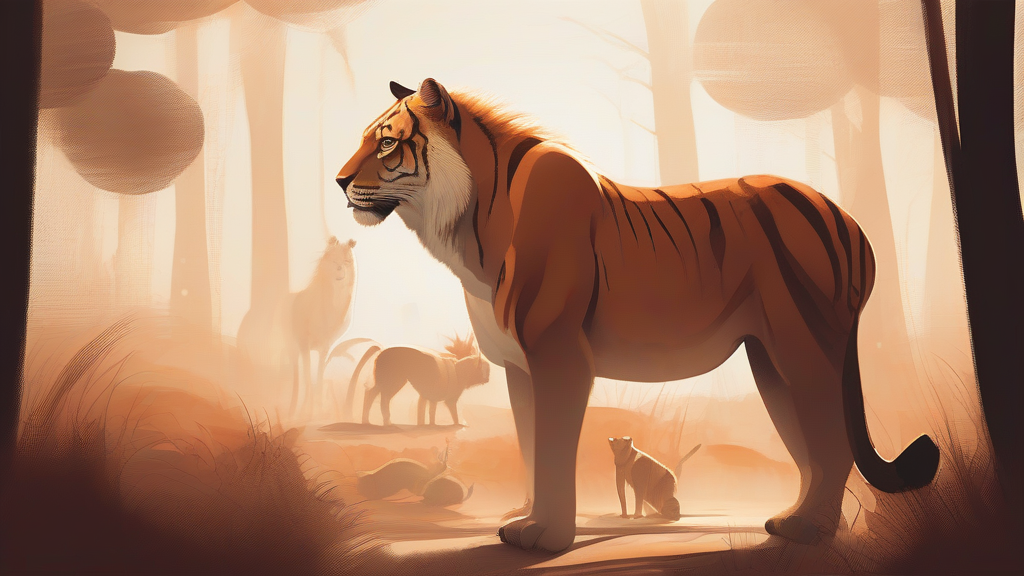
What does animalize mean?
To animalize is to strip a person — or, occasionally, a depiction or description — of distinctively human qualities and reduce them to something merely animal. The verb is most often encountered in moral, political, and literary criticism, where writers invoke it to condemn regimes, institutions, or practices that deny people dignity, education, or humane treatment, effectively treating them as beasts. It also appears in aesthetic contexts, describing art or characterization that emphasizes instinct, appetite, and physicality over intellect and refinement. Animalize carries unambiguously negative connotations: it implies degradation, and it is closely allied to terms such as dehumanize and brutalize, though it specifically foregrounds the loss of humanity through reduction to animality. Its opposite is humanize — the act of cultivating or restoring humane qualities. Formed from the Latin root anima (breath, soul), which also gives us animal and animate, the word belongs to a family of terms concerned with what separates humans from other creatures, making it a pointed and useful term in ethical and cultural argument.
verbTo reduce a person to the condition or nature of an animal, especially by depriving them of reason, dignity, or humane treatment; more broadly, to render something animal-like in character.
- To reduce a human being to an animal-like condition, depriving them of reason, dignity, or moral agency.
- To give something or someone the characteristics of an animal, as in art, description, or behavior.
"The novel depicts how slavery animalizes both the enslaved and their enslavers."
"Critics argued that the prison regime deliberately animalized its inmates."
"The painter's raw, instinctive brushwork seemed to animalize his figures, all muscle and appetite."
"Animalize" names one of literature's darkest accusations — that cruelty doesn't just harm its victims, it strips them of their humanity itself.
Reviewed by Deb Chak, Editor. AI-assisted content curated by RJS Tech Solutions LLP.
Etymology of animalize
Animalize derives from Latin "anima," meaning breath or soul, the same root that produced "animal" (a living, breathing being) and "animate" (to give life). English formed the verb by attaching the suffix -ize to this root, following a productive pattern for creating verbs from Greek- and Latin-derived stems. The word emerged in English usage around the late eighteenth century, appearing in philosophical and literary writing about human nature and moral degradation. Its cognates include "animal," "animate," "animation," and "inanimate," all tracing back to the Roman concept of the animating breath that distinguishes living beings.
Related word forms
How animalize is actually used
The word is largely literary and critical rather than everyday; it carries strongly negative connotations and is often used in discussions of oppression, cruelty, and dehumanization.
Easily confused with animalize
"Animate" means to bring to life or give liveliness, while "animalize" means to reduce someone or something to a mere animal state.