What does antennae mean?
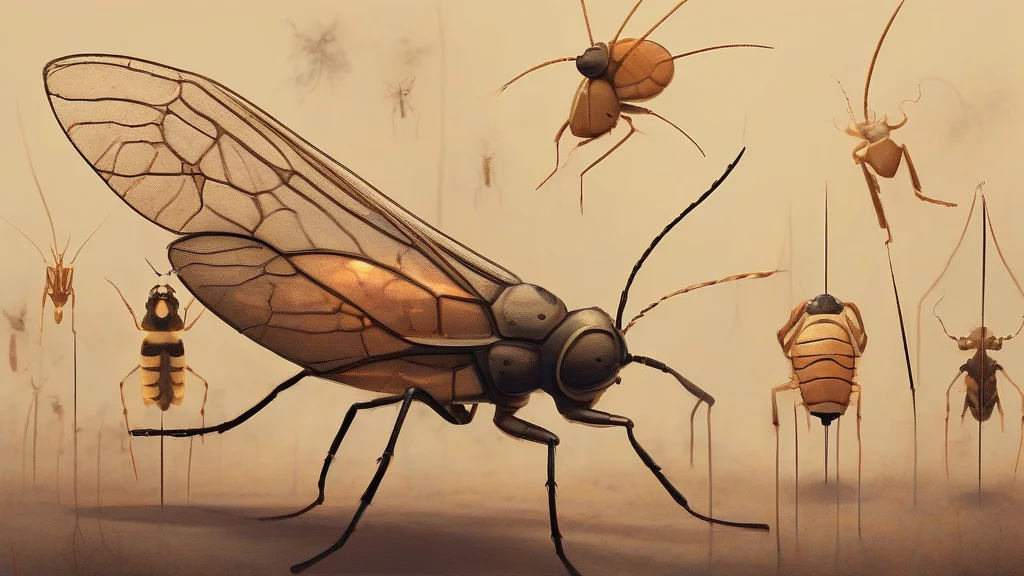
Antennae are the paired, usually jointed sensory structures that project from the heads of insects, crustaceans, and many other arthropods. Far more than simple feelers, they carry receptors that allow an animal to smell chemicals, sense touch and vibration, gauge humidity, and even navigate by wind direction — functions essential to finding food, mates, and safe passage. The word is the standard plural of 'antenna', derived from the Latin term for a ship's yardarm, the spar on which a sail was set; naturalists borrowed it in the seventeenth century when naming these appendages. In scientific and zoological contexts, 'antennae' remains the strongly preferred plural, while everyday speech often uses the anglicized 'antennas'. Because they are so distinctive and visible — think of a butterfly's club-tipped antennae or a moth's feathered ones — the word also serves as a useful marker of careful biological observation.
noun (plural)The paired, jointed sensory appendages on the heads of insects, crustaceans, and other arthropods, used for feeling, smelling, and sensing the environment. 'Antennae' is the standard plural form of the noun 'antenna'.
- The paired sensory appendages on the heads of insects and other arthropods, used for touch, smell, and detecting vibrations.
"A butterfly's antennae twitched as it sampled the nectar of the milkweed."
"The cockroach swept its long antennae through the darkness, reading every current of air in the room."
"Under the microscope, the beetle's delicate, segmented antennae were clearly visible."
"Crayfish use their antennae both to probe their surroundings and to detect chemicals in the water."
'Antennae' itself is already a plural form — specifically the traditional Latinate plural of the noun 'antenna'. It refers to multiple sensory organs, typically one pair per animal. The anglicized plural 'antennas' is increasingly accepted, especially in American English, though scientific usage favors 'antennae'.
"Each honeybee carries one pair of antennae on its head."
Insects smell with their antennae — a male silkworm moth can detect a single molecule of female pheromone from miles away using his.
Reviewed by Deb Chak, Editor. AI-assisted content curated by RJS Tech Solutions LLP.
Etymology of antennae
'Antennae' is the plural of 'antenna', taken directly from Latin, where the word originally meant the yardarm — the horizontal spar on a sailing vessel from which a sail was suspended. Naturalists adopted the term in the seventeenth century to describe the horn-like sensory appendages of insects, which resembled those spars. The same Latin word later gave rise to the modern sense of 'antenna' as a radio aerial in the late nineteenth century, after Hertz's experiments. Cognates appear across Romance languages, such as Italian and Spanish 'antenna', all tracing back to the same Latin source.
Related word forms
How antennae is actually used
'Antennae' is the classical Latinate plural and remains the standard form in entomology and zoology. In general American usage, 'antennas' has largely displaced it for everyday reference to insects, but scientific writing still strongly prefers 'antennae'. The word is formal-to-neutral in register and carries no strong connotation beyond its technical association with biology.
Easily confused with antennae
'Antennae' is the traditional Latin-style plural referring to insect or crustacean feelers, while 'antennas' is the preferred English plural for radio and TV receiving aerials.