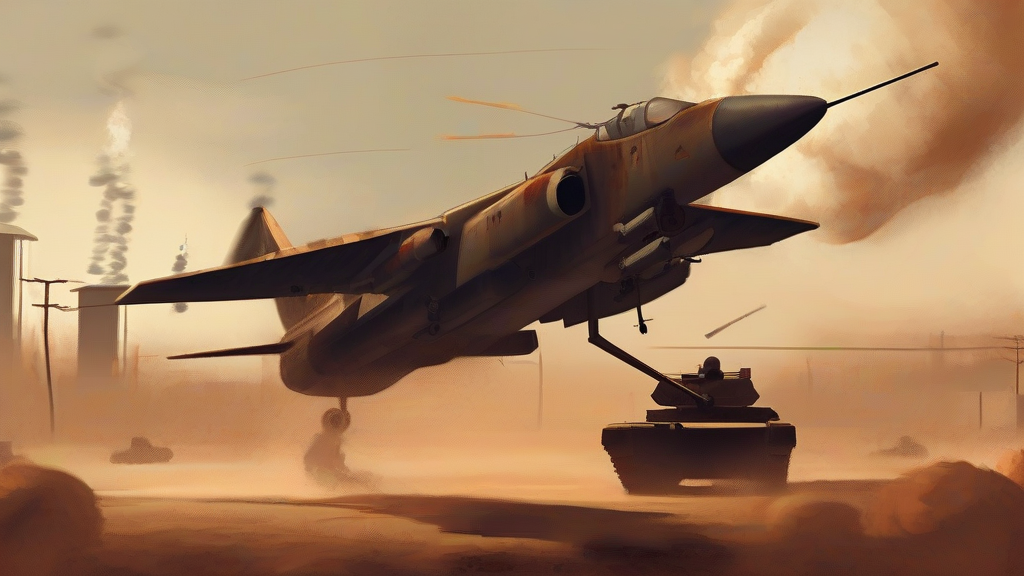
What does antiair mean?
"Antiair" is an adjective describing anything designed to defend against or destroy hostile aircraft. It appears almost exclusively in military and technical language, where it labels weapons systems, missiles, artillery, and defensive measures aimed at threats from the sky — as in "antiair defense" or "antiair fire." The word combines the Greek-derived prefix "anti-" (meaning "against") with "air," making its meaning transparent at a glance. In practice, it functions as a compact modern alternative to the older and more familiar "antiaircraft," which specifically refers to defenses against airplanes; "antiair" has broadened somewhat to cover missiles and other systems that target any airborne threat. Because of this specialized register, general readers encounter it mainly in news reporting on armed conflict or defense technology. Its connotations are entirely functional and technical rather than emotional, but it carries the gravity inherent to warfare vocabulary. For writers, it offers precision and brevity when discussing modern air-defense strategy.
adjectiveDesigned for or directed against enemy aircraft; serving to defend against attack from the air.
- Relating to measures, weapons, or systems designed to defend against or destroy enemy aircraft.
"The warship was equipped with state-of-the-art antiair defenses."
"The battalion deployed its antiair batteries along the coastline."
"Modern fighter pilots must train extensively to evade sophisticated antiair missile systems."
In modern military slang, "antiair" covers everything from radar-guided guns to the shoulder-fired missiles that changed the course of countless conflicts.
Reviewed by Deb Chak, Editor. AI-assisted content curated by RJS Tech Solutions LLP.
Etymology of antiair
The word "antiair" is formed from the combining prefix "anti-", borrowed from Greek "anti" meaning "against," joined to "air," which entered English via Latin "aer" and ultimately Greek "aēr." The compound emerged in twentieth-century military terminology alongside related formations such as "antiaircraft," as aerial warfare became a dominant feature of modern combat. Its cognates include other English words built on the same Greek prefix, such as "antidote" and "antithesis," as well as "aerial" and "aerate," which share the Greek root for air.
How antiair is actually used
Primarily used in military and technical contexts; in everyday speech, "antiaircraft" is the more common and widely recognized term. Often written without a hyphen in American usage, though British style may prefer the hyphenated form.
Easily confused with antiair
"Anti-aircraft" is the fuller, more established term for weapons or defenses against planes, while "antiair" is a shorter modern variant often used in military jargon for broader air-defense systems including missiles.