What does anting mean?
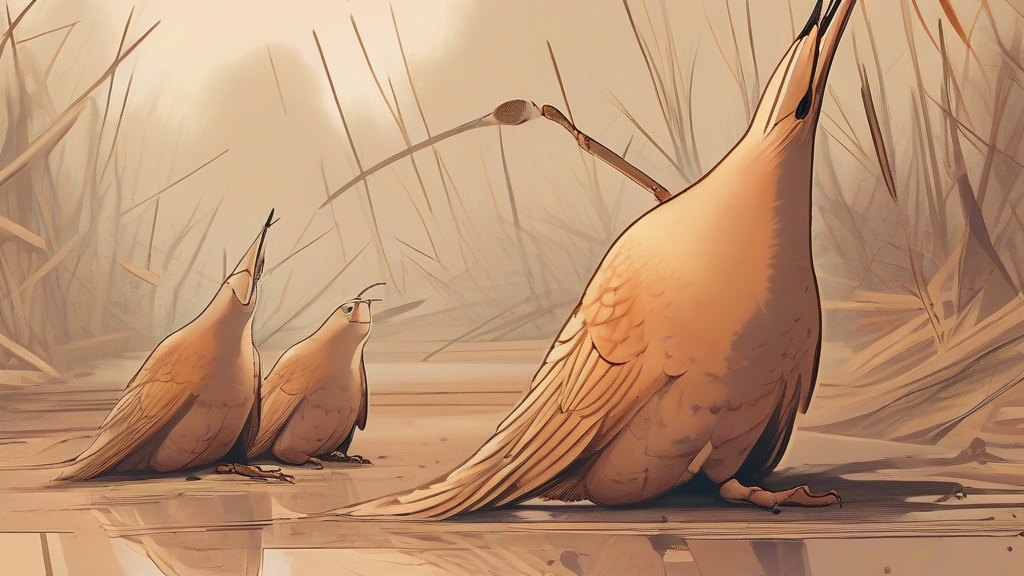
Anting is a curious grooming behaviour observed in many species of songbirds, in which the bird uses ants to treat its own feathers. In active anting, the bird picks up individual ants — often ones that spray formic acid — and rubs them into its plumage; in passive anting, it crouches or spreads its wings over an anthill and allows the insects to swarm through its feathers. Ornithologists believe the practice may help rid the bird of feather parasites such as mites and lice, though some suggest the formic acid may also act as a soothing agent or supplement during moulting. The term belongs chiefly to ornithology and birdwatching writing rather than everyday speech, but it has become well known through nature documentaries and field guides. Anting remains one of the more puzzling and debated behaviours in avian biology, making it a favourite example of animal self-medication.
nounA self-anointing behaviour in which birds pick up ants and rub them over their feathers, or allow ants to crawl through their plumage, thought to help control parasites or soothe irritated skin.
- The behaviour of birds rubbing ants or other pungent substances on their feathers, believed to repel or kill parasites.
"The starling was observed anting, pressing live ants into its wing feathers before shaking them off."
"Birdwatchers watched the jay engage in anting, picking up ants one by one and wiping them along its feathers."
"In passive anting, the bird simply spreads its wings over an anthill and lets the ants swarm through its plumage."
Some birds deliberately let stinging ants crawl all over their bodies — and scientists still aren't entirely sure why.
Reviewed by Deb Chak, Editor. AI-assisted content curated by RJS Tech Solutions LLP.
Etymology of anting
The word anting derives straightforwardly from the noun 'ant', combined with the English suffix '-ing', and arose within English-language ornithology to name this distinctive behaviour. Its use became established in twentieth-century scientific and popular bird literature as observations of the behaviour accumulated. Related words sharing the root include 'formicary', from Latin 'formica' meaning ant, which denotes an ant nest.
How anting is actually used
Anting is a technical term used mainly in ornithology and birdwatching literature. It is divided into 'active' anting, where the bird picks up ants and applies them itself, and 'passive' anting, where it sits on or near an anthill. The exact function of the behaviour remains debated among researchers.
Easily confused with anting
Anting-anting is a Filipino word for a magical amulet or talisman, whereas anting refers to the bird behaviour of rubbing ants on the plumage.