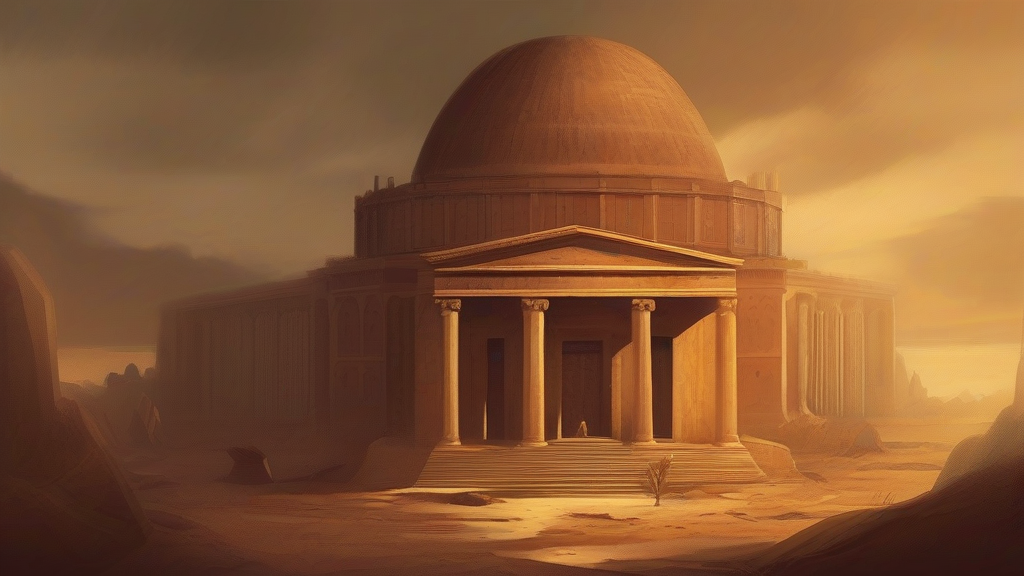
What does antiquity mean?
Antiquity is a noun referring to the distant past, and above all to the era of ancient Greece and Rome before the Middle Ages — what scholars call 'classical antiquity.' It can also denote great age itself, as when something is described as having an air of antiquity, and in its plural form, antiquities, it names the surviving objects, artworks, and relics of those ancient worlds. The word carries a scholarly, somewhat formal tone and appears most often in historical, archaeological, and cultural writing. Its connotations are largely reverent: antiquity suggests depth of time, endurance, and the authority of origins. Related terms such as antique (an old collectible) overlap but differ — an antique is a thing, whereas antiquity is more often an era or a quality of age. For anyone reading history or visiting museums, antiquity is an essential term for framing humanity's oldest recorded civilizations.
The distant past, especially the period of ancient Greece and Rome before the Middle Ages.
"The philosophers of antiquity still shape how we think about ethics today."
Often modified as 'classical antiquity' or 'late antiquity' in scholarly contexts.
Great age; the quality of belonging to the very distant past.
"The castle's air of antiquity drew visitors from around the world."
(usually plural, antiquities) An object, artwork, or relic surviving from ancient times.
"The looted antiquities were returned to their country of origin."
The plural 'antiquities' almost always refers to individual artifacts or relics from ancient times, not to multiple eras.
"The exhibition displayed Egyptian antiquities spanning three millennia."
When historians say 'antiquity,' they usually mean the roughly thousand-year stretch when Greek and Roman civilization dominated the Mediterranean — a word so old it's been describing old things for centuries.
Reviewed by Deb Chak, Editor. AI-assisted content curated by RJS Tech Solutions LLP.
Etymology of antiquity
Antiquity derives from the Latin noun antiquitas, meaning 'ancient times' or 'olden condition,' which itself comes from the adjective antiquus ('old, former'), built on the Latin prefix ante- ('before'). The word entered English via French in the late medieval or early modern period and has long served as the standard term for the Greco-Roman past. It shares its root with words such as ancient, antique, and antic, all ultimately tracing back to the same Latin source.
How antiquity is actually used
Mostly formal or scholarly in register. The plural 'antiquities' typically refers to physical artifacts rather than to eras. 'Classical antiquity' and 'late antiquity' are established technical terms in history and archaeology.
Easily confused with antiquity
An antique is a specific old collectible object, while antiquity refers broadly to the distant historical era itself (or to objects of great age generally).