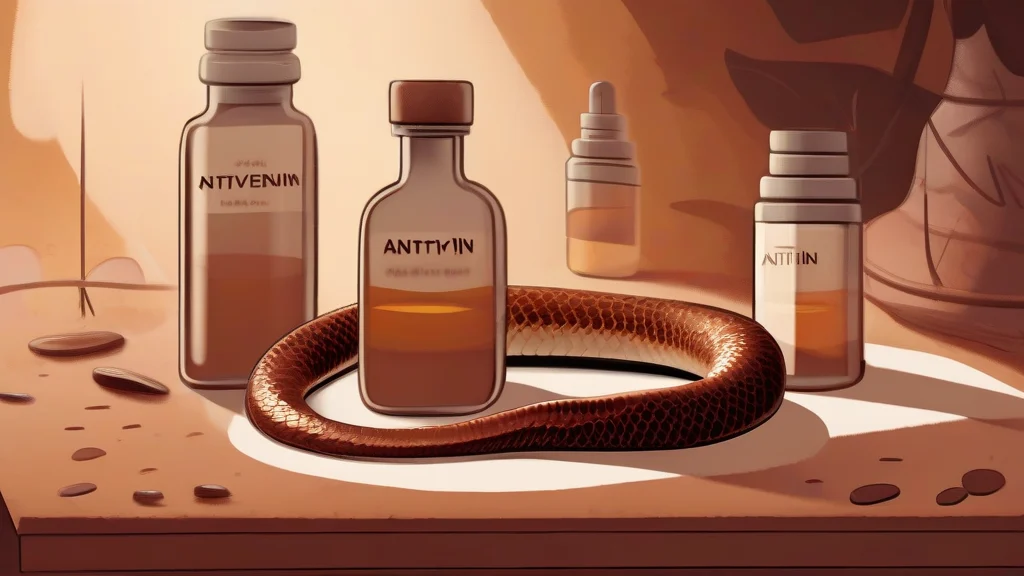
What does antivenin mean?
Antivenin is a biological preparation used to treat victims of venomous bites and stings, most commonly from snakes but also from spiders, scorpions, and other creatures. It consists of antibodies purified from the blood of an animal — traditionally a horse or sheep — that has been immunized with gradually increasing doses of venom. When injected into a patient, these antibodies neutralize the toxins circulating in the body, dramatically improving the chances of recovery if administered promptly. The word comes from French and coexists with the near-identical term "antivenom," which many modern medical authorities now favor. Antivenin appears chiefly in medical, clinical, and news reporting about snakebite treatment, often paired with words like "dose," "administer," and "polyvalent." Because production is laborious and expensive, antivenin remains scarce in parts of the world where venomous bites are most common, making it both a vital medicine and a subject of ongoing global health concern.
nounAn antivenin is a serum containing antibodies used to treat poisoning by snake, spider, or scorpion venom. It is produced by injecting an animal with small doses of venom and harvesting the antibodies from its blood.
- A serum containing antibodies against venom, used to treat envenomation by snakes, spiders, scorpions, or other venomous animals.
"The hiker was rushed to hospital, where doctors administered antivenin to counteract the rattlesnake's venom."
"After the bite of the black mamba, antivenin had to be given within hours to save the patient's life."
"The clinic stocked polyvalent antivenin effective against several species of pit viper."
The plural "antivenins" is used when referring to different types of serum, but the word is frequently uncountable when describing the substance in general.
"Researchers are developing new antivenins to treat scorpion stings more effectively."
Antivenin is made by deliberately envenoming horses or sheep — their blood becomes a life-saving antidote for snakebite victims around the world.
Reviewed by Deb Chak, Editor. AI-assisted content curated by RJS Tech Solutions LLP.
Etymology of antivenin
Antivenin derives from the French "sérum antivenimeux," combining the prefix "anti-" (against) with "venin," the French word for venom, which itself traces back through Old French "venim" to Latin "venenum" meaning poison or potion. The term entered English medical usage in the late nineteenth century as scientists first developed antisera against snake toxins. Its close cousin "antivenom" arose later as an anglicized variant replacing the French-derived "venin" with the English "venom."
How antivenin is actually used
"Antivenin" derives from French and remains common in American medical literature, though "antivenom" has become increasingly preferred internationally. The plural is typically "antivenins," but the word is often treated as a mass noun when referring to the serum generally.
Easily confused with antivenin
Antivenin and antivenom are variant names for the same thing; antivenom is now the more common term in modern medical usage, while antivenin is the older French-derived spelling still widely used in North America.