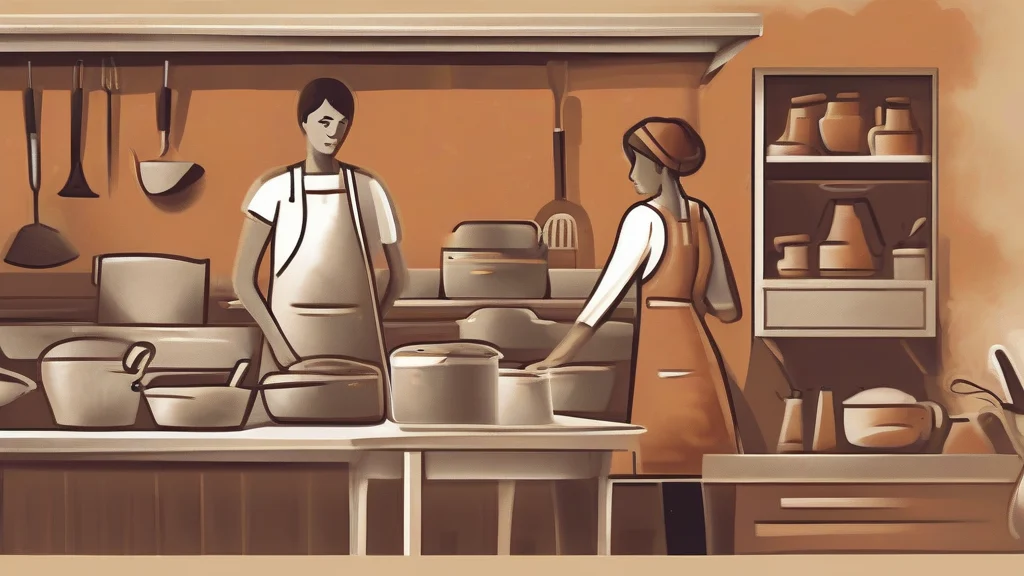
What does aproned mean?
"Aproned" is an adjective describing someone who is wearing an apron, most often used in vivid, descriptive writing to portray cooks, bakers, servers, artisans, or homemakers engaged in their work. Rather than being common in casual speech, it belongs largely to literary and journalistic prose, where it lends scenes a concrete, visual quality — an aproned chef at a stove or an aproned shopkeeper behind a counter instantly suggests diligence, craft, and domestic warmth. The word derives from "apron," a garment with a remarkably quirky history: Middle English borrowed it from Old French "naperon," a diminutive related to "nappe" (tablecloth), and English speakers misdivided "a napron" into "an apron," permanently reshaping the word. Related terms include "napkin" and "napery," which share the same cloth-based root. With its homely connotations and evocative power, "aproned" remains a useful word for writers seeking to conjure traditional workspaces and comforting domestic imagery.
adjectiveWearing or covered by an apron; often used attributively to describe someone, especially a worker, cook, or shopkeeper, dressed in an apron.
- Wearing an apron, typically describing a cook, baker, server, or craftsperson at work.
"The aproned baker slid the loaves into the oven before dawn."
"An aproned barista steamed the milk behind the counter."
"In the old photograph, aproned women stood over washtubs in the courtyard."
The word "apron" itself was born of a medieval mix-up: people misheard "a napron" as "an apron," slicing a piece off the word forever.
Reviewed by Deb Chak, Editor. AI-assisted content curated by RJS Tech Solutions LLP.
Etymology of aproned
"Aproned" is formed from "apron" plus the participial suffix "-ed." The noun "apron" entered Middle English from Old French "naperon," a diminutive of "nappe" meaning tablecloth, ultimately tied to Latin "mappa" (cloth). A famous case of metanalysis occurred when speakers reinterpreted "a napron" as "an apron," shifting the "n" across the article boundary. Its linguistic cousins include "napkin" and "napery," all descending from the same cloth-related root.
Related word forms
How aproned is actually used
"Aproned" functions almost exclusively as a participial adjective and appears most often in descriptive or literary prose rather than everyday conversation. It carries warm, domestic, or old-fashioned connotations, frequently evoking kitchens, workshops, and traditional labor.
Easily confused with aproned
"Adorned" means decorated or embellished, while "aproned" specifically means wearing an apron; they rhyme but differ entirely in meaning.