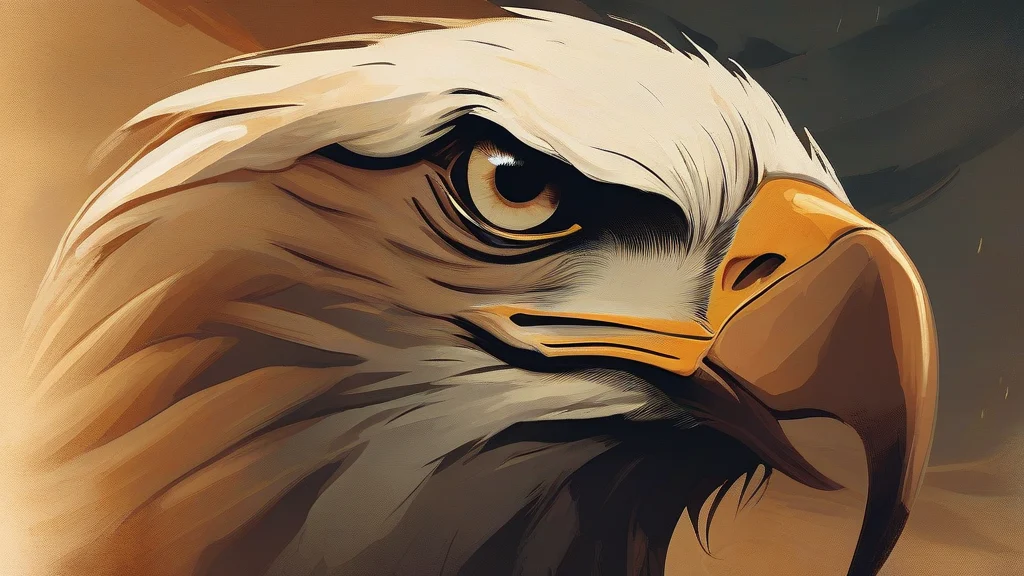
What does aquiline mean?
Aquiline is an adjective meaning resembling an eagle, particularly in reference to a nose that is hooked or curved like an eagle's beak. It derives from the Latin aquila, meaning eagle, and entered English in the seventeenth century. The word appears almost exclusively in formal or literary contexts, most commonly in descriptions of faces and profiles: a character might be said to have an aquiline nose, an aquiline profile, or more generally aquiline features. Because the eagle has long symbolized power, keen sight, and nobility, describing someone as aquiline tends to carry flattering connotations, suggesting sharpness, dignity, and commanding presence rather than mere physical description. Writers of fiction, biography, and art criticism favor the term when they want to lend a portrait verbal elegance. Though its use is narrow, aquiline remains a precise and evocative way to describe one of the most distinctive shapes a human profile can take.
adjectiveOf or resembling an eagle, especially in having a hooked, curved beak. When applied to people, it describes a nose that is prominently hooked or curved like an eagle's beak.
- Resembling an eagle, especially in having a hooked or curved beak.
- (of a nose) Hooked, curved downward like an eagle's beak; by extension, describing a sharp, commanding facial profile.
"The portrait captured the general's stern expression and strikingly aquiline profile."
"Her aquiline nose gave her face a regal, hawkish intensity."
"The sculptor emphasized the emperor's aquiline features to convey authority and nobility."
When you call someone's nose 'aquiline,' you're literally comparing their face to an eagle's beak — a compliment in the age of classical portraiture.
Reviewed by Deb Chak, Editor. AI-assisted content curated by RJS Tech Solutions LLP.
Etymology of aquiline
Aquiline comes from the Latin aquila, meaning eagle, combined with the adjectival suffix -ine. It was borrowed into English in the early seventeenth century, when writers sought Latinate vocabulary for precise physical and moral description. The same Latin root gives us Aquila, the name of the constellation known as the Eagle, and underlies the English word eagle through Old French.
How aquiline is actually used
Aquiline is a formal, literary word, most often used in descriptive writing about faces and profiles. It carries broadly positive connotations of nobility, sharpness, and distinction, echoing its use in classical physiognomy where an eagle-like nose was considered a mark of leadership.
Easily confused with aquiline
Equine means relating to horses, while aquiline means relating to or resembling eagles.