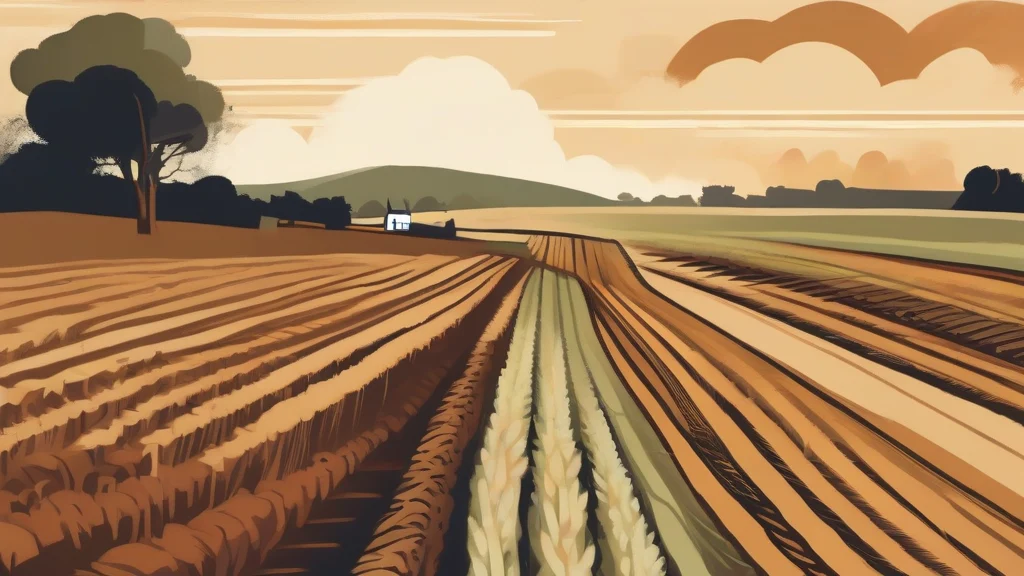
What does arable mean?
"Arable" is an adjective describing land that is suitable for growing crops — that is, land that can be ploughed and cultivated, as opposed to pasture for grazing animals or woodland. The word derives from the Latin "arabilis," meaning "that which can be ploughed," itself rooted in "arare," to plough, and it entered English via Old French in the medieval period. In modern usage it appears most frequently in agriculture, geography, and environmental discussion, typically in the phrases "arable land," "arable farming," and "arable crops." A related noun form, also called "arable," refers to such land itself, and the derived adjective "arability" expresses the degree to which soil can support crops. The term is neutral and technical in register, but it carries real weight in debates about food security, soil degradation, and land use: the world's supply of genuinely arable ground is finite, shrinking under urbanization and erosion, which makes this quiet Latinate word central to some of the most consequential conversations of our time.
(Of land) suitable for ploughing and growing crops; relating to the cultivation of such land.
"The region's arable fields produce much of the country's barley."
Most commonly encountered in the phrase "arable land"; in British English, "arable farming" specifically denotes crop-growing as opposed to livestock rearing.
Land that is ploughed and used for growing crops.
"The estate includes several hundred acres of arable."
Used chiefly in British English, often in plural form ("arables") in agricultural contexts.
As a noun, "arable" is used mainly in British English to denote arable land collectively; the plural "arables" appears occasionally in agricultural writing but the singular collective use is more common.
"The farm's arables were rotated between wheat, oilseed rape, and beans."
The word "arable" and the word "tree" share the same ancient root — Latin "arare," to plough — making every field of wheat a distant cousin of the orchard.
Reviewed by Deb Chak, Editor. AI-assisted content curated by RJS Tech Solutions LLP.
Etymology of arable
"Arable" comes from the Latin "arabilis," meaning "fit for ploughing," derived from "arare," to plough, which traces back to the Proto-Indo-European root *h₂erh₃- associated with ploughing and tillage. The word reached English through Old French "arable" during the Middle Ages, when much legal and agricultural vocabulary entered the language. It shares this deep root with "arbor" (a tree) and its derivatives such as "arboreal" and "arborist," all descendants of the same ancient Indo-European family of words concerned with plants and cultivation.
Related word forms
How arable is actually used
Chiefly used in agricultural, geographical, and policy contexts; in everyday speech it appears most often in the fixed phrase "arable land." It carries no strong connotation — it is a neutral technical term — though it often signals large-scale, mechanized crop farming, especially in British usage where it contrasts with "pastoral" or "livestock" farming.
Easily confused with arable
"Arable" describes land fit for growing crops, while "arbor" is a noun meaning a leafy shelter formed by trees or climbing plants.