What does arame mean?
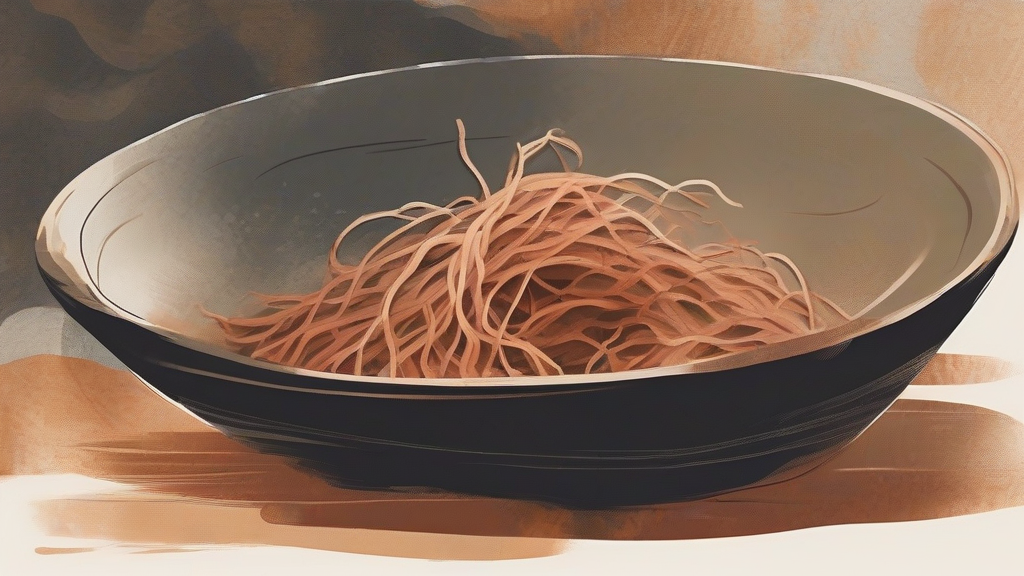
Arame is an edible brown seaweed, scientifically known as Eisenia bicyclis, that grows wild along the coasts of Japan and Korea and has become a staple of Japanese and macrobiotic cooking. Sold in dried form as thin, near-black strands, it is remarkably mild for a sea vegetable — subtly sweet, faintly briny, and far gentler than stronger-flavoured seaweeds such as hijiki. Before use, the dried strands are rinsed and soaked or simmered for a few minutes, after which they turn tender with a pleasant, springy bite. Cooks fold arame into salads, grain bowls, soups, and stir-fries, often pairing it with sesame oil, soy sauce, or vinegar. Beyond its culinary appeal, arame is valued as a source of minerals, including iodine, which contributes to its healthful reputation. For anyone exploring sea vegetables, it is frequently recommended as an approachable starting point precisely because its flavour never overwhelms a dish.
nounArame is an edible brown seaweed (Eisenia bicyclis) native to the western Pacific, sold dried in dark, wiry strands and widely used in Japanese cuisine. It has a mild, slightly sweet flavour and a firm yet tender texture when rehydrated.
- The edible brown seaweed Eisenia bicyclis, sold dried and used in Japanese and macrobiotic cooking.
- The prepared culinary ingredient: dried arame strands that are soaked or simmered before being added to salads, soups, and stir-fries.
"She tossed a handful of rehydrated arame into the sesame-dressed salad for a subtle taste of the sea."
"Simmer the arame with soy sauce and mirin until the strands turn glossy and tender."
"A scattering of arame adds minerals and a whisper of ocean flavour to a grain bowl."
Arame functions as a mass noun like rice or salt; when a plural sense is needed, cooks simply say 'arame' again or describe quantities, so no separate plural form is established.
"Two varieties of arame were displayed side by side at the market stall."
This unassuming bundle of black sea threads was carried from Japan's Ise Peninsula to health-food shelves worldwide — one of the mildest ways the ocean ever seasoned a salad.
Reviewed by Deb Chak, Editor. AI-assisted content curated by RJS Tech Solutions LLP.
Etymology of arame
The word arame entered English directly from Japanese, where あらめ (arame) names both the seaweed Eisenia bicyclis and the prepared ingredient made from it. The Japanese term combines elements relating to the plant's coarse, strand-like form and its status as an edible sea vegetable gathered for centuries along Japan's Pacific coast, particularly around the Ise Peninsula. Alongside related borrowings such as wakame, kombu, and nori, arame spread into Western vocabularies during the twentieth century as Japanese cuisine and macrobiotic diets gained international followings. Like those sister terms, it remains a loanword with no native English root, retaining its Japanese identity on menus and packaging.
How arame is actually used
Arame is almost exclusively encountered in culinary and health-food contexts rather than everyday conversation. It carries a wholesome, health-conscious connotation, appearing most often in vegetarian, vegan, and macrobiotic recipes. The word is typically treated as a mass noun; cooks refer to 'a handful of arame' or 'soaked arame' rather than counting individual pieces.
Easily confused with arame
Wakame is a different edible seaweed (Undaria pinnatifida) with softer, broader fronds often served in miso soup, whereas arame comes in thin, wiry black strands with a firmer bite.
Hijiki is another dark, stringy Japanese seaweed that looks similar to arame but has a stronger, more briny flavour and is typically soaked longer before cooking.