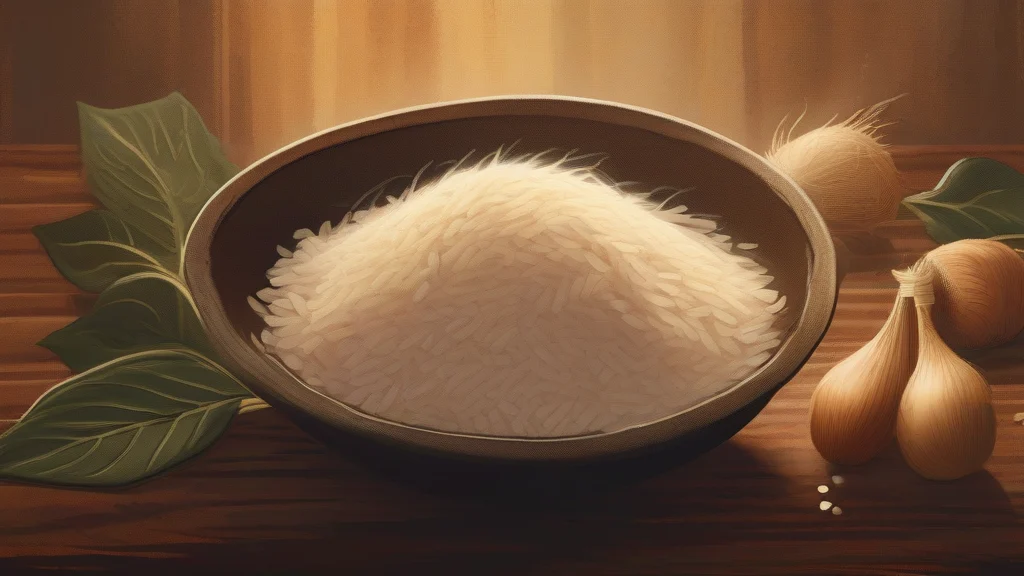
What does arborio mean?
Arborio is an Italian short-grain rice variety prized above all for its role in risotto. Named after the town of Arborio in the Po Valley of Piedmont, where it has long been cultivated, the grain is notably plump and rich in amylopectin, a starch that leaches out gradually during slow, incremental cooking. This is what gives a well-made risotto its characteristic creamy consistency without any added cream. Because the grains keep a firm, al dente center even as their exteriors soften, arborio rewards patient technique: toasting the rice first, then adding warm stock a ladleful at a time while stirring. Beyond risotto, it appears in rice puddings and other dishes where a starchy, tender grain is desired. In everyday usage the word almost always appears as part of the phrase 'arborio rice,' on packaging and in recipes, and it is occasionally confused with carnaroli, another esteemed Italian risotto rice with a firmer bite.
nounA short-grain, high-starch white rice variety from Italy, traditionally used to make risotto because it releases starch during slow cooking and yields a creamy texture.
- The arborio rice variety itself, used chiefly for risotto.
- By extension, any dish cooked using arborio rice.
"For a properly creamy risotto, toast the arborio briefly before adding the stock ladle by ladle."
"She stirred the hot stock into the arborio until each grain turned tender but still held a slight bite."
"The recipe calls for arborio, though carnaroli can be substituted in a pinch."
Rarely pluralized; arborio is usually treated as an uncountable mass noun referring to the rice itself.
"The pantry stocked several different arborios from various Italian mills."
Named after a small town in the Italian region of Piedmont, this humble grain is the secret behind risotto's signature creaminess — no actual cream required.
Reviewed by Deb Chak, Editor. AI-assisted content curated by RJS Tech Solutions LLP.
Etymology of arborio
The word comes from Italian, taking its name from the town of Arborio in the province of Vercelli, Piedmont, where the rice variety has been grown since at least the nineteenth century. It entered English primarily through cookery writing as Italian cuisine, and risotto in particular, gained international popularity in the twentieth century. As a varietal place-name borrowing, it has no meaningful cognates in English beyond other Italian food names adopted the same way.
How arborio is actually used
Almost always encountered in the phrase 'arborio rice' in cookbooks and grocery labeling; rarely used outside culinary contexts.
Easily confused with arborio
Carnaroli is a different Italian risotto rice with a slightly longer grain and firmer texture, often considered more forgiving than arborio.
Arborvitae is a genus of evergreen coniferous trees; the shared 'arbor' element refers to trees, not rice.