What does arrowworm mean?
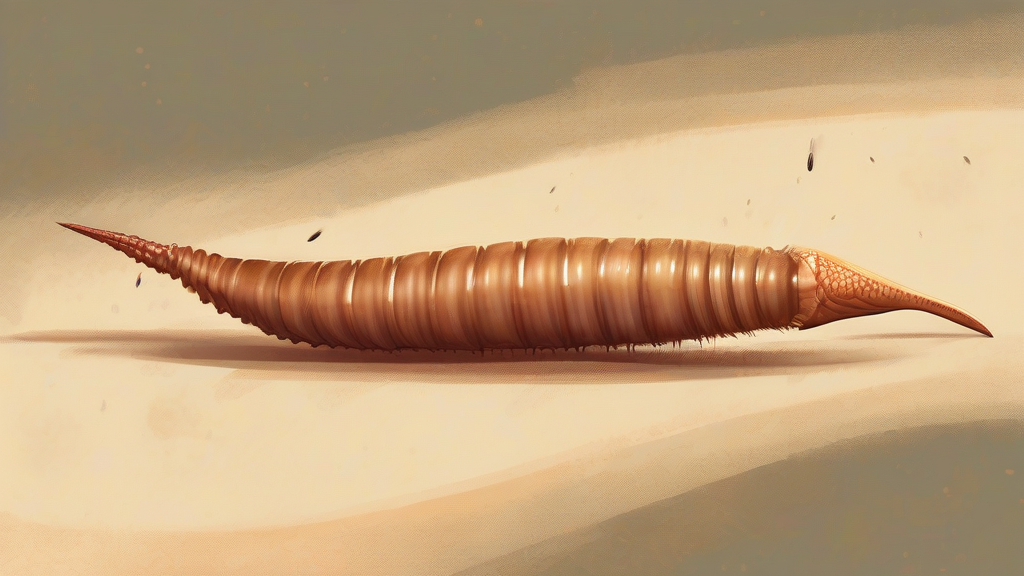
An arrowworm is a small, slender marine invertebrate belonging to the phylum Chaetognatha, named for the dart-like shape of its body. Typically only a few centimeters long and largely transparent, arrowworms are voracious predators that drift as part of the plankton in oceans worldwide, seizing smaller animals such as copepods and fish larvae with curved bristles surrounding their mouths. Despite their size, they are ecologically significant: they are among the most abundant carnivores in the sea and form an important link in the marine food web between grazing plankton and larger animals such as fish. The term is chiefly technical, appearing in marine biology and oceanographic literature rather than casual speech, though it occasionally surfaces in nature writing about plankton. For readers interested in ocean life, arrowworm offers a vivid example of how much predatory drama unfolds invisibly in open water.
nounAn arrowworm is any small, translucent marine worm of the phylum Chaetognatha, characterized by an elongated, dart-shaped body and grasping bristles around the mouth used to seize prey. Arrowworms are abundant planktonic predators found throughout the world's oceans.
- Any small, transparent marine worm of the phylum Chaetognatha, having a slender, dart-shaped body and hooked bristles used to capture prey; an important planktonic predator.
"Under the microscope, the arrowworm darted through the plankton sample, seizing copepods with its bristled jaws."
"Biologists trawling at night collected hundreds of arrowworms from the upper layers of the water column."
"Because its body is nearly transparent, an arrowworm can ambush unsuspecting prey in open water."
The regular plural applies when referring to individual specimens; the singular may be used generically for the group as a whole.
"Arrowworms drift through the water column, preying on copepods and other small planktonic animals."
The arrowworm is one of the ocean's most abundant predators — a mostly transparent hunter that can make up a significant share of plankton biomass, yet most people have never heard of it.
Reviewed by Deb Chak, Editor. AI-assisted content curated by RJS Tech Solutions LLP.
Etymology of arrowworm
The word arrowworm is an English compound formed from 'arrow,' from Old English 'earh' or 'arwe,' ultimately from Proto-Germanic roots also reflected in words connected with archery such as 'arc' and 'archer' (via Latin 'arcus'), and 'worm,' from Old English 'wyrm.' The name was coined to describe the creature's slim, dart-shaped body, which resembles an arrow in flight. It has been used in English natural-history writing since at least the nineteenth century, when chaetognaths were being formally described by zoologists.
How arrowworm is actually used
Arrowworm is primarily a scientific and technical term, encountered in marine biology, oceanography, and zoology rather than everyday conversation. It refers to members of the phylum Chaetognatha as a group, so it may be used with singular or plural reference depending on context.
Easily confused with arrowworm
Arrowwood is a flowering shrub of the genus Viburnum whose straight stems were once used for arrows, whereas an arrowworm is a tiny predatory marine animal.