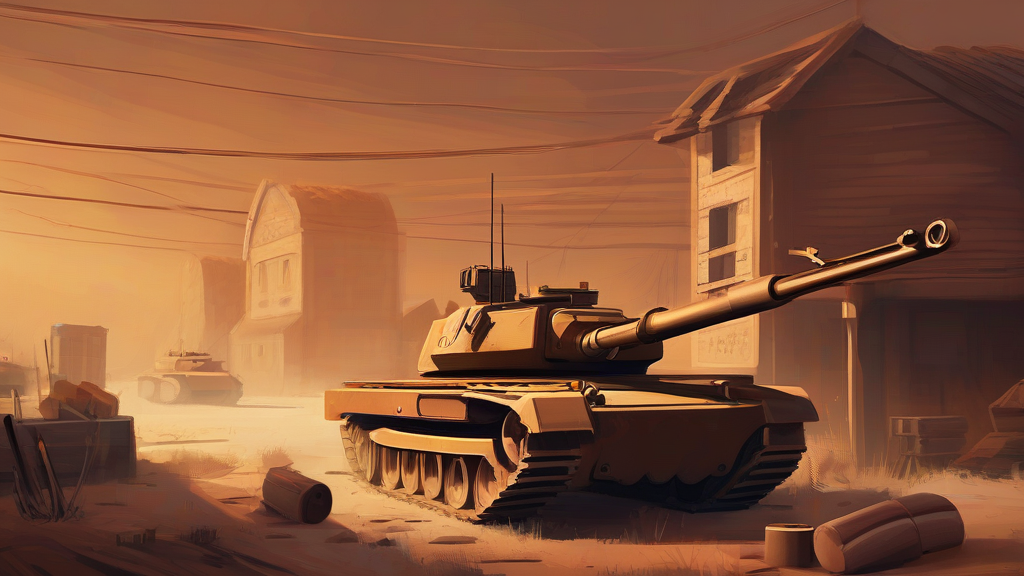
What does arsenal mean?
An arsenal is, in its original and most concrete sense, a building or establishment where weapons, ammunition, and military equipment are manufactured or stored. Historically, nations maintained royal or state arsenals as centers of arms production, making the word closely associated with military power. In modern usage, however, 'arsenal' is at least as often employed figuratively, describing the complete range of resources, skills, methods, or options available to a person or organization — one might speak of 'her arsenal of persuasive arguments' or 'the team's offensive arsenal.' This extended sense gives the word broad usefulness well beyond military contexts. It appears frequently in journalism, sports commentary, and business writing, usually implying thorough preparation or formidable capability. A notable cultural footnote is that Arsenal Football Club in London derives its name from the Royal Arsenal munitions works where the club's founders worked. Whether literal or figurative, the word consistently suggests a well-stocked reserve held ready for use.
A building or place where weapons, ammunition, and military equipment are stored or manufactured.
"The rebels seized the government's main arsenal overnight."
In this literal sense, often capitalized when referring to a specific historic site, as in the Royal Arsenal in London or the Harpers Ferry Arsenal.
A complete collection of resources, skills, weapons, or options available for a particular purpose.
"The startup deployed every tool in its marketing arsenal to win the contract."
This figurative sense is now extremely common in general usage, especially in journalism and business writing.
Standard regular plural. Used both for multiple literal weapons storehouses and for multiple figurative collections of resources or skills.
"Both nations expanded their nuclear arsenals during the Cold War."
England's famous Arsenal Football Club takes its name from the munitions factory workers at London's Royal Arsenal who founded the team in 1886.
Reviewed by Deb Chak, Editor. AI-assisted content curated by RJS Tech Solutions LLP.
Etymology of arsenal
The word 'arsenal' entered English in the early 16th century, borrowed through Italian 'arzanale' (Venetian dialect) and later reinforced by French 'arsenal'. These forms trace back to the Arabic phrase 'dār aṣ-ṣināʿah', meaning 'house of manufacture' or workshop, which Mediterranean maritime traders carried into European port cities. Venice's famed naval shipyards helped establish the term in European languages before it settled into English with its association to military stores.
How arsenal is actually used
The literal sense refers strictly to military storage or manufacture of arms; the figurative sense is very common in everyday and journalistic language, often applied to skills, arguments, recipes, or strategies. The figurative use carries a mildly forceful, resourceful connotation rather than a violent one.
Easily confused with arsenal
Arsenic is a poisonous chemical element, while an arsenal is a collection or storehouse of weapons and equipment.
An armory traditionally stores weapons and armor specifically, while an arsenal can refer both to such a storehouse and, figuratively, to any supply of available resources or capabilities.