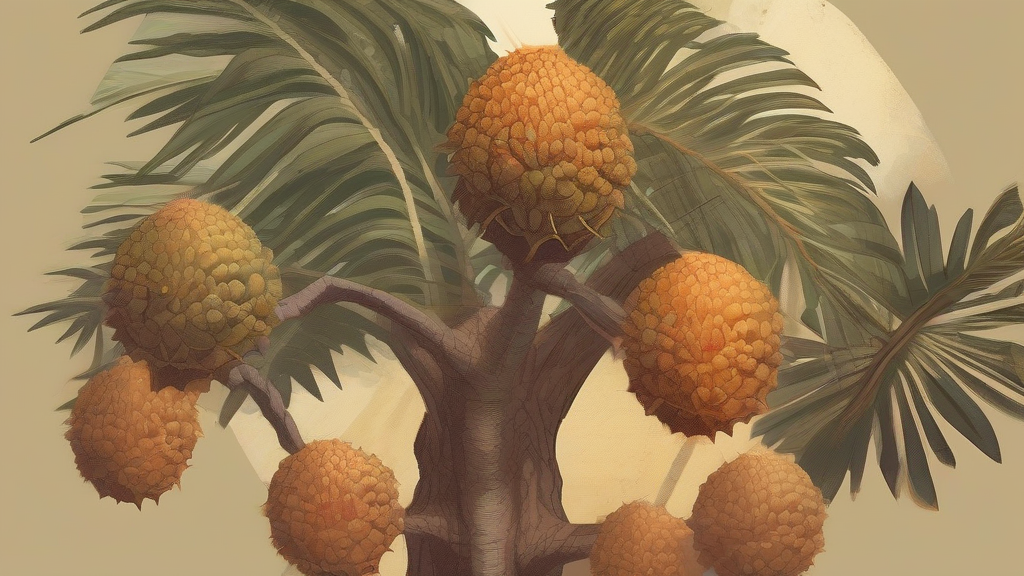
What does artocarpus mean?
Artocarpus is the botanical name of a genus of tropical Asian trees belonging to the mulberry family, Moraceae. The genus is best known for two of its members: the breadfruit (Artocarpus altilis), whose starchy flesh has been a staple food across the Pacific islands for thousands of years, and the jackfruit (Artocarpus heterophyllus), which produces the largest fruit of any tree — individual specimens can weigh well over thirty kilograms. The name derives from the ancient Greek words artos ('bread') and karpos ('fruit'), a fitting label given the bread-like taste and texture of cooked breadfruit. In practice, the word appears almost exclusively in scientific, horticultural, and agricultural writing, where it serves as a precise taxonomic designation rather than an everyday term. Botanists recognize dozens of species within the genus, all native to Southeast Asia and the western Pacific and now cultivated widely throughout the tropics for their nutritious, versatile fruits.
nounA genus of tropical Asian trees of the mulberry family (Moraceae), including the breadfruit and the jackfruit, cultivated for their large edible fruits.
- The genus Artocarpus: a group of tropical Asian trees in the mulberry family (Moraceae) bearing large edible compound fruits, most notably breadfruit (Artocarpus altilis) and jackfruit (Artocarpus heterophyllus).
- Any individual tree belonging to this genus.
"The breadfruit tree, classified in the genus Artocarpus, has sustained Pacific island communities for millennia."
"Scientists have identified more than fifty species within the genus Artocarpus, ranging from the breadfruit to the jackfruit."
"The orchard's oldest specimen was an Artocarpus heterophyllus whose fruits weighed as much as forty kilograms each."
In scientific writing the genus name is typically used without pluralization; the anglicized plural 'artocarpuses' refers to multiple trees of the genus.
"The conservatory displayed several young artocarpuses alongside other tropical fruit trees."
Its name literally means 'bread fruit' in ancient Greek — a botanical label coined for the tree whose starchy fruit tastes so much like fresh bread that Captain Bligh famously sailed the seas just to transport it.
Reviewed by Deb Chak, Editor. AI-assisted content curated by RJS Tech Solutions LLP.
Etymology of artocarpus
The word Artocarpus comes from the ancient Greek elements artos, meaning 'bread', and karpos, meaning 'fruit'. It was coined by European botanists in the eighteenth century, during the era of Linnaean classification, to describe the breadfruit and its relatives after their fruits were encountered on voyages through the Pacific. The same root karpos underlies many other botanical terms such as pericarp and sarcocarp, while artos reflects the bread-like quality of the cooked breadfruit that so impressed early European explorers.
How artocarpus is actually used
Primarily used in botanical, horticultural, and scientific writing; capitalized when referring formally to the genus (Artocarpus), lowercase when used generically. Not part of everyday vocabulary outside contexts discussing tropical agriculture or botany.
Easily confused with artocarpus
Arborvitae is a genus of coniferous evergreen trees unrelated to artocarpus, which denotes a genus of tropical fruit-bearing trees in the mulberry family.