What does asafoetida mean?
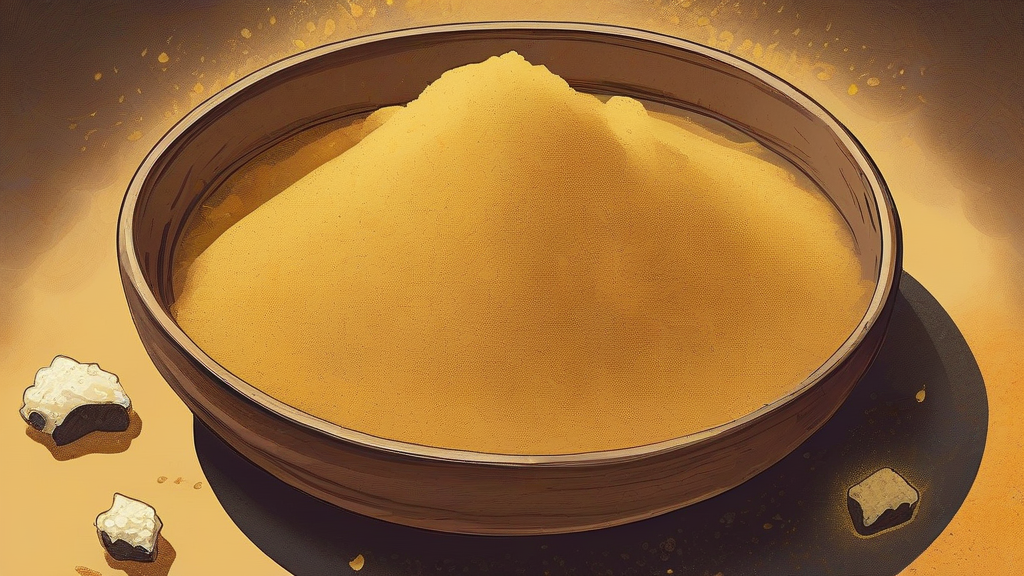
Asafoetida is a pungent, resinous gum obtained from the taproots of several Asian species of Ferula, tall perennial herbs related to fennel and carrot. The raw resin — sold either in amber lumps or, more commonly, ground into a yellowish powder often diluted with rice flour — has an overwhelmingly sulfurous smell that has earned it nicknames like 'devil's dung' and 'stinking gum'. Yet when briefly fried in hot oil or ghee at the start of a dish, it loses its harshness and imparts a savoury depth reminiscent of leeks, onions, and garlic. This makes it indispensable in Indian and other South Asian cuisines, especially among vegetarians who avoid alliums, and it has long featured in Ayurvedic medicine as a digestive aid. The English word derives from medieval Latin asa ('resin') plus foetida ('fetid, smelling'), a fittingly frank description. Known in Hindi as hing, asafoetida remains a small but essential staple of spice cabinets worldwide.
nounA strong-smelling resinous gum obtained from the roots of certain Asian species of giant fennel (Ferula), used in Indian cooking and traditional medicine.
- The bitter, pungent resin (oleo-gum-resin) tapped from the roots and stem of Ferula plants, sold powdered or in lumps.
- The powdered spice used in South Asian cuisine, typically fried briefly in oil or ghee at the start of a dish.
"A pinch of asafoetida sizzled in hot ghee gives the dal its distinctive savoury depth."
"Heat a pinch of asafoetida in ghee before adding the lentils — it mellows into something remarkably like sautéed onions."
"In Ayurvedic medicine, asafoetida has long been prescribed as a digestive remedy, though its medicinal claims lack robust scientific support."
Rarely pluralised; asafoetida normally functions as an uncountable (mass) noun referring to the substance. A plural appears only occasionally in commercial or historical contexts distinguishing grades or sources.
"Early apothecaries stocked several asafoetidas of differing purity."
Nicknamed 'devil's dung' for its eye-watering stench, asafoetida transforms into a rich, garlic-onion flavour the moment it hits hot oil — one of the great magic tricks of Indian cooking.
Reviewed by Deb Chak, Editor. AI-assisted content curated by RJS Tech Solutions LLP.
Etymology of asafoetida
The word entered English in the early seventeenth century from medieval Latin asa-foetida, literally 'fetid resin': asa denotes the gum or resin itself (a term of Persian origin), while foetida is the Latin adjective meaning foul-smelling, from foetere 'to stink'. It thus shares its second element with English 'fetid' and 'foetid'. The plant source, Ferula assa-foetida, was prized in antiquity alongside the related Mediterranean plant silphium, whose trade collapsed centuries before asafoetida became established in European pharmacology and later in cookery.
How asafoetida is actually used
Asafoetida is used almost exclusively in culinary and ethnobotanical contexts; it is especially associated with Indian, particularly vegetarian, cooking, where it stands in for onion and garlic. In formal botanical writing it may appear as the product name of Ferula assa-foetida. British spellings such as 'asafoetida' coexist with American 'asafetida'.
Easily confused with asafoetida
Asafoetida comes from Ferula species related to fennel and is sometimes called giant fennel, but it is a pungent resin rather than the aromatic seed or vegetable known as fennel.