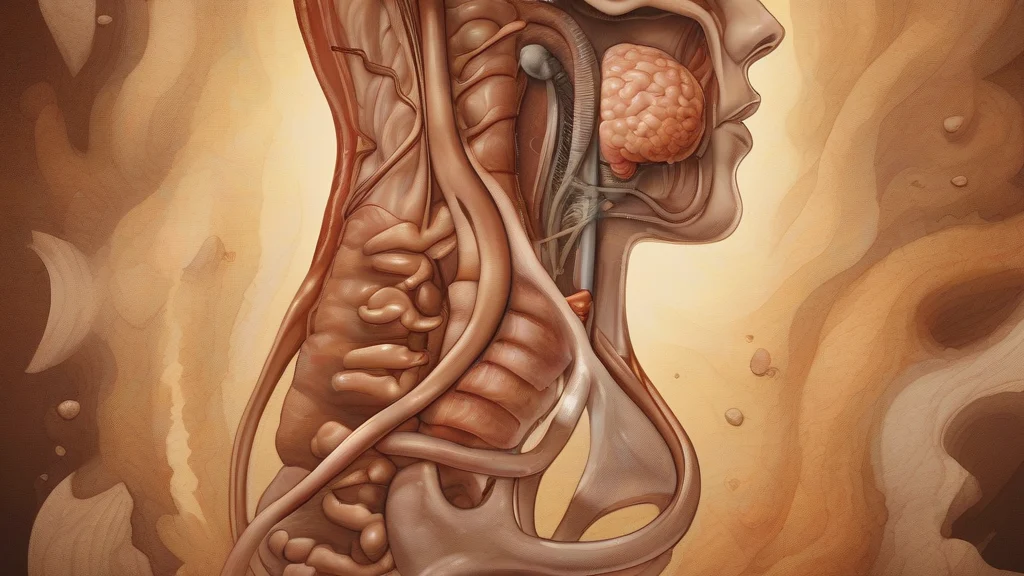
What does ascites mean?
Ascites is the abnormal build-up of fluid within the peritoneal cavity, the space surrounding the organs of the abdomen. It is not a disease in itself but a sign of an underlying condition — most commonly cirrhosis of the liver, though heart failure, kidney disease, and certain cancers can also cause it. Clinically, ascites presents as progressive swelling and distension of the belly, sometimes accompanied by discomfort or breathlessness when the accumulation is large. Doctors assess it by physical examination and imaging, and may perform a paracentesis, draining the fluid with a needle both to relieve symptoms and to analyse its contents. The word derives from the Greek 'askos', meaning a leather bag or wineskin, a vivid image of a swollen abdomen. Strictly a medical term, it appears in clinical records and health literature rather than everyday conversation, yet it remains one of the most common complications of chronic liver disease worldwide.
nounThe abnormal accumulation of fluid in the peritoneal cavity, the space between the abdominal organs and the abdominal wall; a condition most often associated with liver cirrhosis, cancer, or heart failure.
- Pathology: an effusion and accumulation of serous fluid in the peritoneal cavity, typically causing abdominal swelling and most often caused by liver disease, malignancy, or heart failure.
"The ultrasound revealed significant ascites, prompting the physician to order a diagnostic paracentesis."
"Patients with advanced cirrhosis frequently develop ascites as portal pressure rises."
"The oncologist drained two litres of fluid to relieve the malignant ascites causing the patient's distension."
Ascites is used almost exclusively as an uncountable noun and has no standard plural; any plural sense would simply repeat the same form and is rarely, if ever, encountered.
"Both patients presented with ascites on admission."
The ancient Greeks named it after a leather wine bag — because a belly swollen with fluid reminded them of an 'askos', the skin flask used to pour wine.
Reviewed by Deb Chak, Editor. AI-assisted content curated by RJS Tech Solutions LLP.
Etymology of ascites
Ascites entered English in the late sixteenth or early seventeenth century via Late Latin 'ascites' (or 'ascites hydrops'), borrowed directly from the Greek 'askítes (hýdrōps)', literally 'bag-like dropsy'. The Greek term derives from 'askós', meaning a bag made of hide — such as the leather wineskin used in antiquity — chosen because a fluid-swollen abdomen resembled a full skin. A distant cognate survives in botanical terminology: 'ascus', the sac-like cell in fungi, shares the same Greek root.
How ascites is actually used
A formal, technical term used almost exclusively in medical and clinical contexts; it functions as an uncountable mass noun, so it takes singular verb agreement ('the ascites is...'). Lay speakers would more naturally say 'fluid in the abdomen' or 'fluid build-up'.
Easily confused with ascites
An ascetic is someone who practices strict self-discipline and abstains from worldly pleasures, whereas ascites is the medical condition of fluid buildup in the abdomen — the words look and sound similar but share no meaning.