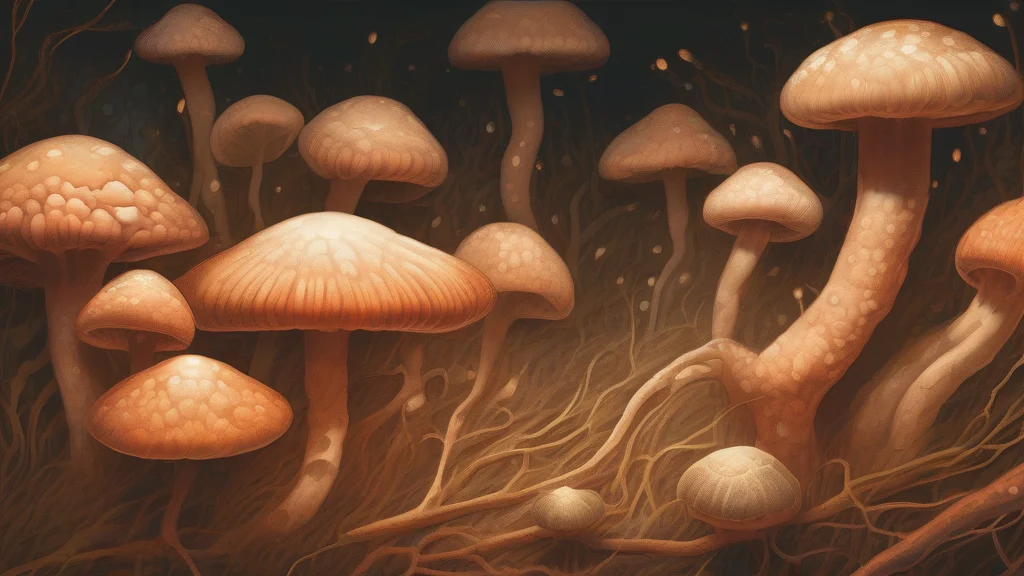
What does ascocarp mean?
An ascocarp is the specialized fruiting body produced by fungi in the phylum Ascomycota, a group that includes yeasts, morels, truffles, and many molds. This structure houses the asci — microscopic, sac-shaped cells in which sexual spores called ascospores are formed. When conditions are right, the ascocarp releases these spores to spread and colonize new substrates. Ascocarps vary enormously in form: some are open, cup- or saucer-shaped bodies known as apothecia, while others remain closed until maturity, as in truffles. The term derives from Greek roots meaning 'bag' and 'fruit,' reflecting its biological role. Though strictly a mycological term, the ascocarp is central to understanding how ascomycete fungi reproduce and why some members of this group, such as edible morels and truffles, hold such economic and culinary value.
nounThe fruiting body of fungi in the phylum Ascomycota, within which the sac-like cells called asci produce ascospores.
- The spore-bearing fruiting body of an ascomycete fungus, enclosing or bearing asci that produce ascospores.
"The cup-shaped ascocarp of the morel makes it one of the most recognizable spring mushrooms."
"Dissection revealed thousands of asci lining the inner surface of the ascocarp."
"Depending on the species, the ascocarp may be open and cup-like or fully closed until maturity."
Regular pluralization; used freely in mycological texts when referring to multiple fruiting bodies.
"Mature specimens were identified by the dozens of ascocarps clustered on the decaying log."
That cup-shaped mushroom you spot in the woods may be a giant ascocarp — the visible tip of a fungus whose spore factories are packed like tiny water balloons just beneath the surface.
Reviewed by Deb Chak, Editor. AI-assisted content curated by RJS Tech Solutions LLP.
Etymology of ascocarp
Ascocarp combines two Greek elements: 'askos,' meaning a bag or wineskin, which also gives us the term 'ascus' for the fungus's spore sac, and 'karpos,' meaning fruit. The compound was coined in nineteenth-century mycological literature as scientists formalized the study of fungal reproduction. It shares its second root with botanical terms such as 'pericarp' (the wall of a ripened fruit) and shares its first root with 'ascospore.'
How ascocarp is actually used
A technical term used almost exclusively in mycology and biology; it does not appear in everyday conversation. In formal scientific writing, authors often specify the ascocarp type — apothecium, perithecium, or cleistothecium — rather than using the general term.
Easily confused with ascocarp
A basidiocarp is the fruiting body of Basidiomycetes (such as mushrooms and puffballs), whereas an ascocarp belongs to Ascomycetes and bears asci instead of basidia.
An ascus is the single microscopic spore-producing sac inside an ascocarp, which is the entire visible fruiting structure containing many such sacs.