What does askari mean?
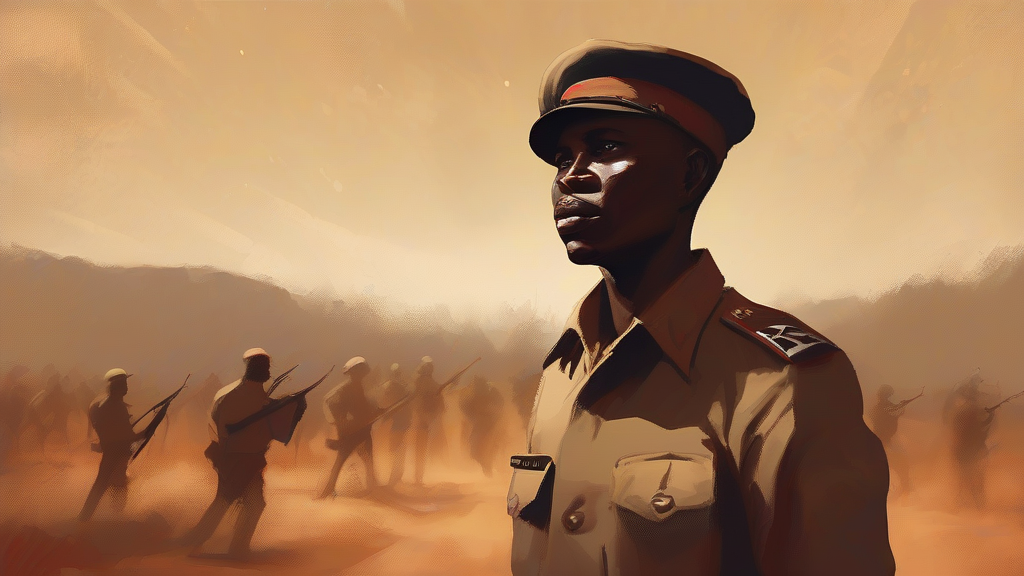
An askari is a local soldier recruited into the armed forces of a European colonial power, a term most closely associated with German and British military units in East Africa during the late nineteenth and early twentieth centuries. Derived from an Arabic word meaning simply 'soldier,' the term entered English through Swahili and became firmly attached to the African troops who garrisoned colonies, escorted officials, and campaigned alongside European officers. Askaris are best known for their role in the First World War's East Africa campaign, where they sustained a prolonged guerrilla effort under German command. Beyond its strictly military sense, the word has also been applied to armed guards and paramilitary auxiliaries elsewhere in Africa, including the feared security agents of Idi Amin's Uganda. Today askari appears almost exclusively in historical, political, and literary contexts, where it evokes both the loyalty of recruited soldiers and the complexities of colonial rule.
A locally recruited African soldier in the service of a European colonial power, particularly in East or Central Africa.
"The askaris were trained and led by officers of the colonial garrison."
Chiefly historical, referring to the colonial era.
By extension, an armed guard or paramilitary auxiliary in parts of post-colonial Africa.
"Under Idi Amin, askari came to be associated as much with state terror as with military service."
The standard plural adds -s, following normal English noun inflection.
"Several hundred askaris were stationed along the frontier."
Askaris fought through nearly the whole of the First World War in East Africa — long after most of the world had stopped fighting.
Reviewed by Deb Chak, Editor. AI-assisted content curated by RJS Tech Solutions LLP.
Etymology of askari
Askari comes ultimately from the Arabic ʿaskarī ('soldier'), formed on ʿaskar, meaning 'army' or 'troops'. The word passed into Swahili along the East African coast and was adopted by European colonial administrations, entering English in the nineteenth century through accounts of East and Central African military service. Its Arabic root also lies behind related borrowings in other languages, and the Persian-derived term lascar reflects a parallel path from a similar military vocabulary.
How askari is actually used
The word carries strong historical associations with the colonial era and appears mainly in historical writing about East and Central Africa; it can also evoke the coercive role of paramilitary guards under later regimes such as Idi Amin's Uganda.
Easily confused with askari
An askari is an African soldier in colonial service, while a lascar was historically an Asian sailor or artilleryman, chiefly in British service.