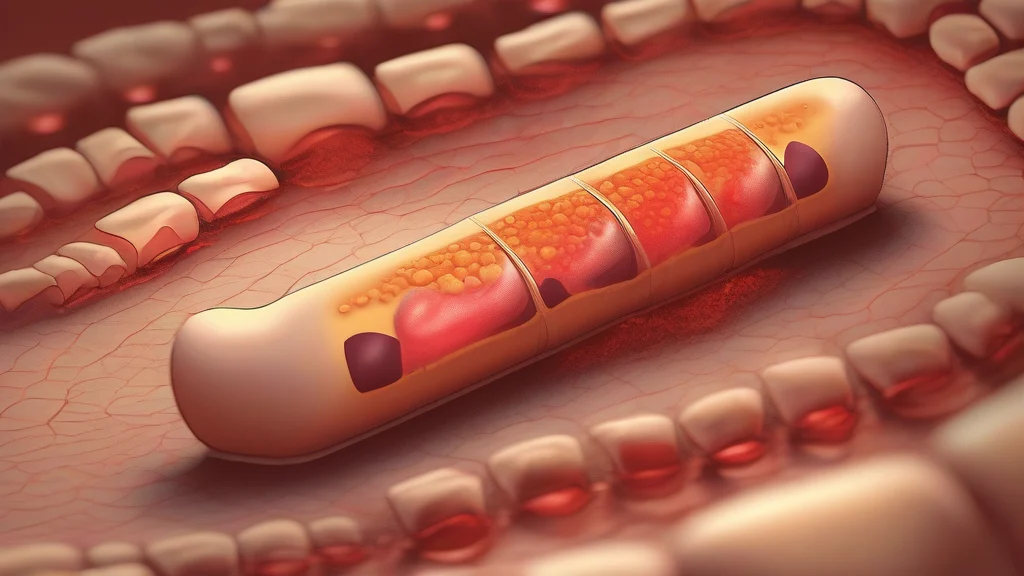
What does atherosclerosis mean?
Atherosclerosis is a progressive disease of the arteries in which plaque — a mixture of cholesterol, fats, calcium, and cellular debris — accumulates within the vessel walls. As the deposits grow, the arteries stiffen and narrow, restricting blood flow to the heart, brain, limbs, or other organs. It is a largely silent condition that develops over decades, often producing no symptoms until a blocked artery triggers a heart attack, stroke, or peripheral artery disease. Because it underlies most cardiovascular deaths worldwide, atherosclerosis is among the most intensively studied diseases in medicine, and its risk factors — smoking, high blood pressure, elevated LDL cholesterol, diabetes, and inactivity — are central targets of preventive care. The term derives from Greek roots meaning 'gruel' (athērē) and 'hardening' (sklērōsis), an image of soft fatty matter hardening within vessels. In usage it remains a formal, clinical word, familiar mainly from medical writing rather than casual conversation.
nounA disease in which plaque, made up of fat, cholesterol, calcium, and other substances, builds up inside the arteries, causing them to harden and narrow and restricting blood flow.
- The buildup of fatty plaque within arterial walls, causing narrowing, hardening, and reduced blood flow; the underlying cause of most heart attacks and strokes.
"Years of high cholesterol and smoking left him with severe atherosclerosis in his coronary arteries."
"A diet high in saturated fat can accelerate atherosclerosis over decades."
"The autopsy revealed advanced atherosclerosis as the cause of death."
The word comes from Greek words literally meaning 'gruel-hardening' — because the fatty gunk clogging your arteries was said to look like porridge.
Reviewed by Deb Chak, Editor. AI-assisted content curated by RJS Tech Solutions LLP.
Etymology of atherosclerosis
Atherosclerosis entered English in the early twentieth century, coined from Greek elements: athērē ('gruel' or 'porridge'), referring to the soft, pasty core of arterial plaque, combined with sklērōsis ('hardening'), from skēlēroun ('to make hard'). The term arose as a refinement of the broader word arteriosclerosis, which German pathologists had introduced in the nineteenth century to describe arterial hardening generally. It shares its Greek roots with related terms such as atheroma, the name for the plaque deposit itself, and sclerosis, which appears in many medical words for hardening of tissue.
Related word forms
How atherosclerosis is actually used
A formal medical term used chiefly in clinical and scientific contexts; in everyday speech people more often say 'clogged' or 'hardened arteries'. It is uncountable and typically takes singular verb agreement.
Easily confused with atherosclerosis
Arteriosclerosis is the general term for any hardening of the arteries, while atherosclerosis is the specific and most common type caused by plaque buildup.