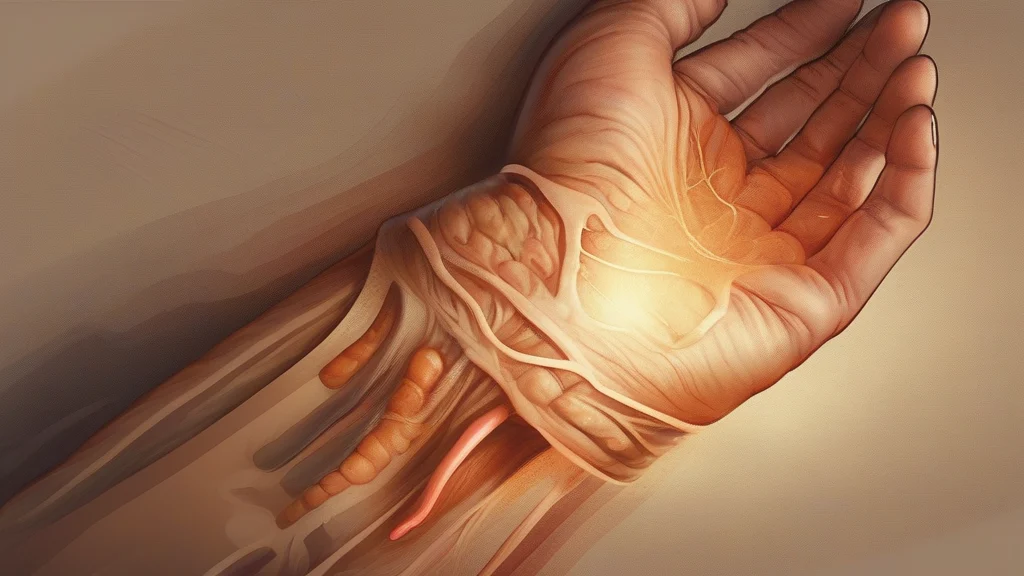
What does autograft mean?
An autograft is a piece of living tissue — most commonly skin, but also bone, cartilage, or blood vessels — that surgeons remove from one part of a patient's body and transplant to another part of the same patient. The prefix 'auto-' signals the defining feature: donor and recipient are the same individual, which makes an autograft the safest and most successful kind of transplant, since the immune system recognises the tissue as its own and will not reject it. The word functions chiefly as a noun in medical writing ('a skin autograft', 'a bone autograft') and occasionally as a verb meaning to perform such a transfer. It contrasts directly with an allograft, which uses tissue from another human donor, and a xenograft, which uses tissue from another species. Autografts appear routinely in burn treatment, reconstructive surgery, spinal fusion, and dental bone rebuilding, and the term is standard vocabulary for clinicians, medical students, and patients discussing their own procedures.
A piece of tissue or organ transplanted from one part of an individual's body to another part of the same individual.
"The burn unit performed a skin autograft using healthy tissue from the patient's upper arm."
Used mainly in surgical and medical contexts; often preceded by the type of tissue involved, as in 'skin autograft' or 'bone autograft'.
To transplant tissue from one part of an individual's body to another part of the same individual.
"The surgeons autografted a strip of skin from her thigh to cover the wound."
Less common than the noun; typically appears as a past participle in clinical descriptions, e.g. 'the site was autografted'.
The plural refers to multiple pieces of grafted tissue or to grafts across multiple cases; the verb forms are autografted and autografting.
"Split-thickness autografts remain the standard treatment for extensive burns."
Because an autograft comes from your own body, your immune system never rejects it — making it medicine's only guaranteed perfect tissue match.
Reviewed by Deb Chak, Editor. AI-assisted content curated by RJS Tech Solutions LLP.
Etymology of autograft
The word autograft combines the Greek-derived prefix 'auto-', meaning 'self' or 'one's own', with 'graft', which entered English through Middle French 'graffe' and ultimately traces back to the Greek 'graphion', a stylus or grafting blade. The compound arose in late nineteenth-century surgical literature as transplantation techniques developed, modelled transparently on the older horticultural sense of grafting plants onto stock. Its relatives include the wide family of 'auto-' words borrowed from Greek, such as autobiography and autonomous, all sharing the notion of selfhood.
How autograft is actually used
Autograft is primarily a technical term used in surgical, dental, and dermatological contexts; in everyday conversation people are more likely to say 'skin graft' or 'taken from their own body'. It carries no emotional or figurative connotations and appears almost exclusively in formal medical registers. The plural 'autografts' refers either to multiple pieces of transplanted tissue or to grafts performed on different patients.
Easily confused with autograft
An allograft is transplanted between two genetically different individuals of the same species, whereas an autograft comes from the same person it is implanted into.
An autograph is a person's own signature or handwritten manuscript, while an autograft is tissue transferred within the same body.