What does aventurin mean?
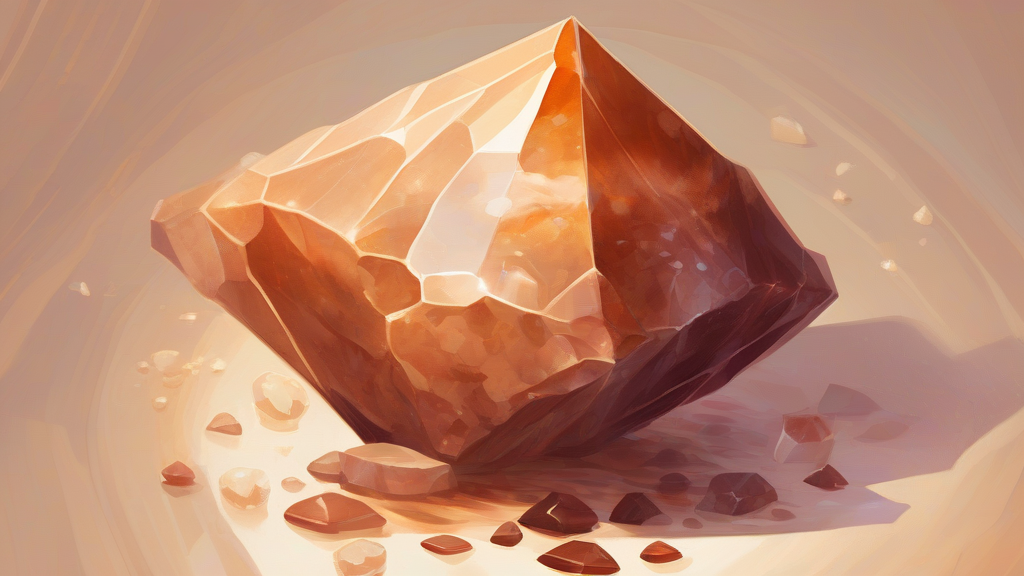
Aventurin is a noun denoting a semi-translucent ornamental mineral prized for its distinctive sparkle. Most commonly a variety of quartz tinted green by inclusions of other minerals such as mica or hematite, it can also occur in blue, red, orange, and brown forms, and a related feldspar variety known as sunstone shows a similar glittering effect. The name also covers aventurine glass — familiarly called goldstone — an artificial material invented in Venice when copper particles were accidentally fused into molten glass, producing a golden shimmer. Because of its gentle glow and affordable price, aventurin is widely used in beads, cabochons, carvings, and inexpensive jewelry. The word derives ultimately from the Italian avventura, meaning "chance," a nod to the accidental discovery of the glassy imitation, and it remains a staple term in mineralogy, gemology, and the craft trades.
nounA translucent mineral, typically quartz or feldspar, containing small glittering inclusions that give it a sparkling sheen. The term also refers to an artificial glass, known as goldstone, made with embedded copper particles to imitate this effect.
- A translucent quartz (or, less commonly, feldspar) containing platy mineral inclusions such as hematite, mica, or goethite that produce a sparkly, metallic sheen.
- A man-made glass, often called goldstone or aventurine glass, containing copper or other particles that mimic the gemstone's glittering appearance.
"Her bracelet was carved from green aventurin that caught the light with every movement."
"The pendant was cut from deep green aventurin flecked with tiny glints of mica."
"Venetian craftsmen first produced aventurin glass by chance, scattering copper crystals through molten glass."
As a mass noun referring to the material, aventurin is typically uncountable; the plural appears mainly when discussing distinct varieties or individual specimens.
"The shop displayed aventurins in shades of green, blue, and orange."
Aventurin owes its name to pure luck — Italian glassmakers stumbled on the shimmering effect by accident, and the stone was named after avventura, meaning "by chance."
Reviewed by Deb Chak, Editor. AI-assisted content curated by RJS Tech Solutions LLP.
Etymology of aventurin
The word comes from the Italian avventurino, derived from avventura meaning "chance" or "accident." It originally referred to a type of glittering glass produced in seventeenth-century Venice, reportedly by accident when metal particles fell into molten glass. The name was later extended to natural minerals whose internal inclusions produce a similar sparkle. English shares the root with words like "adventure" and "venture," all tracing back to Latin adventurus.
How aventurin is actually used
In everyday English the spelling "aventurine" predominates; "aventurin" is more common in German, Dutch, and Scandinavian contexts and may read as slightly technical or foreign in English text. The word carries no strong connotation beyond its association with jewelry, lapidary work, and decorative objects.
Easily confused with aventurin
"Aventurine" is simply the standard English spelling of the same word; "aventurin" is chiefly the German and Scandinavian spelling and appears as a variant in English.