
What does axletree mean?
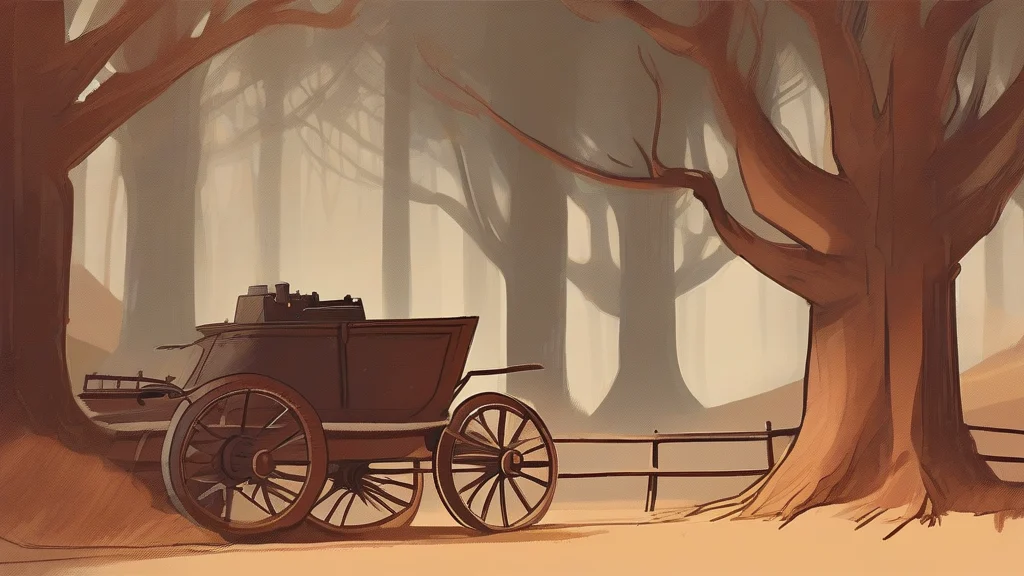
An axletree is the bar or beam — traditionally made of wood, later of iron or steel — on which the wheels of a vehicle such as a carriage, wagon, or cart revolve. Running transversely beneath the body of the vehicle, it carries the weight of the load while allowing the wheels to rotate around it at either end. The word is now largely historical: modern speakers simply say 'axle,' and 'axletree' survives mainly in technical descriptions of horse-drawn vehicles, in historical writing, and in older literary texts. It carries a slightly antiquated, craftsmanlike connotation, evoking wheelwrights, stagecoaches, and pre-industrial transport. For readers of classic novels or enthusiasts of vintage vehicles, recognizing the term adds precision; elsewhere it signals deliberate period flavor. Its compound form — literally an 'axle tree' or beam — preserves a vivid image of early engineering.
nounAn axletree is a fixed bar or beam on which the wheels of a vehicle or machine revolve, typically running across the width of a carriage or wagon.
- The transverse beam or bar of a vehicle, carriage, or wagon on which its wheels revolve.
"The old farm wagon's wooden axletree had cracked under decades of heavy loads."
"The coach lurched to a halt when its iron axletree snapped on the rutted road."
"Wheelwrights shaped each axletree by hand so the wheels would turn true."
Regular plural; used when referring to the front and rear beams of a vehicle or to multiple vehicles.
"Both axletrees of the stagecoach had been reinforced with iron bands."
Before steel and bearings, an entire loaded wagon rested on a single carved wooden beam called the axletree — break it, and your journey was over.
Reviewed by Deb Chak, Editor. AI-assisted content curated by RJS Tech Solutions LLP.
Etymology of axletree
Axletree derives from Middle English, formed as a compound of 'axle' (from Old Norse 'axull' or Old English 'eax', ultimately related to Latin 'axis') and 'tree' in its older sense meaning a beam or piece of timber. The word thus originally denoted the wooden beam serving as a vehicle's axle. It has been used since medieval times for carts and carriages, and its cognates include 'axis' and 'axle' from the same ancient root.
How axletree is actually used
Largely historical or technical today; it survives chiefly in literature about carriages, wagons, and early machinery. In everyday modern usage, 'axle' has replaced it.
Easily confused with axletree
Axle is the general modern term for any rod on which wheels turn, while axletree is the older, more specific term for the transverse beam of a vehicle, especially in historical or literary usage.