What does babe mean?
Babe is a noun with two principal uses: it denotes an infant — a very young child — and it serves as an informal term of endearment for a sweetheart or beloved person. In its infant sense, babe carries connotations of innocence, helplessness, and tenderness; the phrase 'a babe in the woods' extends this to describe anyone naive or unschooled in the ways of the world. As an endearment, it is casual and affectionate, widely used in everyday conversation, though addressing strangers with it can come across as presumptuous. The word derives from an imitative or expressive root related to babbling sounds, sharing origins with 'baby' and 'babble'. Though largely superseded by 'baby' in modern usage, babe remains current in literature, song lyrics, and intimate speech, giving writers and speakers a slightly warmer, older-fashioned alternative that evokes vulnerability and affection alike.
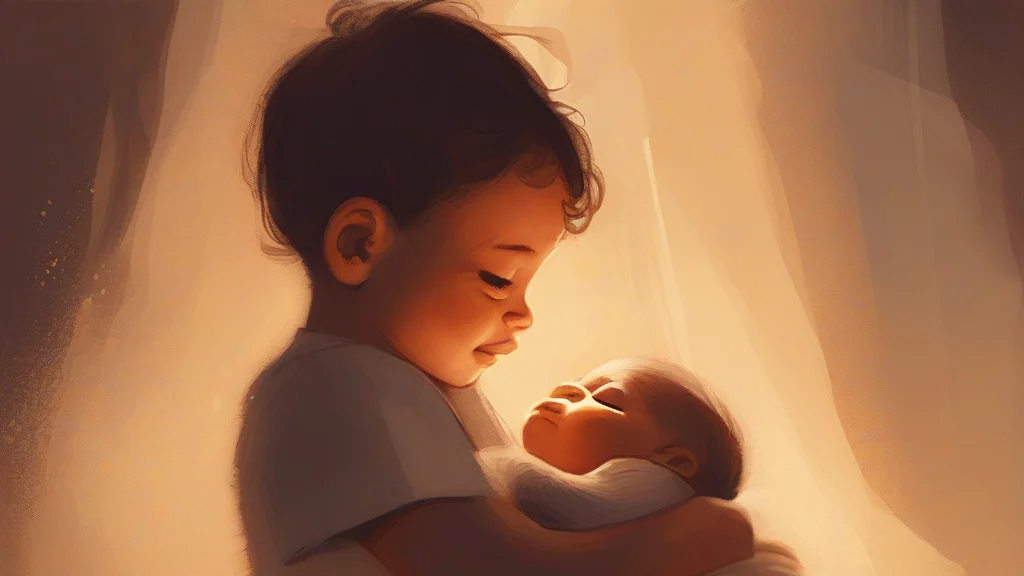
A baby; a very young child, especially one too young to speak or walk.
"The babe slept soundly through the night."
Somewhat literary or old-fashioned next to the more common 'baby'.
Informally, a term of endearment for a sweetheart or romantic partner.
"'I'll see you soon, babe,' she texted."
Casual register; can feel overly familiar when used toward strangers.
Standard pluralization applies; commonly used when referring to multiple infants or, colloquially, to several attractive people.
"The nursery was full of sleeping babes."
Shakespeare's 'the babe in the woods' trope made this tiny word a symbol of innocence centuries before it became a pop-culture endearment.
Reviewed by Deb Chak, Editor. AI-assisted content curated by RJS Tech Solutions LLP.
Etymology of babe
Babe arose in English during the Middle English period, likely from an imitative origin connected to the babbling sounds infants make, making it cognate with or closely related to 'baby' and 'babble'. It has no classical Latin or Greek ancestor but belongs to a small family of nursery-derived English words built on infant vocalizations. The word was well established by the early modern period and appears frequently in Shakespearean and later literature to denote both literal infants and figures of innocence.
How babe is actually used
Babe is informal when used as an endearment between adults and is common in both British and American speech. When applied to infants, it is somewhat literary or old-fashioned compared to 'baby'. Using 'babe' toward strangers can be perceived as overly familiar or patronizing.
Easily confused with babe
Bay is a body of water or a reddish-brown color, whereas babe is a noun meaning an infant or a term of endearment.