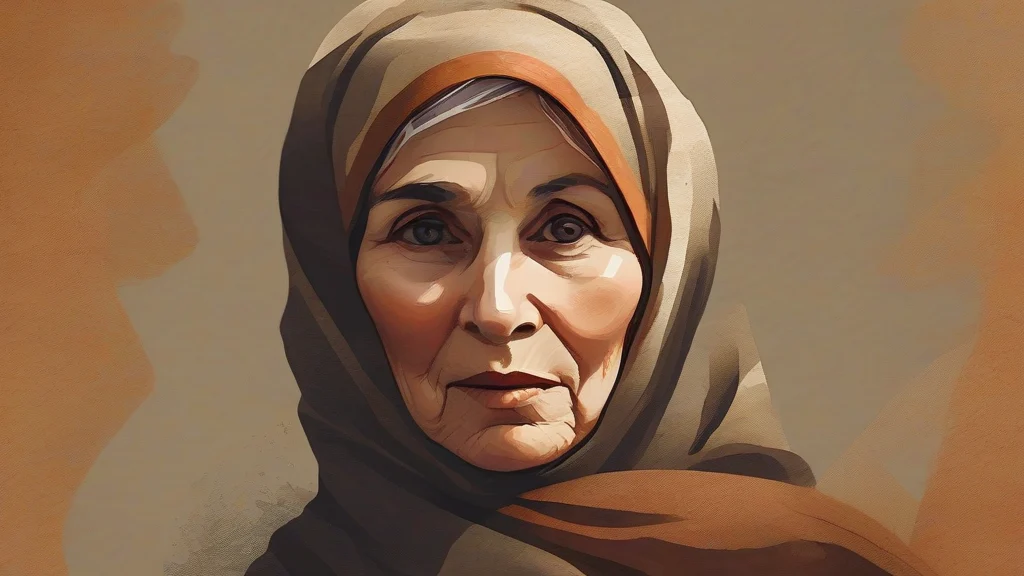
What does babushka mean?
Babushka is an English borrowing from Russian, where it literally means 'grandmother.' In modern English usage, however, the word is best known for a different meaning entirely: a headscarf folded into a triangle and tied beneath the chin, in the manner long associated with older women of rural Russia and Eastern Europe. This fashion sense appears frequently in descriptions of winter wear, vintage style, and traditional dress, and it has enjoyed periodic revivals on runways and in street fashion. The word's two meanings coexist comfortably: those familiar with Russian may use it affectionately for an actual grandmother, while the broader English-speaking public reaches for it when discussing scarves. Its connotations are warm and nostalgic, evoking images of old-world village life rather than high formality. Babushka is a compact example of how borrowed words can shift emphasis in a new language — here, the accessory associated with grandmothers came to eclipse the grandmothers themselves in common English use.
A woman's headscarf folded into a triangle and tied under the chin, in the style traditionally worn by older Eastern European women.
"She knotted her babushka snugly before walking through the snow-covered market."
This is by far the more common sense in contemporary English.
A Russian grandmother.
"Every summer we visited our babushka at her dacha outside Moscow."
The original meaning, retained mainly by speakers familiar with Russian.
Standard English pluralization; no special form applies.
"The stall displayed babushkas in a dozen floral prints."
English speakers borrowed 'babushka' so thoroughly that most now use it for the headscarf rather than the grandmother it originally named — a word that changed jobs when it crossed languages.
Reviewed by Deb Chak, Editor. AI-assisted content curated by RJS Tech Solutions LLP.
Etymology of babushka
Babushka comes directly from the Russian word for 'grandmother,' itself a diminutive-related form built on 'baba,' an old Slavic term for a woman or peasant woman. The word entered English in the twentieth century, carried largely by émigré communities and by descriptions of Eastern European dress. As English speakers encountered the image of elderly Russian women wearing triangular headscarves knotted under the chin, the garment absorbed the name of its typical wearer, producing the now-dominant headscarf sense.
How babushka is actually used
The headscarf sense dominates everyday English, especially in fashion contexts, while the literal 'grandmother' sense survives mainly among speakers with Russian heritage or knowledge of Russian. The word carries warm, somewhat nostalgic connotations of old-world rural life.
Easily confused with babushka
A matryoshka is a Russian nesting doll, whereas a babushka is a headscarf tied under the chin or, literally, a Russian grandmother.