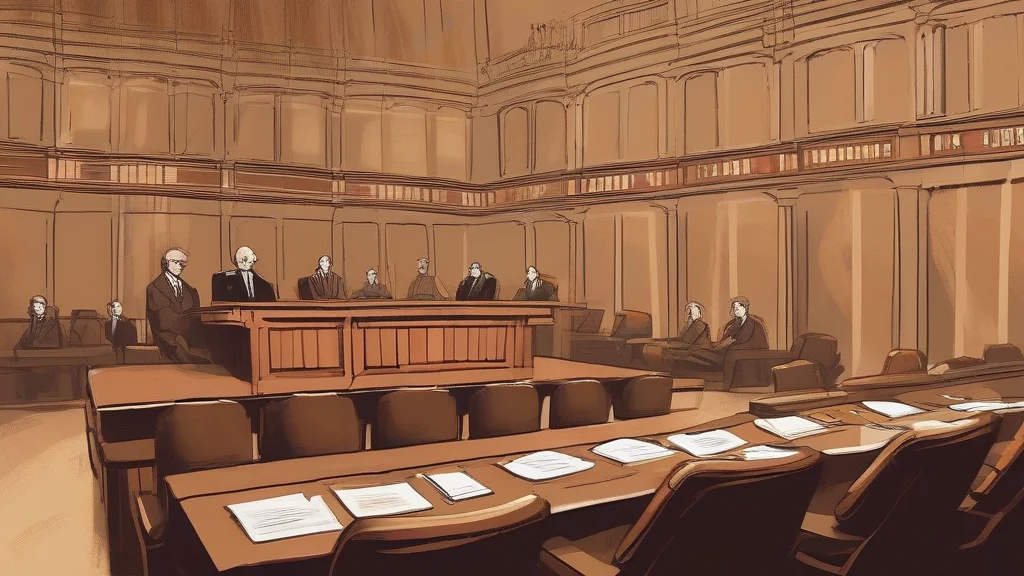
What does backbencher mean?
A backbencher is a member of a legislative body, most commonly the British House of Commons, who holds no governmental or oppositional office and therefore sits on the plain rear benches rather than the prominent front rows reserved for ministers and shadow ministers. Because such members occupy no position of formal power, 'backbencher' often connotes an ordinary, low-profile politician — sometimes dismissively, as in 'a mere backbencher' — yet the role has genuine value: free from collective responsibility, backbenchers can scrutinise legislation, represent local constituents candidly, and even rebel against party lines. The word is distinctly British in flavour, tied to the physical layout of the Commons chamber, but it is now applied to rank-and-file legislators in other Westminster-style systems too, including Canada, Australia, and India. Understanding the term offers insight into how parliamentary architecture mirrors political hierarchy, making it a useful word for anyone following British politics or comparative government.
nounA member of a parliament, especially the British House of Commons, who does not hold government or opposition office and therefore sits on the ordinary back benches. The term is also used more broadly for any rank-and-file legislator without a leadership role.
- A member of the UK Parliament (especially the House of Commons) who holds no ministerial or shadow ministerial office and thus occupies the rear benches.
- More generally, any legislator in a parliament who lacks a leadership or executive role within their party.
"As a backbencher, she was free to vote against her party's bill."
"The bill was defeated largely thanks to a rebellion by restless backbenchers."
"After years as a quiet backbencher, he finally earned a place in the shadow cabinet."
Standard English plural; commonly used collectively to refer to the mass of non-office-holding MPs.
"Backbenchers threatened to vote down the government's proposal."
In Britain's cramped House of Commons, where you sit literally signals your power — and backbenchers, by sitting furthest from the floor, are telling the world they have none of it (at least officially).
Reviewed by Deb Chak, Editor. AI-assisted content curated by RJS Tech Solutions LLP.
Etymology of backbencher
Backbencher arose in late 19th-century Britain as a straightforward compound of 'back' and 'bencher', describing MPs who sat on the rear benches of the House of Commons because they held no front-rank office. Its literal basis in the chamber's seating arrangement gives the word its enduring figurative force: distance from the centre equals distance from power. Related compounds include 'frontbencher' and 'crossbencher', coined around the same period for occupants of other parts of the chamber.
How backbencher is actually used
Chiefly British in origin and still most strongly associated with UK politics, though the term is increasingly used for rank-and-file members in other Westminster-style parliaments. It carries no inherent negative connotation — some MPs deliberately remain backbenchers to speak freely — but 'mere backbencher' can be used dismissively to imply insignificance.
Easily confused with backbencher
A frontbencher is a senior parliamentarian holding or shadowing a ministerial post and sitting on the front benches, whereas a backbencher holds no such office and sits further back.