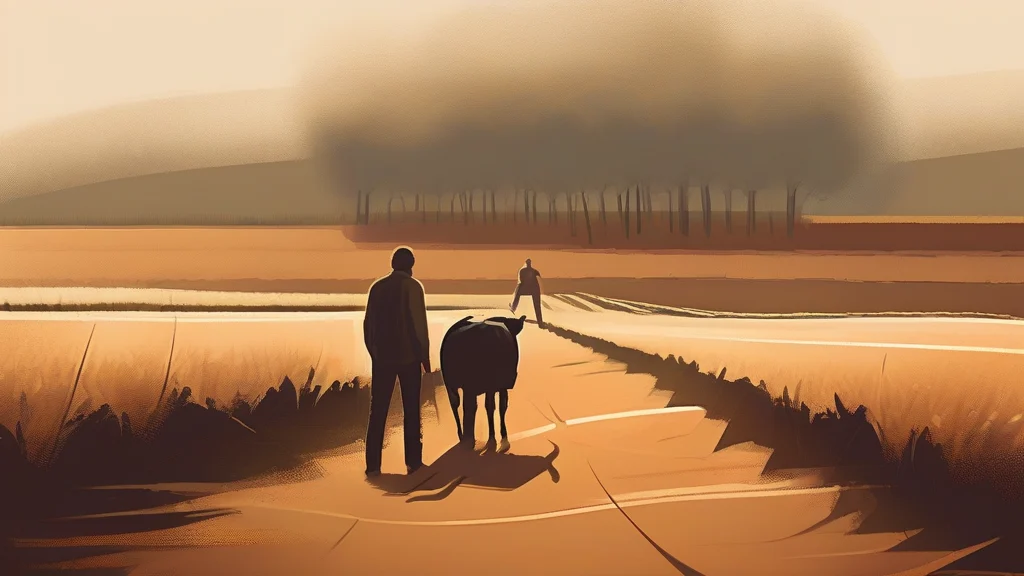
What does backgrounding mean?
Backgrounding is the practice of placing information, activity, or subjects in a secondary position rather than at the center of attention. In journalism and communications it often describes the provision of contextual detail — sometimes off the record — that helps audiences understand a story's fuller picture. In computing, backgrounding refers to running tasks behind the scenes while a user continues other work. In North American agriculture, it has a distinct commercial meaning: the stage of cattle production in which young animals are fed pasture or roughage to add weight cheaply before entering a feedlot for finishing. Across these fields the word carries a sense of quiet, preparatory work — important but deliberately kept out of the spotlight. Its opposite is foregrounding, the deliberate drawing of attention to something. Backgrounding is a specialist term, most at home in newsrooms, technical documentation, and the livestock industry, but its underlying idea is broadly intuitive: what matters is happening out of sight, doing its work unobserved.
nounThe act or practice of keeping something in the background, away from attention or emphasis; also, the provision of preliminary information or context. In agriculture, it specifically refers to the practice of feeding cattle on pasture or roughage before finishing them for slaughter.
- The act of providing background information or context (as in writing, broadcasting, or briefing).
- The deliberate placement of something in a subordinate or less prominent position, away from attention.
- (Agriculture) The raising or feeding of young cattle on pasture or roughage prior to finishing for market.
- (Computing) Running a program or task in the background while other work continues.
"The documentary's backgrounding helped viewers understand the political tensions behind the conflict."
"Good reporters do careful backgrounding before an interview so their questions land with precision."
"The app lets you keep downloads running by backgrounding the transfer while you browse."
"Many ranchers specialize in backgrounding calves over winter before sending them to feedlots."
Rarely pluralized; the singular form covers nearly all usage, though multiple distinct instances may occasionally be referred to in the plural.
"The report drew on several backgroundings conducted over the past year."
In cattle country, "backgrounding" is big business: it's the months of pasture and roughage that prepare young steers before their final high-grain finishing — a word that quietly bridges journalism and ranching.
Reviewed by Deb Chak, Editor. AI-assisted content curated by RJS Tech Solutions LLP.
Etymology of backgrounding
Backgrounding derives from "background," a compound of "back" and "ground" formed in English; "ground" here traces to Old English "grund," meaning the bottom or foundation. As the figurative use of "background" — meaning subordinate position or prior history — became established in the 18th and 19th centuries, derived verbal nouns like "backgrounding" arose to name the act of supplying or occupying that position. Cognates within English include "fore," "foremost," and "foreground," the last coined as the visual counterpart to "background." The agricultural and computing senses developed in 20th-century American usage.
How backgrounding is actually used
The word is most common in professional registers — journalism, public relations, computing, and livestock production. In journalism, "backgrounding" can describe off-the-record briefings where information is given without attribution. The agricultural sense is regionally prominent in North American beef production.
Easily confused with backgrounding
"Background" is the noun for a person's history or a scene's rear setting, while "backgrounding" is the process or act of placing something into that background, or of providing such context.
"Backdating" means assigning an earlier date to a document, whereas "backgrounding" concerns context-setting or de-emphasis.