
What does backhander mean?
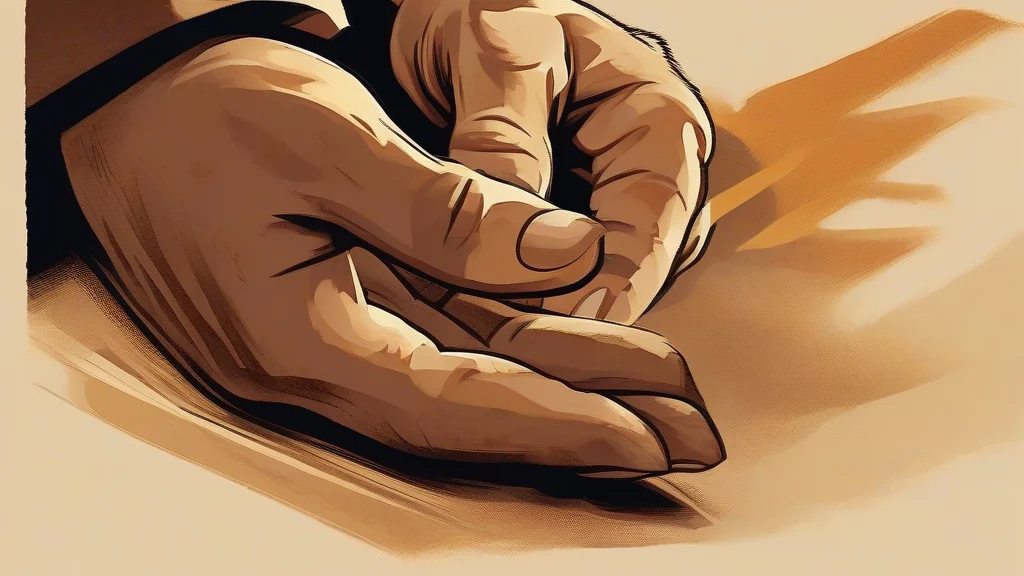
A backhander is primarily an illicit payment — a bribe or kickback handed over discreetly to secure favourable treatment, most commonly heard in British English. The word evokes the image of money slipped slyly into a palm, and its use immediately signals dishonesty: journalists and courts frequently describe officials, referees, or businesspeople as 'taking backhanders'. The term has a second, older meaning as a blow delivered with the back of the hand, though this sense is now largely confined to historical writing or accounts of fights. Derived from the same family as 'backhanded', which describes indirect or double-edged remarks, the word carries an inherent suggestion of concealment and misdirection. Its strong negative connotations make it a staple of reporting on corruption, where it serves as vivid shorthand for secret, improper payments that undermine fair dealing in public life and commerce.
nounA blow or stroke delivered with the back of the hand; figuratively, a payment made secretly or illicitly, especially a bribe or kickback.
- An illicit payment or bribe given to someone to secure favours or influence, typically passed on discreetly (chiefly British).
- A blow struck with the back of the hand rather than the palm.
"The chairman was caught accepting backhanders from contractors in exchange for lucrative council contracts."
"The planning officer was dismissed after investigators uncovered a string of backhanders from property developers."
"He caught his opponent squarely across the cheek with a stinging backhander."
Regular plural; used when referring to multiple instances of bribes or blows.
"Investigators allege he received thousands of pounds in backhanders over a five-year period."
In British English, a 'backhander' is what you slip into someone's palm under the table — and it's also exactly how you'd smack them if they got caught.
Reviewed by Deb Chak, Editor. AI-assisted content curated by RJS Tech Solutions LLP.
Etymology of backhander
Backhander is formed from 'backhand' plus the agentive suffix '-er', first appearing in English in the nineteenth century. It derives ultimately from the Old Norse-influenced compound 'bak-hond', combining 'back' (from Old English/Old Norse) with 'hand', reflecting the physical gesture of striking or passing something using the back of the hand. The figurative bribery sense developed from the literal one, borrowing the association of a swift, concealed movement of the hand behind or away from view. Cognate forms include 'backhand' and 'backhanded', which share the same root and similarly convey indirection or concealment.
Related word forms
How backhander is actually used
The bribery sense is informal and chiefly British; in American English, 'kickback' is more common. The literal sense of a blow with the back of the hand is older and now relatively rare outside historical or sporting contexts. The word carries strongly negative connotations of corruption and dishonest dealing.
Easily confused with backhander
Backhander is the noun for the blow or bribe itself, while backhanded is an adjective describing an indirect or double-edged remark or action.
Kickback refers specifically to a portion of money returned to someone in return for facilitating a deal, whereas backhander can mean either a physical blow with the back of the hand or such an illicit payment.