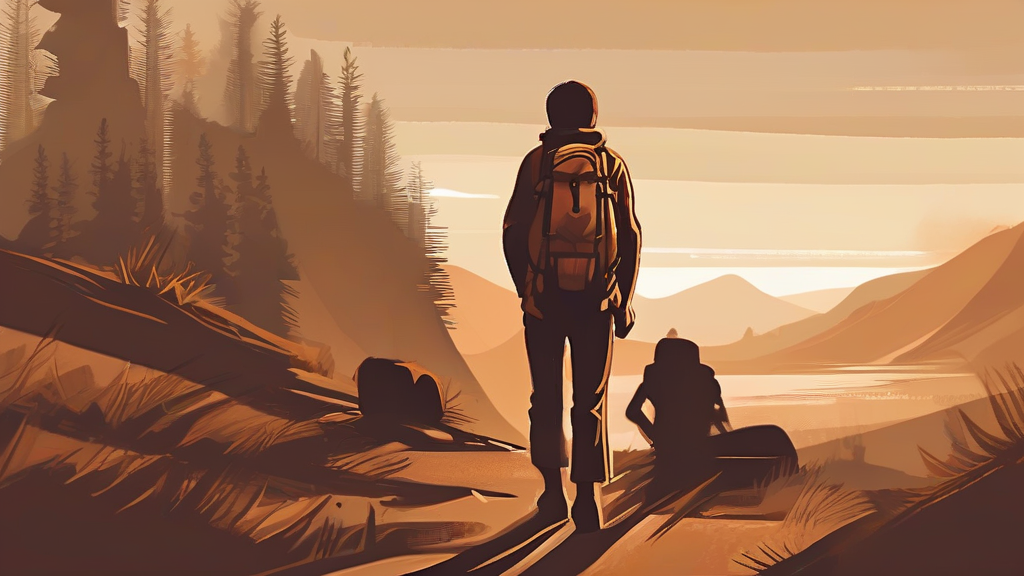
What does backpacker mean?
A backpacker is a person who travels, usually independently and on a limited budget, carrying everything they need in a backpack rather than a suitcase. The word evokes a particular style of travel: long journeys taken over weeks or months, stays in hostels or campsites, use of public transport, and a preference for immersion in local life over packaged tourism. Though most closely associated with young travellers on gap years or extended trips abroad, the term also applies to wilderness trekkers who hike and camp with their gear on their backs. Backpacking culture has generated its own infrastructure of hostels, guidebooks, and well-worn travel corridors through Southeast Asia, Australasia, and Latin America. The word carries connotations of freedom, self-reliance, frugality, and adventure, and is generally used approvingly, though it can sometimes suggest rough or unpolished travel.
nounA person who travels or hikes carrying their belongings in a backpack, especially one who travels cheaply and independently over an extended period.
- A person travelling independently on a low budget, carrying belongings in a backpack, usually over weeks or months.
- A person who hikes or camps in the wilderness carrying equipment in a backpack (overlapping with the sense of 'backpacker' as a wilderness trekker).
"The hostel was full of backpackers making their way across Southeast Asia on a shoestring budget."
"She spent six months as a backpacker, hopping between hostels from Bali to Bangkok."
"The trail was busy with backpackers shouldering heavy packs for a week-long trek through the mountains."
Standard plural; used both for multiple budget travellers and for groups of wilderness hikers.
"Dozens of backpackers gather at the trailhead each morning before setting off."
The word 'backpacker' barely existed before the 1960s — then budget air travel turned it into a global tribe of young travellers.
Reviewed by Deb Chak, Editor. AI-assisted content curated by RJS Tech Solutions LLP.
Etymology of backpacker
Backpacker derives from 'backpack', a compound of 'back' and 'pack' that emerged in American English in the early twentieth century as a term for a bag carried on the back. The agent noun 'backpacker' followed, first describing hikers who carried their gear, and later expanding — particularly from the 1960s and 1970s onward, alongside cheaper international air travel and the growth of hostel networks — to mean an independent budget traveller. It is related to older terms for carried bags such as knapsack, rucksack (from German), and packsack.
How backpacker is actually used
Informal to neutral register. The word carries connotations of youth, frugality, adventure, and independence. In British English, 'backpacker' is standard; in American English it can also overlap with 'hiker' for wilderness contexts. The term is strongly associated with hostel culture, gap-year travel, and routes such as Southeast Asia, South America, and Australia.
Easily confused with backpacker
A hiker walks for recreation or sport, often on day trips, whereas a backpacker typically travels with all belongings in a backpack, often overnight or long-term.
A traveller is anyone journeying from place to place, while a backpacker specifically travels independently and inexpensively, carrying gear in a backpack.