What does backstrap mean?
A backstrap is, most commonly today, the long strip of lean meat that runs along either side of a deer's or other game animal's spine. Because this muscle does little strenuous work, it is exceptionally tender, and among North American hunters it is regarded as the finest cut on the animal — often compared to, and sometimes confused with, the tenderloin that lies beneath it. The word has older, more literal senses as well: cobblers and bootmakers use "backstrap" for the reinforced strip of leather across the back of a shoe or boot, and handweavers know the backstrap as the band that anchors a simple portable loom to the weaver's own body. This range gives the word a distinctly practical flavor — it belongs to the vocabularies of the hunt, the workshop, and the weaving tradition rather than to formal prose. Whether describing a prized venison roast, a repaired boot heel, or a loom strapped around a weaver's waist, "backstrap" names something essential positioned at the back, doing quiet structural work.
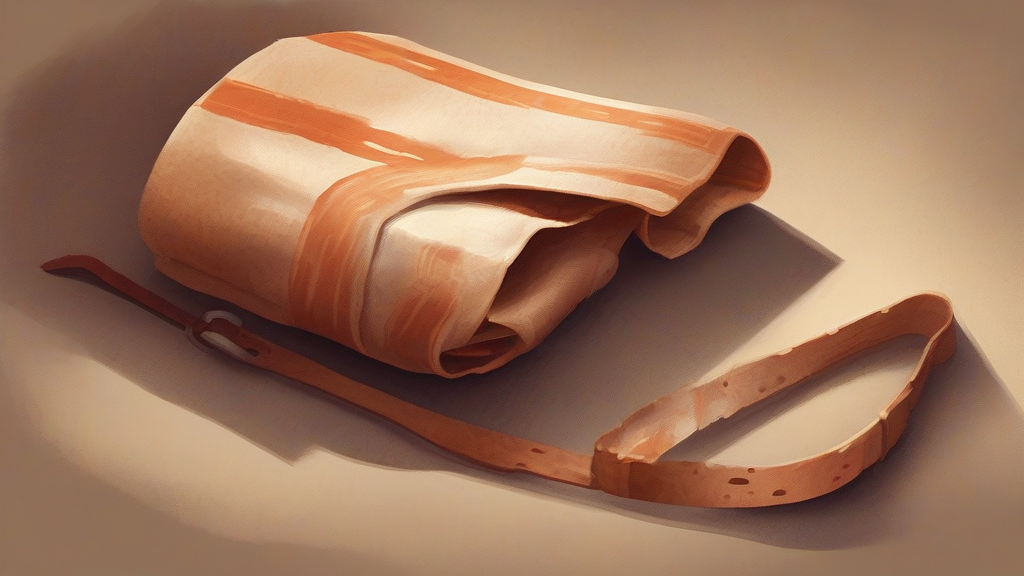
A strap or strip at the back of something, especially the reinforcing leather band on the back of a boot or shoe, or the band anchoring a backstrap loom to a weaver.
"He replaced the cracked backstrap before resoling the boots."
Chiefly a trade term in footwear repair and handweaving.
The lean muscle extending along either side of a game animal's spine; the most prized cut of venison.
"The hunter grilled the backstrap with nothing but salt and butter."
Primarily North American usage; British speakers usually say "loin."
Standard pluralization; when referring to the cut of meat, the plural refers to strips or portions from multiple animals or sides.
"Both backstraps were removed cleanly from the deer."
Ask for "backstrap" in a Texas butcher shop and you'll get venison; ask a weaver in Guatemala and you'll get a portable loom that has been used for thousands of years.
Reviewed by Deb Chak, Editor. AI-assisted content curated by RJS Tech Solutions LLP.
Etymology of backstrap
The word is a straightforward English compound of "back," from Old English bæc, and "strap," borrowed in the early modern period from Old French estrop or estrope, meaning a band or thong, itself likely of Germanic origin. It arose literally to name any narrow strap situated at the rear of an object, appearing first in craft and trade contexts such as shoemaking and later weaving. The culinary sense developed naturally in North American hunting culture, where the anatomical position of the loin muscle made "backstrap" a convenient name for the cut.
How backstrap is actually used
In hunting and cooking contexts, "backstrap" is everyday register among North American hunters and chefs, though it is not always recognized as a butcher's term elsewhere; British speakers typically call the equivalent cut simply the loin. In footwear repair, it is a technical trade term.
Easily confused with backstrap
The backstrap is the whole muscle along the outside of the spine in game animals, while the tenderloin is a smaller, even more tender muscle lying beneath it inside the body cavity.
A backdrop is a painted curtain or background scene, whereas a backstrap is a physical strap or strip at the rear of an object.