What does badger mean?
The word badger serves two distinct purposes in English. Most commonly today, it is a verb meaning to pester or harass someone persistently — to badger a person is to hound them with repeated questions, requests, or demands until they give in or lose patience. The word also names the animal itself: a stocky, short-legged mammal of the weasel family, instantly recognizable by the black-and-white stripes on its face, which lives in underground burrows known as setts. The two senses are historically linked: because badgers were once subjected to baiting by dogs, the act of wearing something down came to be described as 'badgering.' In modern usage the verb is informal and slightly negative in tone, suggesting persistence that has become tiresome. Whether encountered in conversation about pushy salespeople or in nature writing about nocturnal diggers, badger remains a vivid, widely understood word on both sides of the Atlantic.
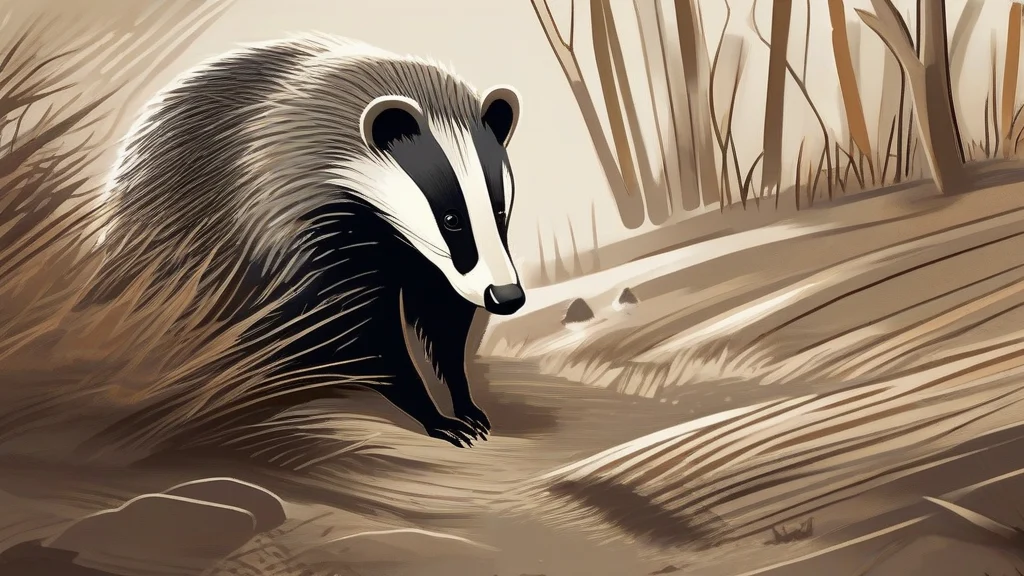
A heavy-bodied, short-legged burrowing mammal (Meles meles in Europe, related species elsewhere) with grey fur and a distinctive white face marked by two black stripes.
"A badger had dug its sett beneath the roots of the old oak tree."
In Britain the European badger is a protected and culturally iconic animal; the American badger (Taxidea taxus) is a different genus.
To pester, harass, or pressure someone persistently with repeated demands, questions, or requests.
"He badgered his editor for weeks before she agreed to read the manuscript."
Transitive verb typically followed by an object and often 'into' + gerund (e.g., 'badgered him into signing').
Standard regular plural; used only for the noun sense referring to the animals.
"A clan of badgers emerged from the sett at nightfall to forage."
The verb 'to badger' literally comes from the animal — because badgers were once cruelly baited with dogs, 'badgering' came to mean wearing someone down, just as dogs wore down the animal.
Reviewed by Deb Chak, Editor. AI-assisted content curated by RJS Tech Solutions LLP.
Etymology of badger
The noun badger entered English in the sixteenth century, likely derived from the word badge, a reference some scholars draw to the animal's white facial marking resembling a heraldic badge; the exact derivation remains debated. The verb sense developed in English by at least the seventeenth century, growing out of the blood sport of badger-baiting, in which dogs repeatedly attacked a captive badger — hence 'badgering' someone means wearing them down through relentless attack. The animal's name has cognate forms in other Germanic languages describing the same creature, though these reflect shared naming rather than a common root with the verb usage.
Related word forms
How badger is actually used
The verb is informal-to-neutral in register and carries a mildly negative connotation, implying persistence that crosses the line from insistence into annoyance. The noun is standard in both British and American English, with the European badger holding particular cultural prominence in Britain.
Easily confused with badger
A badge is a small emblem or sign of identity worn or displayed, while a badger is an animal — the two share a possible historical connection in name but nothing else.