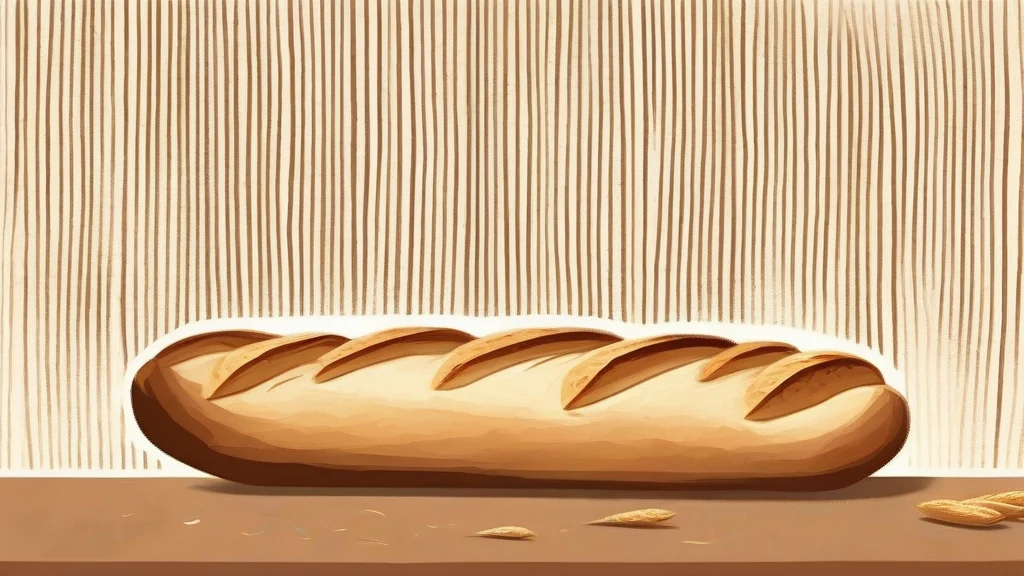
What does baguette mean?
A baguette is a long, slender loaf of French bread, typically around 5–6 cm in diameter and up to a metre in length, distinguished by its crisp golden crust and airy, soft interior. The word comes from French, where 'baguette' literally means 'wand' or 'baton' — a small stick — reflecting the loaf's distinctive rod-like shape. In everyday English, the term almost always refers to this iconic bread, sold fresh from bakeries and central to French food culture, where it is eaten daily alongside meals and used for sandwiches such as the jambon-beurre. A secondary, more specialized sense appears in jewellery, where a 'baguette' describes a small gemstone cut into a narrow rectangular shape. The word carries warm, appetizing connotations of freshness and artisanal baking, and its cultural significance is considerable: in 2022 UNESCO inscribed the craftsmanship of the baguette on its list of intangible cultural heritage of humanity, recognizing the loaf as an enduring emblem of French daily life.
nounA long, narrow loaf of French bread with a crisp crust and soft interior. More broadly, a small, elongated or rod-shaped object, especially one resembling a slender bar or wand.
- A long, thin loaf of French bread with a crisp crust.
- A small, rod- or wand-shaped object, such as a gemstone cut into a narrow rectangular form (a 'baguette' diamond) or a slender stick.
"She picked up a warm baguette from the boulangerie on her way home."
"He tore off the end of the baguette and spread it with butter while it was still warm."
"The vintage ring was flanked by two tapered baguette diamonds."
The standard English plural adds -s, matching the French plural form.
"We bought two baguettes for the picnic."
In France, a true baguette may legally contain only flour, water, yeast, and salt — and in 2022 UNESCO added the baguette to its list of intangible cultural heritage.
Reviewed by Deb Chak, Editor. AI-assisted content curated by RJS Tech Solutions LLP.
Etymology of baguette
Baguette was borrowed from French in the nineteenth century, when Parisian bakers began producing these distinctive long loaves. The French word itself derives from 'baguette', meaning a small stick or wand, ultimately from the Latin 'baculum' (staff or rod) via Italian 'bacchetta'. The same Latin root gives English words such as 'imbecile' (from Latin 'imbecillus', weak) and the bacterial genus name 'Bacillus', all sharing the notion of a small rod. In French bakery terminology, related shapes include the shorter 'bâtard' and the thinner 'ficelle'.
How baguette is actually used
The word is borrowed directly from French and is fully naturalized in English. In everyday use it overwhelmingly refers to the bread; the gemstone-cut sense is confined to jewelry contexts. The plural 'baguettes' is standard in English, though the French form is also 'baguettes'.
Easily confused with baguette
A baton is a general term for a short staff or rod (as used by conductors or relay runners), whereas a baguette specifically denotes the French bread loaf — though both derive from the idea of an elongated stick.