What does bajra mean?
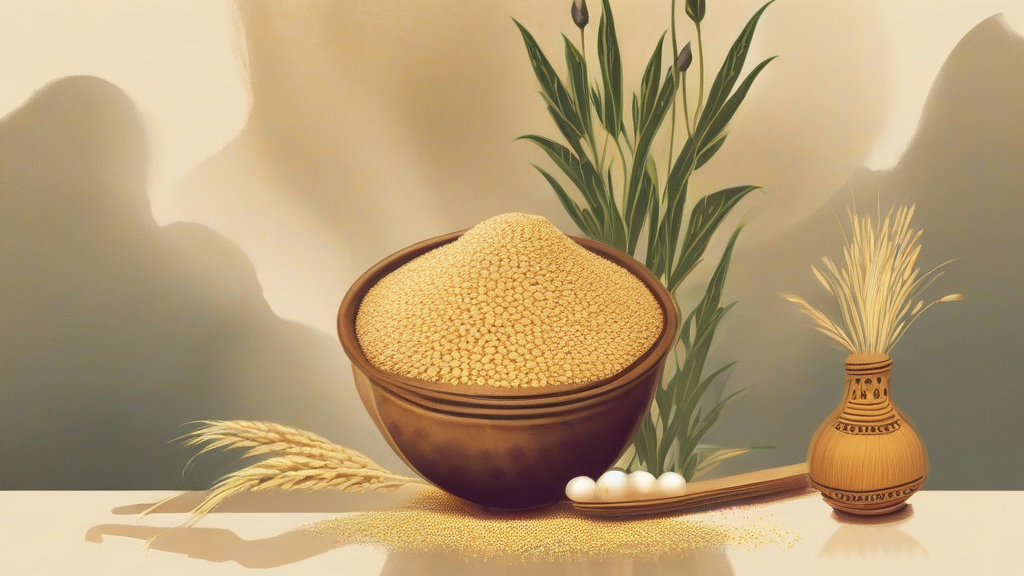
Bajra is the Hindi-derived English name for pearl millet (Pennisetum glaucum), one of the most widely grown types of millet and a crucial food crop in the semi-arid regions of India, Pakistan, and Africa. Exceptionally tolerant of heat and drought, bajra produces a reliable harvest where rice or wheat would fail, making it a mainstay of subsistence farming in Rajasthan and the Deccan. As a food, it is most familiar as bajra flour, milled into a greyish meal used to make rustic flatbreads such as bajra roti, porridges, and khichdi. In recent years the grain has gained attention worldwide as a nutritious, gluten-free alternative to wheat, rich in fibre and minerals. The word appears chiefly in South Asian English, agricultural writing, and recipes; elsewhere it may be rendered simply as pearl millet.
nounPearl millet (Pennisetum glaucum), a cereal grain widely cultivated in the arid regions of India and Africa, whose flour is used to make flatbreads such as bajre ki roti. The term also refers to the grain itself as a foodstuff.
- The pearl millet plant (Pennisetum glaucum), a cereal crop grown in hot, dry regions.
- The edible grain or flour of this plant, used especially in South Asian cooking.
"In Rajasthan, bajra is a staple crop that thrives where other cereals would wither."
"She ground fresh bajra into flour for the winter rotis."
"Farmers across the Deccan rely on bajra because it withstands the monsoon's failure better than wheat."
Rarely pluralized; bajra normally functions as a mass noun referring to the grain or crop.
"Different varieties of bajra are bred for shorter growing seasons."
Bajra has been farmed in Africa for thousands of years and is so drought-hardy it can produce a harvest on rainfall other grains simply cannot survive.
Reviewed by Deb Chak, Editor. AI-assisted content curated by RJS Tech Solutions LLP.
Etymology of bajra
The word bajra entered English through Hindi, in which it names pearl millet; its ultimate ancestry lies in Indo-Aryan languages descended from Sanskrit. It became established in English primarily through colonial-era and modern South Asian usage, alongside related terms such as jowar and ragi for other Indian millets.
How bajra is actually used
Bajra is an anglicized borrowing from Hindi and is standard in South Asian English and international discussions of millets and gluten-free grains; outside those contexts, writers usually use 'pearl millet'. It carries no particular formality or connotation beyond its association with traditional rural and health-food cuisine.
Easily confused with bajra
Jowar is sorghum, a different grain; bajra is pearl millet, though both are staple millets of India.
Ragi is finger millet, whereas bajra is pearl millet — both are drought-tolerant Indian grains but distinct crops.