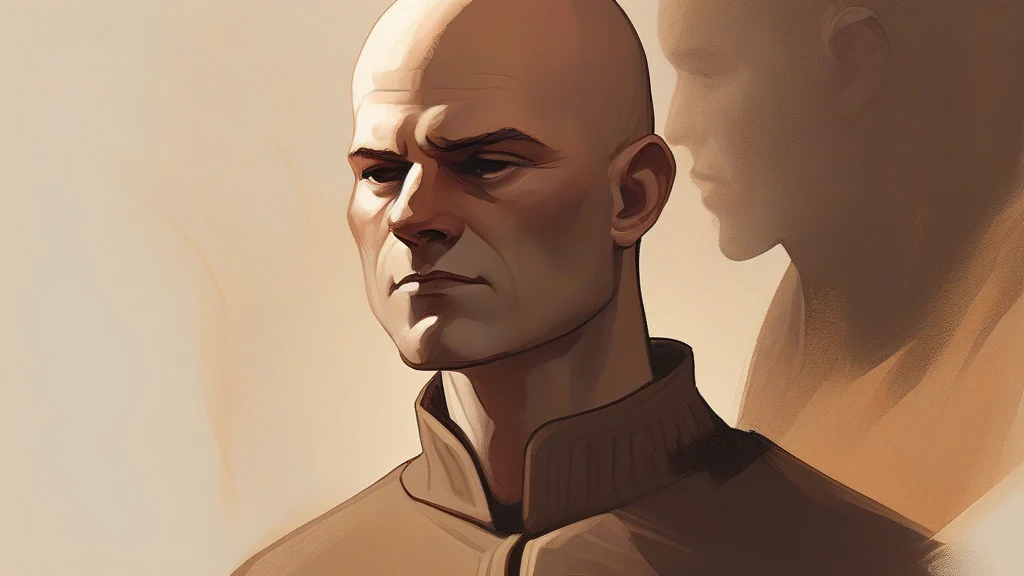
What does balder mean?
Balder is the comparative form of the English adjective bald, describing something that has less hair, covering, or surface detail than another thing or an earlier state. Its most familiar use concerns human appearance: a man who is losing his hair may be described as growing balder year by year. The word also extends beyond heads — a windswept hillside can look balder after a storm, a worn tyre is balder than a new one, and prose stripped of embellishment might be called balder in style. In all these uses it carries a plain, matter-of-fact tone rather than a strongly positive or negative one, though comparisons about hair loss can feel sensitive in polite conversation. The word derives from bald, an old Germanic-rooted English adjective, and pairs naturally with its superlative counterpart, baldest. It is common in British and American speech alike and requires no special context to understand, making it a straightforward but versatile term of comparison.
Comparative form of bald: having less hair, especially on the head, than something else.
"He was noticeably balder than he had been at their last meeting."
Used with 'than' when making explicit comparisons.
More bare, exposed, or lacking in natural covering or ornamentation.
"The overgrazed field looked balder every summer."
Balder is one of the rare words that doubles as both a plain English comparative ('more bald') and the name of a Norse god worshipped for a thousand years.
Reviewed by Deb Chak, Editor. AI-assisted content curated by RJS Tech Solutions LLP.
Etymology of balder
As a word, balder is simply the comparative inflection of bald, an adjective of Old English origin recorded as 'bald' or 'beald', from Proto-Germanic roots shared with related Germanic languages. The comparative suffix -er was added through ordinary English morphological processes rather than borrowed from any other language, so balder has developed alongside bald throughout the history of English. It shares this Germanic ancestry with cognate forms in other Germanic tongues, such as the German 'bold'-related and 'bald'-family words, though the modern English sense of hairlessness is distinctively English in emphasis.
Related word forms
How balder is actually used
'Balder' is strictly the comparative inflection of the adjective 'bald'; it is used in everyday speech about receding hairlines and, more broadly, about anything becoming barer or more exposed. It is informal to neutral in register and appears far more often in casual conversation and fiction than in formal writing, where writers may prefer constructions such as 'less hairy' or 'increasingly bald'.
Easily confused with balder
Baldur is a proper noun referring to a Norse god of light and purity, while balder is an ordinary adjective describing hairlessness or bareness.