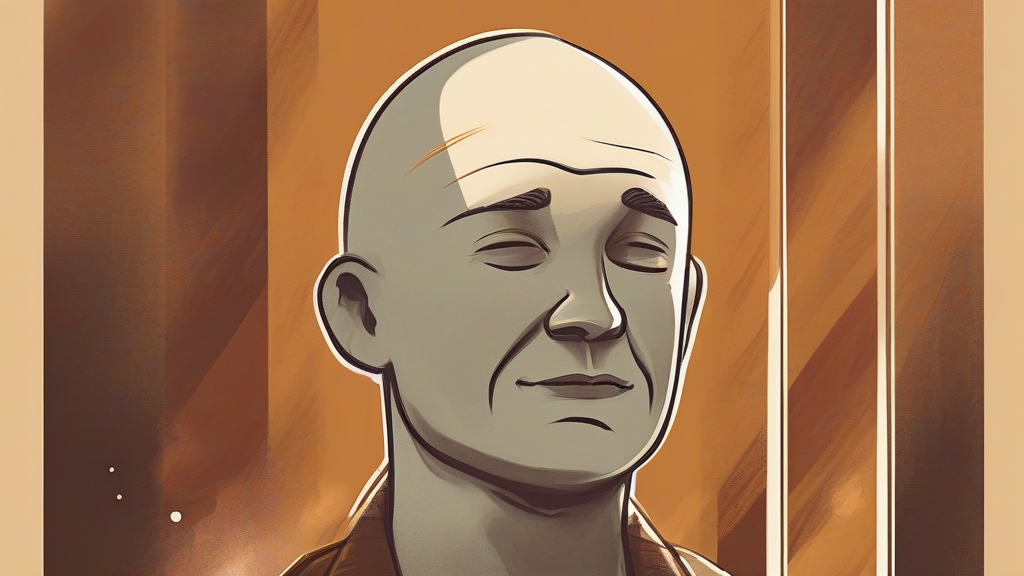
What does baldie mean?
'Baldie' is an informal noun used to describe a bald man, typically as a light-hearted nickname or a teasing epithet rather than a neutral description. It derives simply from the adjective 'bald' plus the familiar diminutive '-ie' suffix that English uses to soften or personalize nicknames, much as 'doggie' softens 'dog'. The word carries a playful, colloquial register: it appears in schoolyard banter, affectionate family ribbing, cartoons, and comedy, where a 'little baldie' is often drawn as a comic figure. Because it highlights a physical trait, however, it can easily tip into insult, especially when aimed at someone who has not invited the joke, so its acceptability depends heavily on tone, relationship, and context. It is overwhelmingly applied to men, mirroring cultural attention to male hair loss. Writers and speakers who want warmth rather than mockery tend to reserve it for close relationships or self-deprecating humour, where it reads as endearing rather than cruel.
nounAn informal, often teasing term for a bald man.
- A nickname or taunt applied to a bald man.
"The kids at school called him 'baldie' until he shaved his head entirely and embraced the look."
"He took the 'baldie' jibes in good humour and eventually shaved off the last wisps himself."
"The cartoonist drew a little baldie character with a single hair on top of his head."
The plural follows regular noun inflection.
"The barber's wall of photos was full of smiling baldies showing off their new shaves."
Reviewed by Deb Chak, Editor. AI-assisted content curated by RJS Tech Solutions LLP.
Etymology of baldie
'Baldie' is formed by adding the diminutive suffix '-ie' to the adjective 'bald', which itself comes from Middle English 'ballede', first recorded around the thirteenth century; the ultimate origin of 'ballede' is uncertain, though it may be connected to Old English words meaning a shining patch or white head. The '-ie' suffix, common in Scottish and northern English dialects, turns descriptive adjectives into personalizing nicknames, giving 'baldie' the same affectionate-teasing flavour as words like 'leftie'. It developed as colloquial slang rather than formal vocabulary, which is why dictionaries record it as an informal noun.
Related word forms
How baldie is actually used
Strictly informal and colloquial, used chiefly in banter, playground teasing, or affectionate ribbing among familiars; it can cause offence when directed at a stranger, so it should be used with care. It is far more common as a label for men than women, reflecting social attitudes about male pattern baldness.
Easily confused with baldie
'Boldie' is not a standard English word; the similar-looking 'baldie' refers specifically to a bald person.