
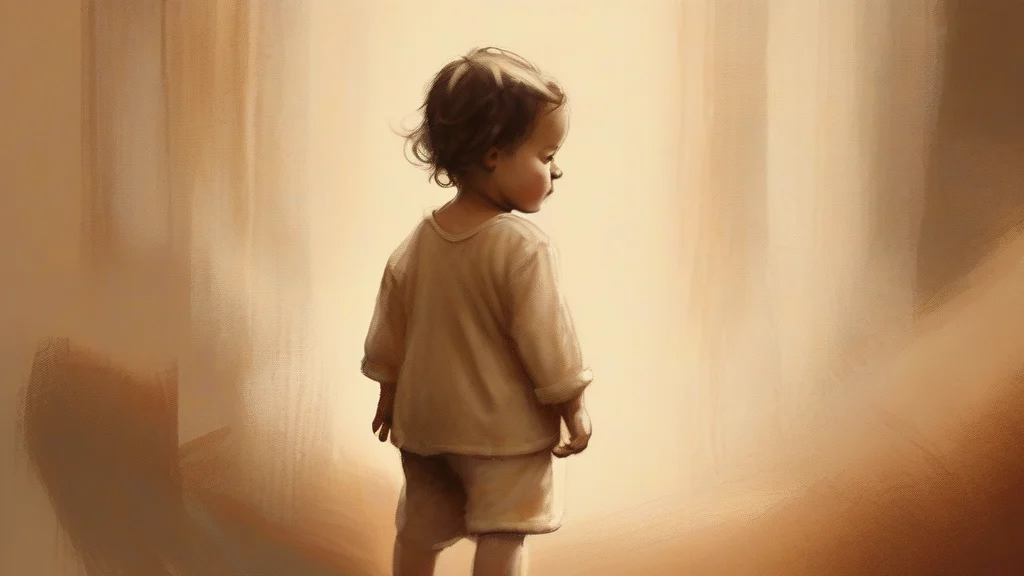
What does bambino mean?
Bambino is an Italian loanword meaning a young child, most commonly a baby or infant, adopted into English as an affectionate and somewhat whimsical alternative to words like 'baby' or 'infant.' In its original Italian context it refers specifically to a boy, with the feminine form 'bambina,' though this gender distinction is generally not preserved when the word is used in English. Speakers reach for bambino less out of necessity than for its charm: it lends a sentence warmth, playfulness, or a touch of Mediterranean flavor that plainer vocabulary lacks. The word has also entered popular culture through sport, since baseball legend Babe Ruth was famously nicknamed 'The Bambino,' giving the term lasting recognition among people who might otherwise never have encountered it. Though never common in formal registers, bambino endures as a colorful, evocative way of speaking about the very young, appearing in family conversations, headlines about celebrity babies, and nostalgic references to American sports history alike.
nounA young child, especially a baby or toddler; the word comes from Italian, where it means a small boy.
- A young child, especially a baby or very young infant (often used affectionately).
- In English, sometimes used more loosely for any small child or toddler, often with a warm, playful tone borrowed from Italian.
"The proud grandmother beamed at the sleeping bambino in her arms."
"She rocked the fussing bambino gently until he drifted off to sleep."
"Their first bambino arrived three weeks early, healthy and hungry."
The standard English plural adds '-s'. Italian purists may note the native plural 'bambini', which occasionally appears in English texts but is uncommon outside Italian contexts.
"The playground was full of laughing bambinos on a sunny afternoon."
Baseball's greatest legend, Babe Ruth, was known simply as 'The Bambino' — an Italian word for baby that became shorthand for the biggest name in sports history.
Reviewed by Deb Chak, Editor. AI-assisted content curated by RJS Tech Solutions LLP.
Etymology of bambino
Bambino derives directly from Italian, where it means 'child,' formed from Latin 'bambus'-related or diminutive roots; more precisely, it stems from the Latin word 'bambus' via medieval usage, ultimately related to Greek terms for a simpleton or childlike figure. It was absorbed into English in the late 19th century, largely through contact between English speakers and Italian communities, and gained wide recognition in America through Babe Ruth's celebrated nickname 'The Bambino.' Its Italian feminine counterpart, 'bambina,' remains in parallel use within Italian but is rarely distinguished in English.
How bambino is actually used
In English, bambino is a borrowed Italian term used informally and often affectionately for a baby or young child; it carries a warm, slightly whimsical connotation rather than clinical precision. It is far less common than native words like 'baby' or 'infant' and is typically chosen for its charm or cultural flavor rather than necessity. In Italian, the word specifically denotes a male child, with 'bambina' as the female equivalent — a distinction usually lost in casual English use.
Easily confused with bambino
Despite a similar opening sound, 'bamboozle' means to deceive or trick and has no connection to children or to the word bambino.